Thursday, November 23, 2006

Papers on Agricultural Economy

Hello,
Every week I'll be posting the latest papers on Agricultural Economy published by universities, journals, and Ag Econ meetings. These are extremely technical, with lots of econometrics that may seem too abstract to non-economist. Yet they can be useful to some of the readers out there with a trained eye on these subjects.

There are about 25 papers; read over the titles and click the ones that you find interesting. Check out the one on Returns on Education, using the case of Nigeria. The paper provides a very informative literature review about the different work done on this subject.

Remember to click the READ MORE link to see the full post. And also, click on the labels to see related posts.
Best,

********************************************
http://agecon.lib.umn.edu/cgi-bin/pdf_view.pl?paperid=21706Food Sector Transformation and Standards in Zambia: Smallholder FarmerParticipation and Growth in the Dairy SectorDepartment of Agricultural Economics Staff Paper 2006-18Michigan State University2006David NEVEN; Hikuepi KATJIUONGUA; Ingrid ADJOSOEDIRO; Thomas REARDON;Pia CHUZU; Gelson TEMBO; Mukelabai NDIYOI********************************************
http://agecon.lib.umn.edu/cgi-bin/pdf_view.pl?paperid=21707
probabilities introduce spurious correlationSelected PaperAmerican Agricultural Economics Association - 20062006 Annual Meeting, July 23-26, 2006, Long Beach, California2006Travis J. LYBBERT; David R. JUST
********************************************

http://agecon.lib.umn.edu/cgi-bin/pdf_view.pl?paperid\u003d21708
Bargaining and market power in a GIS-based hedonic pricing model of theagricultural land marketSelected Paper 154225American Agricultural Economics Association - 20062006 Annual Meeting, July 23-26, 2006, Long Beach, California2006Geerte Cotteleer; Cornelis Gardebroek
********************************************
http://agecon.lib.umn.edu/cgi-bin/pdf_view.pl?paperid\u003d21709
Estimating Liquidity Costs in Agricultural Futures Markets usingBayesian MethodsSelected Paper 151826American Agricultural Economics Association - 20062006 Annual Meeting, July 23-26, 2006, Long Beach, California2006Julieta FRANK; Philip GARCIA
********************************************
http://agecon.lib.umn.edu/cgi-bin/pdf_view.pl?paperid\u003d21710
Wholesale Markets, Horticulture Products, and Supermarkets in MexicoDepartment of Agricultural Economics Staff Paper 2006-17Michigan State University2006Flavia ECHANOVE; Thomas REARDON

********************************************
http://agecon.lib.umn.edu/cgi-bin/pdf_view.pl?paperid=21708
Bargaining and market power in a GIS-based hedonic pricing model of theagricultural land marketSelected Paper 154225American Agricultural Economics Association - 20062006 Annual Meeting, July 23-26, 2006, Long Beach, California2006Geerte Cotteleer; Cornelis Gardebroek
********************************************
http://agecon.lib.umn.edu/cgi-bin/pdf_view.pl?paperid=21709

Estimating Liquidity Costs in Agricultural Futures Markets usingBayesian MethodsSelected Paper 151826American Agricultural Economics Association - 20062006 Annual Meeting, July 23-26, 2006, Long Beach, California2006Julieta FRANK; Philip
GARCIA
********************************************
http://agecon.lib.umn.edu/cgi-bin/pdf_view.pl?paperid=21710
Wholesale Markets, Horticulture Products, and Supermarkets in MexicoDepartment of Agricultural Economics Staff Paper 2006-17Michigan State University2006Flavia ECHANOVE; Thomas REARDON
********************************************
-bin/pdf_view.pl?paperid\u003d21711

Supermarkets and Michoacan Guava Farmers in MexicoDepartment of Agricultural Economics Staff Paper 2006-16Michigan State University2006Julio A. BERDEGUE; Thomas REARDON; Fernando BALSEVICH; Anabel MARTINEZ,;Ruben MEDINA; Marx AGUIRRE; Flavia ECHANOVE
********************************************
http://agecon.lib.umn.edu/cgi-bin/pdf_view.pl?paperid\u003d21712
Spatial Clustering of the U.S. Biotech IndustrySelected Paper 156735American Agricultural Economics Association - 20062006 Annual Meeting, July 23-26, 2006, Long Beach, California2006Pramod SAMBIDI; Wes HARRISON********************************************
http://agecon.lib.umn.edu/cgi-bin/pdf_view.pl?paperid\u003d21713
Incentives for Ex Ante wildfire risk mitigation in the wildland-urbaninterface: The relationship between contingent wildfire insurance andfuel management subsidiesSelected PaperAmerican Agricultural Economics Association - 20062006 Annual Meeting, July 23-26, 2006, Long Beach, California2006Mariam Lankoande; Jonathan Yoder; Philip Wandschneider
********************************************
http://agecon.lib.umn.edu/cgi-bin/pdf_view.pl?paperid\u003d21715
Adoption of No-Tillage Practices, Other Conservation-Tillage Practicesand Herbicide-Resistant Cotton Seed, and Their Synergistic EnvironmentalImpactsSelected PaperAmerican Agricultural Economics Association - 2006",1]

********************************************
http://agecon.lib.umn.edu/cgi-bin/pdf_view.pl?paperid=21712Spatial Clustering of the U.S. Biotech IndustrySelected Paper 156735American Agricultural Economics Association - 20062006 Annual Meeting, July 23-26, 2006, Long Beach, California2006Pramod SAMBIDI; Wes HARRISON
********************************************
http://agecon.lib.umn.edu/cgi-bin/pdf_view.pl?paperid=21713Incentives for Ex Ante wildfire risk mitigation in the wildland-urbaninterface: The relationship between contingent wildfire insurance andfuel management subsidiesSelected PaperAmerican Agricultural Economics Association - 20062006 Annual Meeting, July 23-26, 2006, Long Beach, California2006Mariam Lankoande; Jonathan Yoder; Philip Wandschneider

********************************************
http://agecon.lib.umn.edu/cgi-bin/pdf_view.pl?paperid=21715
Adoption of No-Tillage Practices, Other Conservation-Tillage Practicesand Herbicide-Resistant Cotton Seed, and Their Synergistic EnvironmentalImpactsSelected PaperAmerican Agricultural Economics Association - 2006
2006Roland K. Roberts; Burton C. English; Qi Gao; James A. Larson
********************************************
http://agecon.lib.umn.edu/cgi-bin/pdf_view.pl?paperid\u003d21716

Potential Effects of Transgenic Rice on Farm Households\' NutritionalStatus in BangladeshSelected Paper 156562American Agricultural Economics Association - 20062006 Annual Meeting, July 23-26, 2006, Long Beach, California2006Yan Liang; Dixie W. Reaves; George W. Norton
********************************************
The Impact of Global Cotton Markets on Rural Poverty in PakistanSelected PaperAmerican Agricultural Economics Association - 20062006 Annual Meeting, July 23-26, 2006, Long Beach, California2006David ORDEN; Abdul SALAM; Reno DEWINA; Hina NAZLI; Nick MINOT
********************************************
Can Cocoa Farmer Organizations Countervail Buyer Market Power?Selected PaperAmerican Agricultural Economics Association - 20062006 Annual Meeting, July 23-26, 2006, Long Beach, California2006Michael WILCOX; Philip ABBOTT
********************************************
Potential Effects of Transgenic Rice on Farm Households' NutritionalStatus in BangladeshSelected Paper 156562American Agricultural Economics Association - 20062006 Annual Meeting, July 23-26, 2006, Long Beach, California2006Yan Liang; Dixie W. Reaves; George W. Norton
********************************************
The Impact of Global Cotton Markets on Rural Poverty in PakistanSelected PaperAmerican Agricultural Economics Association - 20062006 Annual Meeting, July 23-26, 2006, Long Beach, California2006David ORDEN; Abdul SALAM; Reno DEWINA; Hina NAZLI; Nick MINOT
********************************************
Can Cocoa Farmer Organizations Countervail Buyer Market Power?Selected PaperAmerican Agricultural Economics Association - 20062006 Annual Meeting, July 23-26, 2006, Long Beach, California2006Michael WILCOX; Philip ABBOTT
********************************************
http://agecon.lib.umn.edu/cgi
U.S. and Canadian Livestock Prices: Market Integration and Trade DependenceSelected Paper 156074American Agricultural Economics Association - 20062006 Annual Meeting, July 23-26, 2006, Long Beach, California2006Dragan Miljkovic
********************************************
Is Individual Behavior Oriented to Self-interest, Other-interest orboth? Empirical Evidence from a Case Study of Social CapitalSelected PaperAmerican Agricultural Economics Association - 20062006 Annual Meeting, July 23-26, 2006, Long Beach, California2006Zhenyu ZHANG; Gary D. LYNNE
********************************************
Cattle Producers? Participation in Market Channels in Central America:Supermarkets, Processors, and AuctionsDepartment of Agricultural Economics Staff Paper 2006-01Michigan State University2006Fernando BALSEVICH; Paul SCHUETZ; Edwin PEREZ
********************************************
Farmer Willingness to Grow Switchgrass for Energy ProductionSelected PaperAmerican Agricultural Economics Association - 20062006 Annual Meeting, July 23-26, 2006, Long Beach, California2006Kimberly Jensen; Christopher D. Clark; Pamela Ellis; Burton English;Jamey Menard; Marie Walsh",1]
Miljkovic
********************************************
s Individual Behavior Oriented to Self-interest, Other-interest orboth? Empirical Evidence from a Case Study of Social CapitalSelected PaperAmerican Agricultural Economics Association - 20062006 Annual Meeting, July 23-26, 2006, Long Beach, California2006Zhenyu ZHANG; Gary D. LYNNE
********************************************
Cattle Producers? Participation in Market Channels in Central America:Supermarkets, Processors, and AuctionsDepartment of Agricultural Economics Staff Paper 2006-01Michigan State University2006Fernando BALSEVICH; Paul SCHUETZ; Edwin PEREZ
********************************************
Farmer Willingness to Grow Switchgrass for Energy ProductionSelected PaperAmerican Agricultural Economics Association - 20062006 Annual Meeting, July 23-26, 2006, Long Beach, California2006Kimberly Jensen; Christopher D. Clark; Pamela Ellis; Burton English;Jamey Menard; Marie Walsh
********************************************
Analysis of Farm Service Agency Direct Loan Loss Likelihoods and Loss RatesSelected PaperAmerican Agricultural Economics Association - 20062006 Annual Meeting, July 23-26, 2006, Long Beach, California2006Bruce L. Ahrendsen; Bruce L. Dixon; O. John Nwoha; Sandra J. Hamm; DianaDanforth
********************************************
Biological Invasions: The Case of Soybean Aphid InfestationSelected PaperAmerican Agricultural Economics Association - 20062006 Annual Meeting, July 23-26, 2006, Long Beach, California2006C. S. Kim; G. Schaible; L. Garrett; R. Lubowski; D. Lee********************************************
Effects of Herbicide-Resistant Technology Fees on the Plant PopulationDecision for Cotton ProductionSelected PaperAmerican Agricultural Economics Association - 20062006 Annual Meeting, July 23-26, 2006, Long Beach, California2006James LARSON; Roland ROBERTS; Owen GWATHMEY
********************************************
********************************************
********************************************
********************************************
Factors Affecting Direct and Indirect Energy Use in U.S. Corn ProductionSelected PaperAmerican Agricultural Economics Association - 20062006 Annual Meeting, July 23-26, 2006, Long Beach, California2006Wesley Musser; Dayton Lambert; Stan Daberkow

********************************************
Analysis of Farm Service Agency Direct Loan Loss Likelihoods and Loss RatesSelected PaperAmerican Agricultural Economics Association - 20062006 Annual Meeting, July 23-26, 2006, Long Beach, California2006Bruce L. Ahrendsen; Bruce L. Dixon; O. John Nwoha; Sandra J. Hamm; DianaDanforth
********************************************
Biological Invasions: The Case of Soybean Aphid InfestationSelected PaperAmerican Agricultural Economics Association - 20062006 Annual Meeting, July 23-26, 2006, Long Beach, California2006C. S. Kim; G. Schaible; L. Garrett; R. Lubowski; D. Lee
********************************************
Effects of Herbicide-Resistant Technology Fees on the Plant PopulationDecision for Cotton ProductionSelected PaperAmerican Agricultural Economics Association - 20062006 Annual Meeting, July 23-26, 2006, Long Beach, California2006James LARSON; Roland ROBERTS; Owen GWATHMEY
********************************************
Africa's Education Enigma? The Nigerian story.
American Agricultural Economics Association - 20062006 Annual Meeting, July 23-26, 2006, Long Beach, California2006Ruth Uwaifo
********************************************
Modeling Conservation Program Impacts: Accounting for participationusing bootstrappingSelected PaperAmerican Agricultural Economics Association - 20062006 Annual Meeting, July 23-26, 2006, Long Beach, California2006Daniel Hellerstein
********************************************
On the spatial nature of the groundwater pumping externalitySelected PaperAmerican Agricultural Economics Association - 20062006 Annual Meeting, July 23-26, 2006, Long Beach, California2006Nicholas BROZOVIC; David SUNDING; David ZILBERMAN
********************************************
Factors Affecting Direct and Indirect Energy Use in U.S. Corn ProductionSelected PaperAmerican Agricultural Economics Association - 20062006 Annual Meeting, July 23-26, 2006, Long Beach, California2006Wesley Musser; Dayton Lambert; Stan Daberkow
********************************************
Modeling Conservation Program Impacts: Accounting for participationusing bootstrappingSelected PaperAmerican Agricultural Economics Association - 20062006 Annual Meeting, July 23-26, 2006, Long Beach, California2006Daniel Hellerstein
********************************************
On the spatial nature of the groundwater pumping externalitySelected PaperAmerican Agricultural Economics Association - 20062006 Annual Meeting, July 23-26, 2006, Long Beach, California2006Nicholas BROZOVIC; David SUNDING; David ZILBERMAN
********************************************
Factors Affecting Direct and Indirect Energy Use in U.S. Corn ProductionSelected PaperAmerican Agricultural Economics Association - 20062006 Annual Meeting, July 23-26, 2006, Long Beach, California2006Wesley Musser; Dayton Lambert; Stan Daberkow********************************************

Wednesday, November 15, 2006

Is Raining Coffee in Nicaragua

Nicaragua 047

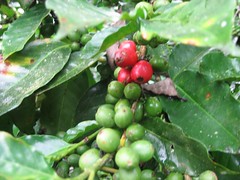
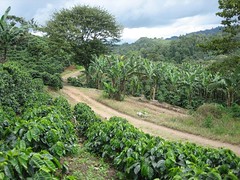
As Juan Luis Guerra once hoped "I wish it rains coffee in the field" in Nicaragua it is coffee time and you can feel it in the atmosphere. Yesterday I had the opportunity to go to Jinotega, the department north of Matagalpa in the Honduran border, famous for its shade-grown Arabica coffee. The purpose of the visit was to check on the progress of a School Garden we had helped implement a couple months ago. But as we travelled this mountainous region, I was amazed by how it looks so different now that the coffee is being harvested.

The rural roads look like ant paths, with hundreds of people going back and forth carrying sacks of coffee, food, tools, and guitars. Although the pick of the seasons hasn’t started yet, you’ll be able to find Nicaraguan from all over. Some come from the Atlantic coast where poverty is more prevalent. Others live in the region and spend some time harvesting coffee, then sugar cane and then back to their farms. This region in fact, has been a reservoir of agricultural labour. This is one of the reasons why so many agricultural projects that try to convert these seasonal workers to producers fail.

Imagen 125


The town is bursting and the money starts to trickledown to restaurants, shops, and obviously to the local tavern. There are problem, most of then alcohol related after pay-day, yet the mood is pleasant as the farmers know that all the hard work is finally producing the first fruits and the workers are getting some money to bring back to their families. The farms where the berry pickers work are filled with joy: don’t get me wrong as I’m not saying that coffee picking is an easy, pleasant job. What I’m saying is that to the foreign eye it looks like a romantic painting of blue skies and green landscapes: a resting yet deceiving image from colonial times.

But forget about the Germans and other Europeans who once owned and managed these coffee farms, although there is some left, most farms are now owned and operated by Nicas. So Nica is the music played on the radio, or sang by the workers as they pick the berries. At lunch time, you'll hear a whistle telling you is time for lunch. A Nica lunch of beans, tortilla, cuajada, meat (sometimes), and of course coffee, giving these good-hearted Nicaraguans the energy to keep going.

more coffee

During the Sandinistas time and to some degree today, you hear many voices that complained about coffee and other monocultures as being promoters of poverty and food insecurity. The rationality of their argument is based on a colonial systems of production that reflect little to today’s reality. Nowdays, the wages for pickers are regulated and there are a wide range of standards for the conditions in which they have to work, guarantying their safety and wellbeing. People also think food security for farmers means producing food, when most of the time they are better off by producing goods to commerce and then buying food.

A quintal (100LB) of dry coffee is being paid at US$120.oo aprox. The coffee price is now recuperating from a two decade low that busted the market for speciality coffees such as shade-grown, fair treaded, organic, etc. Now, there are plenty of farmers that are meeting their ends by growing this berry. So next time you drink a cup coffee, imagine all the bliss that came into bringing it to you.
Salud,

“Give a man a fish; you have fed him for today. Teach a man to fish; and you have fed him for a lifetime”.— Old Chinese Saying

My version: “Give a man a fish; you have fed him for today. Teach a man to sell the fish, so he can also eat some chicken”. – Rafael I Merchan


Friday, November 10, 2006

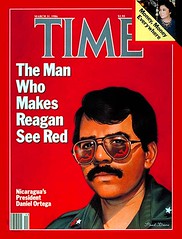
Why Daniel Ortega is back in power and why to Remain Suspicious

Daniel Ortega

Ok, so the news that Daniel Ortega, the former Sandinista guerrilla combatant, won last Sunday presidential bid were digested easily as a learn that the democrats got back control of both houses of congress. That said, we need to explore why that Danielistas won and what are the prospects of his presidency.

There are several factors that influenced last Sunday election outcome. First and most important was the overwhelming support the Sandinistas obtained from the youth. In order to vote in Nicaragua you have to be 16 or older, so there is a big chunk of the population that did not experience the hardships of the 80’s and was eligible to vote. Youth “had it easy” -as and older guy told me- “they didn’t have to be part of the obligatory two year army service in the middle of a war and they didn’t have to harvest coffee and cotton for three months a year, eight hours a day”. They were in fact, easily persuaded by the overused, coldwared antiyanqui speech of the Sandinistas. With magnificent but undoable offers of employment, education, and other benefits, the youth selected to what their eyes was a new path, the Sandinista path. A path with not clear destination and a familiar blocks on the way to many of the older generations.

Another very important factor that influenced this election was the mess created by the liberal party in control for the past 16 years, the PLC (Partido Liberal Constitucionalista). Although two of their presidents, Violeta Chamorro and Enrique Bolaños were in fact conservative minded, the PLC must take blame for the corruption scandals and the clientelims characterized of their governments. Graft, bribery, extortion, cronyism, nepotism, and patronage were common place after the end of the Sandinista era. Predictably, at the height of all this came the Political Pact (El Pacto) signed by the Arnoldo Aleman of the PLC and Daniel Ortega of the FSNL. This power sharing agreement had among others decrees that one could be president with 35% of the popular vote as long as they maintain a 5% lead. Before the pact, the percentage needed was 40 and since Ortega only got 38% of the vote, there would have been runoff election in which he would unquestionably loss.

The U.S, as in the last two centuries of Nicaragua history, played an important and influential role in the election outcome. This time by interfering directly with the electoral process of Nicaragua’s election. This blatant and often absurd interference lead to a boomerang effect, reinforcing Ortega’s claims of American interventionsionism and rallying the youth as already mention. In the words of Tim Padget of TIME “the yanqui politicking — which included a threat to cut off U.S. aid to impoverished Nicaragua if Ortega won — backfired miserably, actually helping boost the Sandinista leader to his first-round victory. That such U.S. pressure tends to work in favor of its opponents is a lesson Washington seems woefully unable to learn in a post-Cold War Latin America whose electorates have unexpectedly turned leftward in recent years” (Read article HERE). And Mr. Padget is not alone, Marcela Sanchez, a Colombian reporter of the Washington Post, writes “Scare tactics were the wrong choice for Washington. But this was again a case of pragmatism blinded by ideology. That was evident when Rep. Dan Burton, chairman of the House International Relations Subcommittee on the Western Hemisphere, wrote that an Ortega victory raised the possibility that Venezuelan President Hugo Chavez and his ailing mentor Fidel Castro could be expanding their influence, meaning that "our enemies will be that much closer to our borders"” Read article HERE. En ESPAÑOL AQUI. However, I believe the percentage of the population that got turn off by Washington’s bad neighbour talk was miniscule as Nicaraguans have gotten used to the American ascent. This is not to say, though, that D.C’s foreign policy is antiquated, in need of a reality check, something hopefully democrats will do now they the control the congress.

Now that I’ve discussed what I see as the most important reasons for Ortega’s victory, lets look at the prospects of his presidency. First and foremost Nicaragua needs investment: after decades of war, natural disaster, and corruption is natural that the country ranks as the most food insecure and poor in continental America. So foreign currency is essential to lift the country out of poverty. Before going any forward, imagine I give you half million dollars for a tourism investment in Central America. You can choose any country as long as you maximize profits. So obviously you google all the countries trying to learn more about history, economic potential, governance, transparency, in other words business climate. It should take you less that an hour to realise that Nicaragua is a no–no. With a very recent history of expropriation (See my older post), corruption, and most important economic risk, investment in Nicaragua is a casino-like experience, is you like Vegas bring your money to Managua. Worst now that the man that was in charge of all economic chaos of the 80’s is back in power.

But where is the money coming from if is not from international investors? It won’t come from the black riches Ortega’s friend to the south sits on, or the vast agricultural and mineral exports of the others in the lefty South American wagon. Unfortunately, Nicaragua is energy dependent, lacks adequate infrastructure, and most of its land is unsuitable for productive agriculture. This raises the basic question of how to finance the large agenda of social investment without resource to access to.
For now we can only wait and see. Although Ortega may not turn out as bad as many predicted, it is almost undeniable that he will bring a climate of uncertainty: not a good weather forecast for a country with way too many political storms.
If you hate my grammar and my bias, data-lacking-right-leaning reporting, check out this article about Nicaragua’s recent news. First check out excellent World Opinion Roundup on Nicaragua’s election by Jeferson Morly of the Washington Post. Also, check out what my favourite magazine had to say The Economist-Fasten your Sit belts. The people from NicaNet had this to SAY. Finally, what the Brits had to say BBC.
From now on, I’ll finish every post with a quote: here is today’s.
There is a common tendency to ignore the poor or to develop some rationalization for the good fortune of the fortunate. John Kenneth Galbraith

Wednesday, November 01, 2006

School Garden Group

Students with Papaya Honduras
Hola Gente,
You are missing something big if you haven't open an account on FLICKR, the best photo sharing website out there.
Taking advantage of such technology, I've created a group of School Gardens around the world. Ideally, people will post picture of school gardens and share their experiences with them. But hey, just pics are fine. We already have 6 member (not bad...the group was created yesterday!!), but I want to see more. Thus, YOU ARE CORDIALLY INVITED
Stay tuned for a more detail analysis on the many benefits of School Gardens. In the meantime check out the group's pictures.

Also, check out The Growing Connection, an initiative to "link people and cultures in a revolutionary campaign that introduces low-cost water efficient and sustainable food growing innovations hand in hand with wireless IT connectivity. It provides a sound educational foundation, and offers hundreds of families, both in America and abroad, a concrete opportunity to earn income and climb out of desperation".
Photo Credit: Sustainable Harvest International. Original Link

VIEWS: Targeting Nicaraguans’ Stomachs


Hello,
Trying to remain partial in the discussion of politics in Nicaragua is a difficult task, specially now that we are four day away from the elections. So here is an article by Ben Beachy of Witness for Peace who talks about U.S interventionism in Nicaraguan elections, a subject I have to some extend ignore. As mentioned before, this blog is about Agriculture and Rural Development and the outcome of this election will have a certain effect on both.
Enjoy.

October 30, 2006
By Ben Beachy

Imagine the following: you and your family decide to remodel your kitchen. Your neighbor, also the principal at your children’s elementary school, hears of the plan and immediately states his opposition. He argues that the remodeling project is not the sort of investment your family needs and hints that carrying it out would jeopardize his friendship. Deciding to move ahead with the remodeling anyway, you and your family begin removing the kitchen cabinets one day, but are interrupted by a knock at the door. Your neighbor enters and grimly announces to the entire family that if the remodeling is carried out as planned, he will see to it that your children do not pass another grade in his elementary school.

Your neighbor’s behavior, however far-fetched it may seem, is no more ridiculous or offensive than the treatment U.S. political figures have been giving their neighboring Nicaraguans in the last several days. Nicaragua is currently gearing up for its national elections on Sunday, November 5.

For the last year, Nicaragua’s complicated electoral panorama has been further convoluted by a string of U.S. representatives endeavoring to ward off an electoral victory by Sandinista (FSLN) leader and former president Daniel Ortega. U.S. officials have publicly censured Ortega, attempted to unify his opposition, and threatened that an Ortega win would endanger U.S. financial support. The continuous intervention, however, has failed to unite Nicaragua’s divided right or significantly detract from Ortega’s base. Now U.S. meddlers are flustered and desperate in the face of recent polls revealing that Ortega is within a few percentage points of clinching the presidential office.

In a last-ditch effort to undermine Ortega, U.S. Congressman Dana Rohrabacher, chairman of the House’s International Relations Subcommittee on Oversight and Investigation, sent a letter on Friday, October 27, to Michael Chertoff, Secretary of Homeland Security. Rohrabacher enjoined Chertoff “to prepare in accordance with U.S. law, contingency plans to block any further money remittances from being sent to Nicaragua in the event that the FSLN enters government.” The nearly half million Nicaraguans currently living in the U.S. send around $500 million each year to their family members in Nicaragua, according to Nicaraguan economist Nestor Avendaño.

Nicaraguans have reason to believe Rohrabacher may not be bluffing. In the buildup to Nicaragua’s 1990 elections, the United States promised Nicaraguan voters that it would continue fueling the decade-old contra war and maintain its economic embargo on Nicaragua, both of which were wreaking havoc on Nicaragua’s economy, if Daniel Ortega were reelected as President. Beleaguered by a crippling war, food rationing, and empty supermarket shelves, Nicaraguans opted for U.S.-backed Violeta Chamorro over Ortega. Satisfied, the U.S. then released its stranglehold on the Nicaraguan economy.

Seeing that the FSLN now has a chance to return to power, Rohrabacher seems eager to once again target Nicaraguans’ stomachs with callous pressure. Thousands of Nicaraguan families depend on remittances to augment the meager wages paid for picking coffee, sewing jeans in assembly factories, or selling water at intersections. In an economy sacked with underemployment, stagnant salaries, and rising costs, remittances keep Nicaragua afloat by generating an income equivalent to 70% of the country’s total annual exports, according to the most recent estimates. Avendaño projects that a U.S. embargo on remittances would prove as disastrous for Nicaraguans as the U.S.-imposed trade embargo of the 1980’s. Once again, the hardest hit would be the impoverished majority.

Nicaraguan voters are not unaware of this reality. Nor is Rohrabacher, no doubt. Nicaraguans’ direct dependence on remittances is what makes his open threat particularly potent. In the face of a potential Ortega victory, Rohrabacher is striving to make longstanding U.S. interference more personal by pushing Nicaraguans to see a vote for Ortega as a vote against their own pocketbooks.

Rohrabacher’s letter is but one voice in a recent cacophony of U.S. meddling. Headlines of the last week have been laden with unsolicited U.S. opinions on Daniel Ortega and the sort of President Nicaraguans should want. The day after Rohrabacher sent his letter, Florida governor Jeb Bush authored a letter published in a La Prensa paid ad. Bush’s letter declares that Nicaraguans must choose between a “tragic step towards the past,” which he identifies as the “totalitarianism” of the Sandinistas, and “a vision towards the future.” Jeb Bush’s own vision for Nicaragua’s future is revealed at the bottom of the ad, where the Alianza Liberal Nicaraguense party, which is running the U.S.- preferred presidential candidate Eduardo Montealegre, is named as the ad’s sponsor.

Just a few pages away from Bush’s ad appears an article in which Adolfo Franco, USAID’s Assistant Administrator for Latin America and the Caribbean, warns that a FSLN victory next week could limit USAID support for Nicaragua, citing worries that Daniel Ortega might significantly alter Nicaragua’s current economic model. USAID’s admonition piggybacks on US Secretary of Commerce Carlos Gutierrez’s more explicit pressure in an interview publicized one week earlier. Gutierrez threatened that an Ortega win could preclude a $230 million combined investment from three foreign companies that would generate 123,000 jobs, a $220 million aid package promised through the Millenium Challenge Account, and implementation of CAFTA in Nicaragua.

On October 29, the day after printing Jeb Bush’s letter, La Prensa published an editorial by Otto Reich, former Assistant Secretary of State for Western Hemisphere Affairs, in which he accuses the FSLN of maintaining ties with terrorist groups, a claim that Reich does not attempt to substantiate. Though Reich does not currently hold a position in the U.S. government, he writes as if he does, stating, “If the Sandinistas control the government of Nicaragua, there will be strong pressure in Washington to review all aspects of the bilateral relationship, including remittances.” Reich equates a Sandinista victory with “a return to a past of poverty and international isolation.” Such a dismal outcome indeed seems likely if the U.S., as the party responsible for the isolation of the past, would implement Reich’s thinly cloaked threat of aid and remittance cutoffs.

Ironically, Reich precedes all the above statements with the disclaimer, “No one can tell [Nicaraguans] who to vote for.” Jeb Bush, Adolfo Franco, and other outspoken U.S. figures have similarly acknowledged Nicaraguans’ sovereign right to pick their own leaders. Unfortunately, such statements come across as meaningless niceties when subsequently contradicted with threats and admonishments against choosing a president not to the U.S.’s liking. As Nicaraguans make their way to the polls on Sunday, they must not only consider “What will this candidate do for my country if elected?” but also “What will the U.S. do to my country if this candidate is elected?” The product of relentless outside interference, this sad reality is profoundly undemocratic.

With numerous internal challenges posed by this election, Nicaraguans do not need to be further encumbered by fears of U.S. reprisal. If U.S. representatives truly wish to see free, unfettered elections in Nicaragua on November 5, they would do well to keep their mouths shut.

Ben Beachy is an educator with Witness for Peace in Nicaragua. Witness for Peace is a politically independent, grassroots organization that educates U.S. citizens on the impacts of U.S. policies and corporate practices in Latin America and the Caribbean. www.witness forpeace.org

Tuesday, October 31, 2006

EVENT: Agricultural Research -- A Growing Global Divide

Hello,
Below is the info about another interesting panel taking place at IFPRI. The issue to be discussed will be investment in Agricultural Research and Development. With privatization, budgetary constrains, and decentralization, R&D has decreased enormously in the past decade. Although we have seem magnificent benefits such as the Green Revolution, Sub Saharan Africa, Central America, and other parts of the world are lagging behind in terms of yields, infrastructure, inputs markets, and commercialization. In these areas, public R&D must play an essential role in ensuring small and medium scale farmers are getting adequate information to become competitive. We already know that the returns on investments in Ag R&D are huge; now he need more political commitment from the local governments and the international donors. If you cannot make it to the event, check this article by Marc Cohen on R&D for Agriculture "Aid to Agriculture and Rural Development"

**** Panel Discussion****
Agricultural Research -- A Growing Global Divide

Nienke Beintema, IFPRI
Philip G. Pardey - University of Minnesota
Dana G. Dalrymple -- USAID
Isi A. Siddiqui -- CropLife America

Monday, 13 November, 2006
3:30 - 5:00 p.m.

Abstract

Sustained, well-targeted, and effectively used investments in Research
and Development have reaped handsome rewards from improved agricultural
productivity and cheaper, higher quality foods and fibers. At the
beginning of a new millennium, the global patterns of investments in
agricultural R&D are changing in ways that may have profound
consequences for the structure of agriculture worldwide and the ability
of people in poor countries to feed themselves.

What are the key trends in agricultural R&D spending?

What are the implications of the changing trends in agricultural R&D
spending?

What are the developments in public and private sector investment in
agricultural R&D?

Please join us for a panel discussion based on the recently published
IFPRI Food Policy Report "Agricultural Research - A Growing Global
Divide." The report may be downloaded at
www.ifpri.org/pubs/fpr/pr17.asp.
------------------------------------------------------------------------
------------------------------------------------------------------------

Nienke Beintema -- Head of the Agricultural Science and Technology
Indicators (ASTI) initiative, International Service for National
Agricultural Research Division, International Food Policy Research
Institute

Philip G. Pardey - Professor, Department of Applied Economics and
Director, International Science and Technology Practice and Policy
(InSTePP) Center, University of Minnesota, St. Paul

Dana G. Dalrymple -- Senior Research Advisor, Bureau of Economic
Growth,
Agriculture and Trade, U.S. Agency for International Development

Isi A. Siddiqui -- Vice President for Science and Regulatory Affairs,
CropLife America

IFPRI is pleased to invite you to the following Panel Discussion, which
we will hold in our fourth floor conference facility located at 2033 K
Street, NW (entrance on 21st Street, between K and L Streets). Please
RSVP to Simone Hill Lee (s.hill-lee@cgiar.org; Tel: 202.862.8107).

Friday, October 27, 2006

IFPRI EVENT: Distributional Effects of WTO Agricultural Reforms in Rich and Poor

Thomas W. Hertel, Purdue University
Thursday, 2 November, 2006. 3:30 - 5:00 p.m.
The presentation is based on a paper by Thomas W. Hertel and Roman
Keeney of Purdue University, and Maros Ivanic and L. Alan Winters, The
World Bank, for the 44th Panel Meeting of Economic Policy in Helsinki,
Finland, October 2006.

Paper Abstract
Rich countries' agricultural trade policies are the battleground on
which the future of the World Trade Organization's troubled Doha Round
will be determined. Subject to widespread criticism, they nonetheless
appear to be almost immune to serious reform, largely because of the
widespread belief that they protect poor farmers. Our findings counter
this view. Using detailed data on farm incomes, they show that only
large, wealthy farmers in a few heavily protected subsectors would be
seriously affected by trade reform. By contrast, reforming rich
countries' agricultural trade policies would lift large numbers of
developing country farm households out of poverty, according to an
analysis using household data from 15 developing countries. In most
cases, these gains are not outweighed by the poverty-increasing effects
of higher food prices among other households. The analysis conducted
here indicates that maximal trade-led poverty reductions occur when
developing countries participate more fully in agricultural trade
liberalization.

------------------------------------------------------------------------

Thomas W. Hertel is a Distinguished Professor at Purdue University,
where he teaches and conducts research on the economy-wide impacts of
trade policies. He is the founder and Executive Director of the Global
Trade Analysis Project (GTAP) which encompasses 5,000 researchers in
over 100 countries around the world.

IFPRI is pleased to invite you to the following Policy Seminar, which
will be held in our fourth floor conference facility located at 2033 K
Street, NW (entrance on 21st Street, between K and L Streets). Please
RSVP to Simone Hill Lee (s.hill-lee@cgiar.org; Tel: 202.862.8107).

Wednesday, October 25, 2006

International World Food Day. Oct 16

Hello,
Last week we celebrated the International World Food Day (WFD), as well as, the creation of the United Nations Food and Agriculture Organization in 1945. Coincidence or not, FAO has been working extensible in the reduction of food insecurity around the world, and Nicaragua is not the exception.

There is now a global consensus on the fact that the fight against hunger requires a comprehensive approach: is not just about increasing yields as it used to be. The fight against hunger is also about creating new markets, promoting conservation and valued added practices, organizing the communities, and, of course, ensuring jobs and education. To accomplish these, however, there must be an alliance among the different components of a society e.g. government, NGO’s, donors, private sector. Our program on School Gardens is a good example of how different sectors can get together and work towards a common goal, food security. Bellow find a video FAO-PESA prepare for the WFD 2006.
Enjoy.

Saturday, October 21, 2006

Un poco de Quejas

Saludos
Voy a escrivir en espanol pues la verdad es que me tengo que quejar un poco, y esto lo hago mejor en espanol. Las eleciones en Nicaragua estan a la vuelta de la esquina y todo parece indicar que Daniel Ortega podria ganar inclusive en la primera vuelta, con un poco mas del 30% de los votos. Esto, gracias a una estupida ley concorda entre mienbros del PLC (Partido Liberal Consituyente) y el FSNL (Frente Sandinista de Liberacion Nacional). Las perspectivas de que los Danielistas retomen el poder nublan y cubren de incertidumbres un futuro nicaraguense que empiesa a salir de la sosobra. Solo para dar un ejemplo del nivel de atrazo que llevo la revolucion al pais, en este ano se alcanzaron los niveles de exportacion del 1976.
Pueda que el nivel de exportaciones no sea el mejor indicador para medir la properidad de un pais, sobretodo en el caso de Nicaragua pues este sector ha sido controlado ferozmente por un pequeno grupo de agroempresarios. De todas formas, no hay quien pueda negar que el fortalecimiento del sector agricola tiene efectos directos e indirectos en la reducion de probeza y la prosperidad social. Entonces el que los Sandinistas con sus politicas subsidiadoras e irracionales que llevaron al sector agricola a niveles de los anos 40 tengan la posibilidad de retomar es una razon logica para quejarme.
La otra razon para quejarme es que se me dano mi computador. Aparentemente, la Dell portatiles tiene problemas con los Disipadores de Calor (heat sink). El computador se calento tanto que afecto la targeta procesadora. Es tan grande el problema, que parece que toda mi informacion recopilada en ese computador por mas de 3 anos esta seriamente amenazada.
Seguire a la espera de un milagrito, no sin antes disculparme por la falta de egnes y los errores autograficos.

Wednesday, October 11, 2006

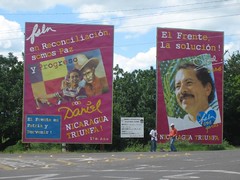
Elections in Nicaragua: Two Contrasting Paths to Choose

Daniel Ortega's billboards. Literally all over the country


Hola Gente,
We're less than a month away from the presidential elections of Nicaragua, yet it seem that the voting is taking place tomorrow: the whole country is flooded with unregulated expensive political advertising (see the picture), the parties' caravans are seem everywhere making traffic worse, and politics is in everybody's conversations regardless of where you are. Since my arrival to Nicaragua, people tell me that these are the most decisive elections in recent history. And they are definitely right.

So without forgetting our topic agriculture, let’s talk about politics for a bit as they have a direct effect on the welfare of the rural sector and the fate of agriculture (check out this post). Since the end of the Sandinista Revolution in 1989, Nicaragua has seen bipolar election campaigns: you voted for the Sandinistas or against the Sandinistas. The Sandinistas, always represented by Daniel Ortega in the FSLN party lost to; Violeta Chamorro (1990), to Arnoldo Aleman (1997) and to Enrique Bolanos (2002). Until then, the run for president was solved easily because the Sandinistas haven't been able (since 1990's) to get more than 35% of the popular vote.

This changed drastically when Aleman signed "el Pacto" (a political pact) with the Sandinistas in which some key political figures of the FSLN got permanent government positions and other political favors. This pact improved the condition of the FSLN and in return Aleman received lax treatment when his corruption charges surfaced the public. The spillover effect, however, was a strong division in the two parties which saw the pact as ideologically incongruous and driven by personal ambitions of Aleman and Ortega. The results were the following: liberals against the pact (ALN) and for the pact (PLC), and Sandinitas against the pact (MRS) and for the pact (FSLN).

Now according to polls, the Daniel Ortega (FSLN) leads with 30% of the vote, followed by Eduardo Montealegre (ALN) with 25%, Mundo Jarquin (MRS) with 15%, and Jose Rizo (PLC) 10%. Because this distribution has never taken place in the recent history of Nicaraguan, there is an overwhelming sense of uncertainty that maintains the country on a frustrating status quo. Besides the unique campaign distribution, there has also never been a runoff election in Nicaragua before, and the amount of people expected to vote appears to be unprecedented, raising questions about logistics and transparency.

What is best for the country? You may ask. This is, of course, up to the Nicaraguans to decide. That is not to say, however, that the outcome of this election will have a direct effect in Central America and possibly in the whole continent. In my opinion, Nicaraguans have to choose between a prosperity path that guarantees economic, political, and social freedom, and an already traveled path of isolation, injustices, and poverty. Although these may sound like plain broad words, I believe the voting decision of the Nicaraguans boils-down to these two paths.

The former path is represented by both Montealgre and Jarquin. Montealegre, who I had the opportunity to speak with, will ensure economic prosperity with a broad growth agenda. Jarquin, also an economist, promises sustain growth and social equity. In my opinion, Nicaraguans must be practical a vote for Montealegre as he is the one with the highest chances of winning. This election is too important to take the risk of voting for a candidate with a slight chance of winning, and only Montealegre ensures a strong vote.

Looking at my notes on Montealgre's presentation at George Washington University in Washington DC (06/15/2006), I find a candidate prepare to run the country in the right direction. Putting emphasis on transparency, economic growth, government institutions, education, and health, he has the silent support of most governments in the region (U.S support for him is controversially quite noisy). When asked about agriculture, he talked about the importance of both creating new markets for export commodities, and assisting small farmers with technical, commercial, and financial help. With an almost nonexistent local market for agricultural output in Nicaragua and with the new set of trade agreements, focusing in exports is a wise policy.

From the time when Violeta Chamorro defeated the face of the revolution in the 1990’s presidential election, Nicaragua has traveled a bumpy road similar to the thousands that lead to the rural areas. Yet, the momentum gain until now is priceless as it has built the foundations for strong growth and stability. I hope this stability is not shaken by the usual earthquakes, not geological but political, that affect the country so often. Daniel Ortega remains an enormous threat to the future and prosperity of the country and must be defeated once for all.

I finish the post providing a link to an interesting article published by the Washintopost.com. The author Roger F. Noriega from the American Enterprise Institute (conservative think tank) talks about the possible scenarios for Nicaragua in this election. Click HERE the read the article.

Monday, October 02, 2006

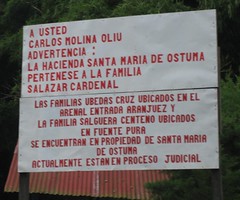
Nicaraguan Agriculture: Private Property and the Revolution's Legacy

Private Propety in Nicaragua

Private property in Nicaragua is a dubious concept in the process of being rediscovered. The country is been recovering from the revolutionaries years in which most of the productive land was confiscated by the Frente Sandinista de Liberacion Nacional (FSNL) and reorganized into cooperatives and Unidades de Produccion Estatal (UPE. State Production Units). The policies enacted during the revolutionary period created repercussions still seen today: farms with several titles, families disunited, violence over land ownership, and most important, a huge lost in agricultural productivity and national welfare.

The initial plans of the revolution of 1979 were to take possession of all the property own by Somozas’ family or by someone else who had gained it through positions within the dictatorship. There was little opposition to these actions as the Somoza regime had control and ownership of whole range of companies in several sectors: mining, construction, agriculture, banking etc. Before the revolution, even the well-off private sector was getting uncomfortable with the dynasty because they saw it as unfair state competition. For the general NIcaraguan public, this was just one of the many reasons to hate the regime and hope for change.

The initial plans for change, however, would resemble little to what most Nicaraguans had hopped the so-called “land reform” would bring. In fact, after Somoza and its followers were striped away of all property, the Sandinistas created another law in which anyone absent from Nicaragua for more than 6 months would have their property taken away.

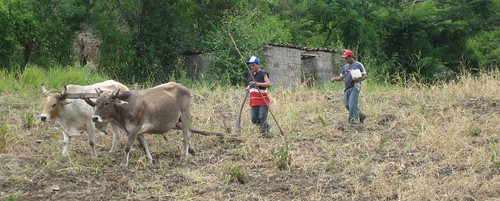
Las Sabanas, Animal Traction

These laws created an atmosphere in which private property was constantly been violated and confiscation became a normal routine. The allocation of lands and properties was completely based in clientelism bias towards sandinitas and, of course, those within the party would get the largest chunks. Holding a position in a public office was a tool to return favors to those you like, a patronage system still very common today and very similar to the years of the dictatorship. Talk to Nicaraguans and you’ll hear hundreds of stories of poor families that had their couple acres taken away by the Sandinistas, not because they were relatives of Somoza or because they went outside Nicaragua, but just because their land was nice to the eyes of somebody with party connections.

It didn’t matter anymore if you had been a staunchly opponent of the Somoza regime and had even supported the revolutionary effort, if you own a farm with cattle, cotton, tobacco, coffee, sugar cane or other goods, chances were that it would be confiscated under the most irrational excuses.

Not surprisingly, the productive sector of Nicaragua went into exile, jointed or financed the counter revolutionary force, or simply gave up. These actions affected the country’s economy enormously: in Esteli, the town where I live, after the Sandinistas took power, the owners of the tabacaleras (tobacco processing plants) ran away fearing retributions from the FSNL. Without owners and technicians, the plants were abandoned and thousands of women went unemployed.

Same story with sugar cane mills, coffee farms, and cotton plantations. Of course the U.S trade embargo played an important role in the economic crisis as the U.S was one of the main clients of Nicaraguan goods. However, the effect of the embargo was shorttermed and miniscule against the disincentives created by the Sandinistas in the agricultural sector as a whole.

Disincentives and lack of rationale was common place in the agricultural sector during those days. For instance, the Sandinistas tried to promote the utilization of Central Pivot Irrigation systems, a result of the latest in technology in the developed world. Of course, for a former farm worker who could barely read and write this new piece of technology resulted simply unsuitable. The irrigation pipes probably end up melted, same fate suffered by the Robotic Milking Systems, imported from Eastern Europe.

Las Sabanas, Plating Beans
But this nonsense top-down, technology transfer approach to agriculture was not the only reason for failure: the social structure of the rural sector was also disrupted. Farmers where not allowed to commerce their goods, even in miniscule amounts. All output needed to be collected, transported, store, and sold by the government. Ignoring the common traditions of the rural people and imposing an alien Marxist system on them was deemed to fail.

Another ridiculous policy took place when it came to harvesting the crops: thousands of students from the cities were sent to the rural regions to do these tasks. Without any experience, away from their families, and under very harsh conditions, it resulted impossible to expect a high school kid to collect cotton or to cut sugar cane under the inferno heat of Chinandega. Some farmers would even reject the students knowing that they could easily ruin the plants and the harvest. Thankfully, the policy was dropped after three years.

Finally, another disincentive created by the Sandinistas was the so called “Piñata” in which farmers were given almost everything for free. Free land, free seeds, free technical assistance, and even free labor, all resulting in a rural sector that still wants everything for free. Visit the farmers today and see their faces when you tell them of their financial contribution to the project, not happy certainly. This dependacy in foreign assistance (central government, or aid agencies), I think is, a rooted problem that will take generations to solve.

Nicaraguan agricultural sector during the Sandinista years served as a sort of playground for the politicians in the central government who tried to implement what translated Marxist literature said. This improvised lab resulted on a series of failures still seem today. With almost 30% of the population undernourished, is depressing to realize that this was a direct result of a bunch of revolutionaries trying to “help” the people.

Monday, September 25, 2006

Vegetables Gardening Videos

Hello
I came across these 2 videos of Gardening by Join Robert Norris, Associate Professor and Associate Botanist at UC Davis. They're each an hour long but definitely worth seeing. Is a class presentation so it can get a bit dull, but the material is excellent and his comments are thoughtful and funny.

Here is the first part:


and the second part:


Enjoy

Sunday, September 24, 2006

School Gardens as a Tool Against Food Insecurity


Hello All, I know it's been a while since my last post, but I've been very occupied gathering material to what is going to be a busy blog for the coming weeks.

School Gardens: I arrive to Nicaragua about a month ago. I've been working (or rather volunteering) on the Special Programs on Food Security, task force set up by the Food and Agriculture Organization of the United Nations. As an Agricultural Economist, I have the task of evaluating, from an economical point of view, the viability of school gardens when it comes to reduce food insecurity. As mentioned earlier, I have been busy visiting schools mainly in the north of the country (Somoto, Jinotega, Esteli, Madriz). Initially, I though of doing a Cost-Benefit Analysis, but the project is quite diverse and most of the benefits are in form of intangibles e.g. education, better nutrition, etc. So allow me to discuss the rationale behind the school gardens and why is it can be difficult to analyze them.

In Nicaragua about 30% of the population, especially in the rural areas, is considered food insecure. This means that they cannot produce or acquire enough food for an adequate diet. Since the repercussions of undernutrition are enormous especially in children, one must think of an immediate solution that puts food in the people's tables. Therefore, school gardens should serve as providers of nutritional food that kids can eat in their school lunch or take with them to their homes. And some school gardens are doing just that.

However, most schools don't have the experience, resources, and/or technical assistance to maintain a garden that will produce an output significant in the kids’ diet. When this is the case, we justify the gardens as methodical tools that make the learning process easier. Proponents and literature argue that gardens can be use in the teaching of math, biology, other sciences, and even language using the concept of "learning by Doing". The rational behind this is that practice will guarantee that the kids will learn the material better and easier. If this is the case, then he will be more prepared to face a situation of food insecurity. He/she for instance can get a job easier, can help their parents in their business, can even set up a garden in his house or in other words can get food easier. Sounds very good but is that really the case? How can we know? And more important is it the best choice given our limited resources?

These are some of the questions I have to struggle with for the next three months. To me is very easy to conclude that a school garden is an effective tool against food insecurity when this garden is producing lots food that is being used in the school kitchen, the kids’ homes, or even process and sold. If this is the case, is simply a matter of comparing the US$250 that cost to set up and maintain a garden for a year with the benefits: lots of food probably worth more than the garden cost, not to mention improved nutrition, education, social skills etc.

But when the gardens do not produce a significant amount of food, then is hard to see whether or not school gardens are a good tool against undernutrition. Here is the case when the intangibles must be quantified and numbers must be given to kids doing gardening. It is hard as an economist realizing that such a wonderful experience as gardening may not the best thing to do given the difficult challenges they’re facing.

I’ll keep you posted as I come up with answers to these questions. As always check the pictures at www.flickr.com/photos/rafamerchan
Best,

Thursday, September 07, 2006

Top Three Sites in Guatemala

Hello All,
Sorry it's been so long to write a post, but I've been very busy with my new job: I'm working with FAO on Special Programs in Food Security. My assigment is to analize the economics of School Gardens. These are being introduced as tools to combat food insecurity. Stay tunned, in the meantime check my three favorite places in Guatemala.

TOP 1 River Semuc Champey
(Picture on top)
This beautifull river is located in the Mountains of Alta Verapaz, about a hour from Coban. The river goes down on a cave while the lime-formed pools are filled with springs from the mountain. There are tours you can take from Coban.

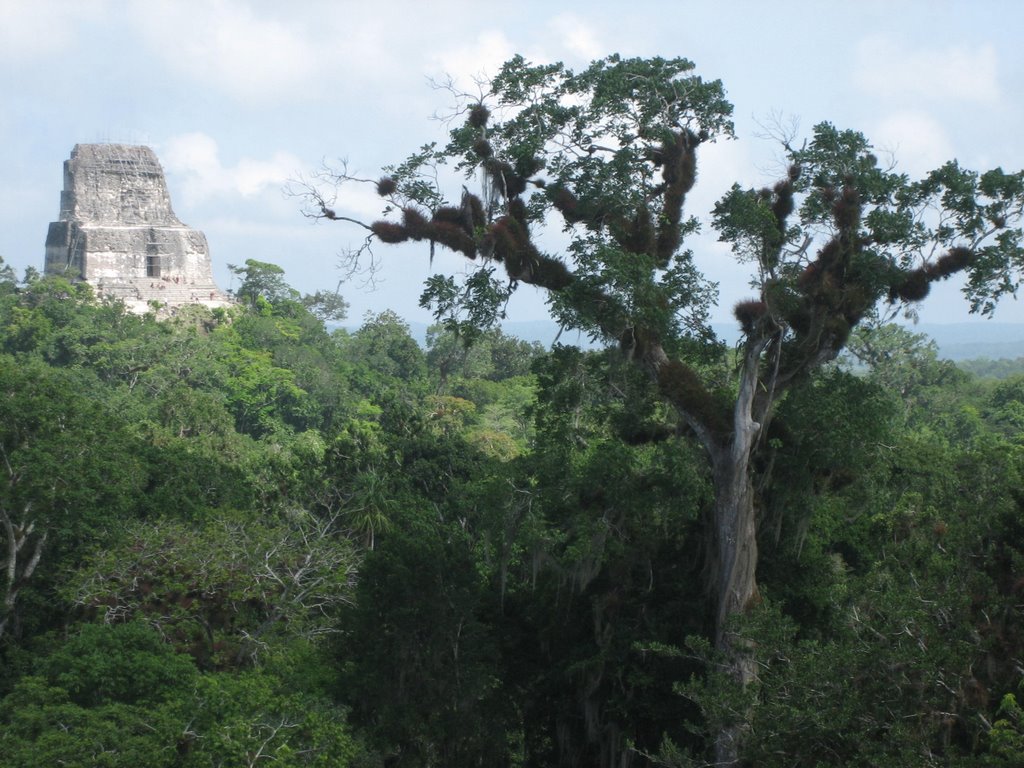
TOP 2 Tikal
The most amazing of all the Mayan sites according to many, Tikal is an exellent place to expirience the beautifull pre-columbus building of the Mayas and a lush, rich in wildlife rain forest. In the picture to the left you can see the Ceiva tree, sacred to the Mayan, and one of the many temples of the city.


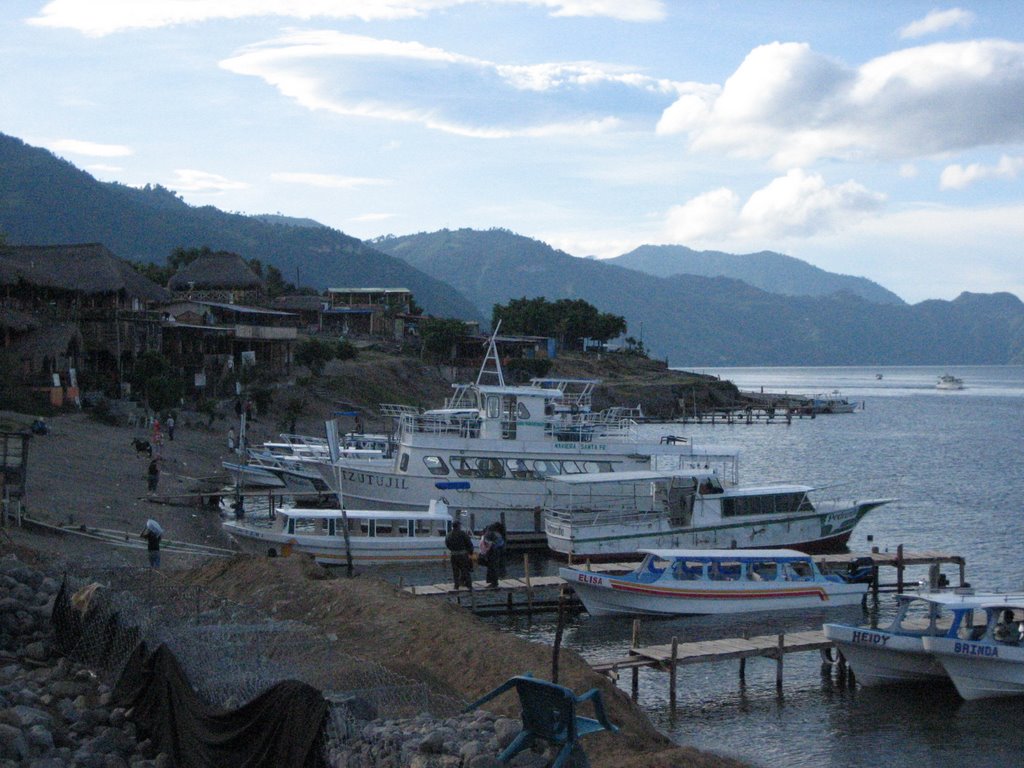
TOP 3 Lake Atitlan
And my last pic, Lake Atitlan is a unique lake surounded by two volcanos and mountains tops and rich in Mayan culture that you can find the the many towns that inhabit the lakes edges. Panajachel, the largest town, is very crowded filled with tourist and craft sellers. Take a bout to one of the smaller towns for some tranquility.

Sunday, August 13, 2006

Photos of Guatemala´s Fields

Agricultural Plots Outside Antigua
Imagen 149

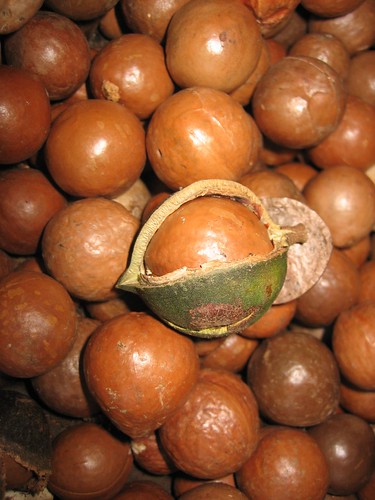
Macademia Nut Farm
Imagen 163

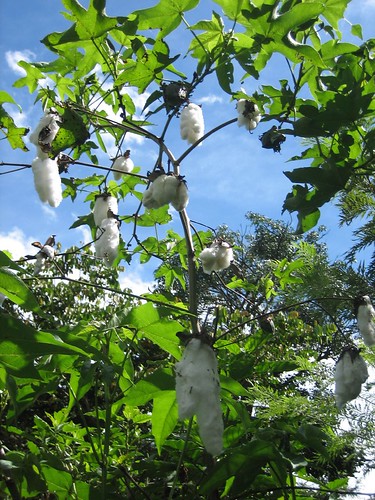
Cotton, the Raw Material for Guatemala´s Beautifull Textiles
Imagen 106

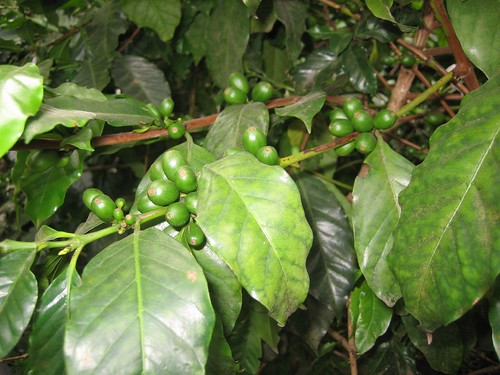
Enrich by Volcanic Soils, Guatemala´s Coffee is one of the Best
Imagen 105

Friday, August 11, 2006

Colors of Guatemala´s Markets


Saludos Seño. Check Guatemala´s latest pictures HERE

Guatemala is a country filled with colors. Right after our second day in the city, we decided to visit the capital’s Central Market in Zona 1. We were amaze at what we saw: A whole range in colors depicted in fruits and vegetables. Similarly beautiful were the colors of the dresses of the Mayan women who sell these products. Colors and odors is an experience you don’t want to miss in the country’s capital, a little taste of its amazing cultural and natural diversity.

This market, where the picture was taken, is located right in front the cathedral, which lies next to the presidential palace. One advantage of this particular market is that you’ll get the Guatemalan price as this part of the city is not frequented by tourists, who avoid it given the bad reviews of guide books. Usually, tourist are given a premium in the pricing of goods, specially crafts, so bargain is a good practice to get used to. Although crime tends to be higher in this part of the city, there is a comprehensive effort to better Zone 1, the centre of the city. The goal is to take advantage of the flow of tourist who usually set off directly towards Antigua.

Markets in Guatemala are the economic engine of the country. Though many consider this as informal economy, the contributions to the country’s growth and welfare are very significant. Central Markets are very complex indeed. They usually involve several players linked between the producer and the consumer. The Mayan lady I bought my vegetable to told me that she buys the produce from three farms in her community. She also sells to bulk buyers who go to upscale parts of the city or supply to restaurants making some profit. In other words, when you buy at the market, the produce has already gone through many hands.

That’s not to worry as this translates into employment. Guatemala as most Central American countries suffers of two-digit unemployment rate. Yet, agriculture infrastructure developed for winter markets in the U.S and Europe, along with money from the tourists industry and, unfortunately, drug trade, are employing more people than ever.
Check the recently uploaded pictures of Guatemala HERE. Also stay tuned for some videos.

Thursday, August 10, 2006

Central America Trip, First Stop: Guatemala


Hola
Disclaimer. During august, Agdes will be a travel blog. Although I’ll write about agriculture in Central America, I will also describe my trip around Guatemala, Honduras, Salvador, and Nicaragua. As some of you know, three days ago Kate and I started our trip throughout Central America. First stop: Guatemala, a country filled with beauty in culture and landscapes. Although the capital, Guatemala City, has a reputation for being unwelcoming, infested with pollution, and crime, we found it quite pleasant. The climate is very nice, mid-70´s with an enjoyable breeze in the afternoon.
Guatemalans are extremely nice and they’re the best source of information when it comes at what places to visit and what to avoid. The city is divided by zones; we stayed in Zone 1 the city centre. A little scary at night because is fairly empty, but during the day there are several churches, museums, plazas, and markets to visit.
The bohemian scene can be found at¨4 Grados Norte¨ and ¨100 Puertas¨. The first one is two blocks of cafes, bars, and cultural centres. The second a little hallway with some Cuban Trova and Spanish rock bars. There are also two excellent museums to have a better understanding of the Maya culture. The first one, Popol Vuh, is an archaeological museum divided by the different periods of the Maya. The second one, the Ixchel museum, puts more emphasis on the Mayan textiles and its meanings.
So, if you’re planning to come to Guatemala, spending a couple days in the capital is definitely worth it. Just don’t forget the universal rules of carrying little cash, avoid bad neighbourhoods and ASK the locals.That’s all for now. Stay tuned for pictures!!! Saludos RAFA

Tuesday, August 01, 2006

Promoción del Cultivo de Caucho y Palma Africana en Colombia

El periódico Colombiano El Tiempo publicó hace poco un artículo sobre la posibilidad de expandir los cultivos de caucho y palma africana en Colombia. Titulado “Es necesario aumentar áreas de cultivos de caucho y palma para depender menos de las importaciones”, el articulo argumenta que al producir mas caucho y palma africana el país se beneficiará pues dependerá menos de los mercados globales. Vale la pena analizar un par de puntos antes de presentar el cultivo de esto productos como una de las alternativas viables para el desarrollo agropecuario Colombiano.

Primero, el alto nivel de importación no debe ser motivo para fomentar la producción local del producto importado. Con algunas excepciones, estamos importando porque en alguna parte del mundo alguien lo esta haciendo de una manera mas eficiente y barata. Contrario a lo que muchas personas piensan, el sector agrario es dinámico y receptivo a las demandas del mercado mundial. Si fuera tan rentable el aumento en la producción de estos productos, como el artículo lo sugiere, el mismo sector ya hubiera empezado a expandir la producción. El que todavía sean pocas la hectáreas cultivadas indica, entre otros, problemas de cultivo, procesamiento, transporte, y falta de financiamiento para estos proyectos de largo plazo. En otras palabras, falta de rentabilidad.

Fuera de eso, el artículo no menciona el impacto ecológico que podría tener el aumento de hectáreas cultivadas. La palma africana tiende a crecer en las costas Pacifica y Atlántica, lugares con invaluable riqueza ambiental. La expansión de estos monocultivos tiene el potencial de amenazar la diversidad tanto biológica como étnica (Palma Africana y las comunidades Afrocolombianas) de las zonas donde se cultivarían. De todas formas esta es una posibilidad entre otras, pues como es el caso en Tumaco, Nariño, la palma esta siendo plantada en antiguos potreros de ganado.

Aclaro que la idea de expandir la producción no es mala, la falacia esta en la justificación que se da para esta. Basados en las fluctuaciones del mercado y su posible rentabilidad, es que se deben tomar las decisiones de cuanto y cuando producir. Fuera de eso, pueda que el cultivo de palma traiga beneficios ignorados en el artículo. Beneficios tales como mayores fuentes de empleo, innovación e inversión en nuevas tecnologías, alternativas para cultivos de uso ilícito etc. Todos estos elementos se deben tomar en cuenta al promover políticas agrarias.

Saturday, July 29, 2006

Video Tour of my Garden

Hola
For those of you that have been asking about my garden, here is a quick tour of it.
The quality of the video is not the best, but you can see what I'm growing at the moment (late july 06). The garden is located in Blair Road Community Garden Association, Washington DC. If you just want to see pictures of the plot click HERE
Enjoy

Programs on International Development. Pt 2

Hola
Browsing the internet I found a very usefull document published by Queens University of Canada. The orginal format was a Word document, but I copied the content into this post so you can have better access to its exellent links. To see the original source please click here. This information is for educational purposes. If used, please give credit to the source.

See infomation below
Graduate Programs in International Development

Canadian Universities
A helpful site to use while researching graduate programs in Canada is: www.idsnet.org/ccupids

University of British Columbia (www.ubc.ca)

Graduate programs can found in four areas at UBC:

Department of Geography (www.geog.ubc.ca)
See: Winter 2002-2003 Graduate Program Brochure
http://www.geog.ubc.ca/~mluk/NewApplicant/NewBrochure02-03.pdf


The Sustainable Development Research Institute (SDRI)
http://www.sdri.ubc.ca
Email: sdri@sdri.ubc.ca

The Institute for Resources and Environment (IRE)
Resource Management Environmental Studies Program
http://www.ire.ube.ca/y2k/ire/html/home.htm
Email: rmesgrad@interchange.ubc.ca

The Liu Centre for the Study of Global issues
http://www.liucentre.ubc.ca
Email: liuctre@interchange.ubc.ca


Dalhousie University (www.dal.ca)

Master of development economics with concentration in international development studies

International Development Studies at Dalhousie
http://www.dal.ca/~intdwww.html
Tel.: (902) 494-3814
Email: ids@is.dal.ca

Contact: Dr. Pauline Gardiner Barber
Tel.: 494-2523
Email: pauline.gardiner.barber@dal.ca

Related organizations at Dalhousie:
Lester Pearson International
The Society for Corporate and Environmental and Social Responsibility

Carleton University (www.carleton.ca)

Master of Arts in International Affairs
Three core sections: development studies, conflict analysis, international political economy

Also: Joint Master of Arts in International Affairs and Bachelor of Law degree
Offered through the Norman Paterson School of International Affairs and the Common Law Section of the Faculty of Law at the University of Ottawa

Contact: international_affairs@carleton.ca


University College of Cape Breton (www.uccb.ns.ca)

Master of Business Administration in community economic development

Faculty: School of Business
Contact: gmacinty@uccb.ns.ca
Tel.: (902) 563-1467


University of Guelph (www.uoguelph.ca)

MA in International Development Studies

MSc in International Development Studies

Contact: Collaborative International Development Studies Program
Sally Humphries (Director)
Email: shumphri@uoguelph.ca
Graduate Secretary
Email: CIDS@css.uoguelph.ca


Saint Mary’s University (www.stmarys.ca)

Master of Art in International Development Studies


University of Northern British Columbia (www.unbc.ca)

Master of Arts in International Studies

Contact: International Studies Program, Lana Diaz
Tel.: (250) 960-6668
Email: diazl@unbc.ca


University of Toronto

Development Studies can be pursued at the Graduate level in three departments at the University of Toronto:

Geography: www.geog.utoronto.ca
See: International Development
Email: geograd@geog.utoronto.ca

Political Science: Political Economy of Development (PED)
Requirements for the program are: political science, undergraduate level microeconomics, macroeconomics, and statistics
Contact: Carolynn Branton (Graduate Secretary)
Tel.: (416) 978-2017
Email: artsci.utoronto.ca

Sociology:
Contact: Jeannette Wright
Telephone: (416) 978-3414
Email: wright@chass.utoronto.ca


International Universities

British Universities

See: http://www.ids.ac.uk/courses for complete list of graduate programs in Development Studies

A printed guide is also available: Development Studies in Britain, A Select Course Guide
For a copy, contact l.j.knight@bradford.ac.uk


US Universities

See: www.gradschools.com/listings/all/intlDevelop.html for information on Graduate Schools in the United States in International Development

Friday, July 28, 2006

Integrated Farm Management in Benin

Hola
It's about time to start adding more media technology to the blog.
I found this video surfing the internet. It describes an on-going project in the west African country of Benin. The project, Songhai Centre Commitment to Excellence,
is a perfect example of what developing countries are doing to address the social and economic problems facing their nations.

Although I've seen several models similar to this one, the Songhai Centre is unique on its emphasis on markets. Farmers in Central America and Sub-saharan Africa need income generating activities that can get them out of poverty traps. Sure sustainability, participation, gender equality and other components of projects are pluses, but a model that does not increase income is unsustainable in the long run.

To learn more about the project and the organization visit

Songhai Centre Commitment to Exellence

check the video:

Thursday, July 27, 2006

Colonial Gardening

Also...
New Pictures from the gardens of Colonial Williamsburg and Moticello, Jefferson's Farm House. Both places have demostrations of colonial gardening using heirloom seeds and old, very old techniques.
Check the pictures HERE

Hasta la vista

Graduate Programs in International Development. pt. 1


Graduate School is next for me and finding the right university is not easy task. I’m interested in international development, with a lot of emphasis in agriculture. The cross-sectoral nature of agriculture must be the main component for a good understanding of developmental studies. Of course there other very important subjects that should be cover in an ID master’s, but rejecting or paying little attention to agriculture’s role in development is a big mistake.

Anyway, I’ve been talking with several people in the development circles and they all seem to agree that if you’re looking for a graduate program in international development and agriculture you should look towards land-grant Universities. I’ve done just that and so far here are my favorites: U.C Davis, Cornell University, and Michigan State. Stay tune for some review on these programs.

In the meantime, here are some link of national and international universities with programs on international development that you may find usefull in your search.
chao

Wageningen University, Master in International Development Studies http://www.mid.wur.nl/UK/

Institute of Development Studies, MA Science, Society and Development http://www.ids.ac.uk/ids/teach/mascience.html.

Harvard, Master in Public Administration in International Development http://www.ksg.harvard.edu/programs/mpaid/


McHill, International Development Studies http://www.mcgill.ca/ids/ M.S Agricultural Economics http://www.agrenv.mcgill.ca/agrecon/grad/overview.htm

Duke University, The Program in International Development Policy http://www.pubpol.duke.edu/centers/dcid/pidp.php

Toronto University, International Development Studies http://www.utsc.utoronto.ca/~socsci/ids/index.html

Brown University, Development Studies Program http://www.watsoninstitute.org/ds/masters.cfm

Colorado State, International Development Studies HERE


Also, gradschools.com has a list with 81 universities that offer Masters in International Development. Follow this link:

http://programs.gradschools.com/usa/international_development.html


Thursday, July 13, 2006

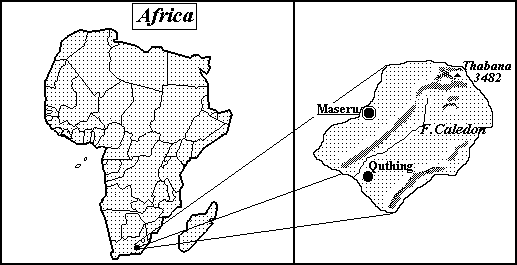
Photo Gallery of Lesotho: Agriculture, Faces, and Landscapes


In January 2005 I had the wonderful opportunity to visit the Kingdom of Lesotho. Located in Southern Africa, this country is one of the three in the world completely landlocked by another country (South Africa).

Lesotho, the Switzerland of Africa, offers beautiful landscapes, delicious food, and best of all welcoming people. This characteristic allowed me to go a little beyond the tourist eye and explore the culture of the Basotho.

Today, after months of procrastination and with a unlimited capacity account on FLCKR, I decided to scan the pictures I took in my trip to Lesotho. One by one you’ll see small details that make this country uniquely stunning. I’ve tried to add as much information as possible on each photo but as you may know “A picture is worth a thousand words”.

There are two photo sets: one on Lesotho in general available HERE and another on Lesotho’s Agricultural Sector available HERE.

Enjoy
rafamerchan

Wednesday, July 12, 2006

Saturday, July 08, 2006

Cursos por Internet en Agroecologia y otras Areas de Agricultura

Saludos
REDCAPA es una organizacion que organiza diversos cursos en agricultura, con la alianza de distintas universidades. El programa se lleva a cabo en linea, y usualmente duran 3-4 meses. Abajo encontraras mas informacion sobre la lista de cursos mas reciente.

Desde REDCAPA le informamos acerca de nuestros Cursos por Internet para el período de septiembre-diciembre del 2006:
Encuentre todas las informaciones en:
este link

CURSOS EN ESPAÑOL:

Agroecología: diseñando agroecosistemas biodiversos y sustentables
REDCAPA, Universidad de California en Berkeley y SOCLA
Profesores: Miguel Altieri y Clara Nicholls.
Inscripciones hasta el 04 de septiembre de 2006.

Formulación y evaluación de proyectos agrícolas y agroindustriales
Universidad Austral de Chile y REDCAPA
Profesor: Ing. Agr. Dr. Juan Lerdon
Inscripciones hasta el 04 de septiembre de 2006.

Métodos Participativos en el Desarrollo Rural Sustentable
REDCAPA
Profesora: Julia Guivant
Informaciones en: Inscripciones hasta el 04 de septiembre de 2006.

Wednesday, July 05, 2006

Urban Agriculture in Lesotho

Lesotho Urban Ag

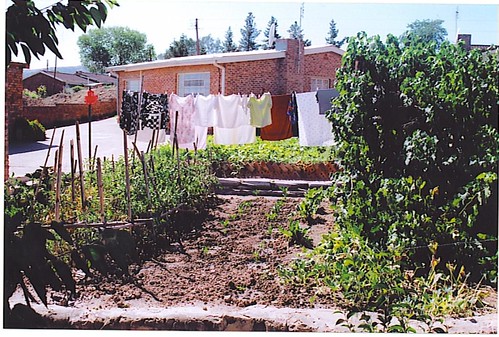
Maseru, the capital of Lesotho, is an overcrowded city located in the lower lands of this mountainous country. The night I arrived in the city I was only able to hear the incessant noises of taxis honking at pedestrians, as if they all needed one. But it was the first morning while driving around this city that I realize how most of the houses have productive gardens. It was amazing to see how Basotho are growing tomatoes, spinach squashes, and maize in pretty much any available space around their homes. In my neighborhood, Maseru East, eight out of ten houses grow different vegetable and fruits. This was a pleasant surprise as I was getting used to the typical North American house with huge unutilized lawns. After seeing the important role home gardens play in the cities of Lesotho, I decided to do my research on Urban Agriculture and how these productive gardens are securing Basotho’s food supply.

The Concepts of Urban Agriculture and Food Security
It is hard to imagine cities and agriculture together as most of us tend to see agriculture as a rural activity. In fact, urban agriculture is sometimes perceived as old-fashioned, temporary, and unsuitable, a view I found widely spread among the officials in Lesotho’s Ministries of Agriculture and Education. However, this common view ignores the fact that urban agriculture is a significant economic activity, central to the lives of tens of millions of people throughout the world. Moreover, in countries like Lesotho where hunger and malnutrition are predominately urban problems, home gardening can contribute significantly to reduce problems of undernutrition and food insecurity.

Although urban agriculture is a recent phenomenon in some parts of the world, traditionally different cultures farmed intensively within and/or at the edge of the city. In developing countries, where cities are characterized by having a large population of people migrating to the cities, home gardening is widely practiced. This can be explained by the fact that most of these people do not have other skills that would allow them to get jobs in the cities, so their income generating activities are very limited. With very little money to acquire food, the most basic need, people have no alternative but to grow their own.
This last aspect brings up the issue of food security: “access by all the people at all times to enough food for an active, healthy life” Reutlinger. Food security can be expressed by an equation that compares the value of the food production deficit in a household with the income and liquid assets that a household has available to purchase food (Leather, Foster, 2004). In other words, you are food secured when you can buy or produce the same or more food that your body requires. If you do not have land to grow food or money to buy it, you will suffer from undernutrition. In Lesotho, with an unemployment rate of 45% many people don’t have the income necessary to purchase food so they have to produce it. Nevertheless, lack of money to purchase food is not the only incentives to grow food.

Overview of Lesotho’s Problems
Food insecurity and poverty have reached alarming proportions in Lesotho with ever increasing numbers of people needing food aid and or other forms of assistance in recent years. In 2004, the prime minister of Lesotho Pakalitha Mosisili, estimated that 600,000 Basotho are faced with starvation unless they are given food aid, mostly coming from international donors (Phororo 1999). This figure shows a steady increase as in 2002 the number of people facing starvation was 500,000. Part of this increase can be explained by important factors that have been taking place in Lesotho for the past two decades: First, the advent of HIV/aids related diseases and the repercussions these have in the much-needed labor force for the agricultural and manufacturing sectors. Second, the diminishing household incomes as a result of limited job opportunities and job losses caused by the retrenchment of huge numbers of Basotho men from the South African mines. There are other important factors that have also contributed to the alarming food insecurity in Lesotho; An inappropriate land tenure system, aid dependency on foreign donors, land degradation mostly caused by erosion, and a perpetual drought that have been present for the last 5 years (Thabane, 1998). Each of these factors is very complex and required in-depth discussion that, due to space constraints, I cannot cover on this paper.
Urban agriculture can played an important role in tackling the problems mentioned above as it enables the people to produce their own food not only for their consumption but also for income generation. The availability of food that a home garden can provide ensures a balance diet, essential for a healthy labor force and vital for people infected with HIV/Aids .

Interview in Maseru East
Maseru East is a neighborhood located in the eastern part of Maseru. Most houses are situated on a hill that borders a stadium and air force landing field in the north, and a big water reservoir in the south. This reservoir provides a good portion of the water used in the gardens of Maseru East. My host family’s house is located in the middle of the neighborhood. My host dad, Ralikariki Molapo, has been living in that area for more than 10 years, so he pretty much knows everybody in the vicinity.
The interviews were rather informal dialogues I had with people on the area of Maseru East. I visited about 20 households from which only one did not have a garden. The questions ranged from the history of the families and the meaning of their names, to the money they spend on inputs and the crops grown in their garden.
Basotho, friendly as they are, like to talk a lot and rather than following a fixed questionnaire I listened most of the time as they were eager to tell me about all the things they were doing with their plots. Responders answered pretty much most of the questions, but for the yields harvest and the prices paid for inputs they could not remember the exact numbers. This can be explained as very few of them have an organized accounting system.
The economic status of the Basotho living inside the neighborhood is extremely diverse. These can be best seen by the types of houses. Ralikariki Molapo’s house is a three bedroom, one story house with western amenities, but right in front of it there is a hut built with aluminum siding very similar to those seen in the shantytowns of Soweto (see attachement A and B). Thabo, the owner of this hut, makes a living by crafting mud- bricks. He then sells them in bulk to construction sites around the area.
Both Ralikariki and Thabo cultivate a productive garden, yet they have different reasons for doing it. Ralikariki enjoys gardening and has been doing it since he was a kid. In elementary school, he and his classmates spent a lot of time in the experimental plot and in the classrooms taking about agriculture. As expressed by Libusena Berena, an estension agent at the Department of Field Services in Maseru “agriculture is a way of life we inherit from our parents”. On the other hand, Thabo practices agriculture to supplement income he gets from the sale of bricks. This does not mean that Thabo does not enjoys working in his garden; it rather means that he has no other option but to produce his own food.
Mamasello, another of the interviewees, is 70 years old but her hands are still very strong to till the land and to pull the carrots out of the soil. -The way you can tell the carrots are ready- she said –is by looking at the base of the plant and check whether the soil is cracked-. When the carrots are big and sweet the dry soil on top of them breaks, as it has to leave room for the expanding carrots. I met Mamasello the second day of my stay in Maseru East and it was thanks to her that I decided to do my research on urban agriculture. That morning Mamasello showed me how agriculture is so important for the Basotho. She also introduced me to other families who enthusiastically showed me their gardens.

Lesotho Tools


Urban Agriculture in Lesotho
Urban agriculture in Lesotho is practiced mostly by women. Most of them were married and head the household as their husbands often work in the mines of South Africa. They said that the main reasons they engage in urban agriculture are to supplement household food supply and to save money. Urban agriculture is then an important, but not main source of income. Salary wages and remittances from their husbands in South Africa are the main sources of income for these families.
I also found that the respondents engaged in home gardening consume most of the harvest yield leaving the surpluses for sale or barter. This trade takes place between neighbor as the quantities are small and the supply irregular. In addition, selling one’s vegetables can become problematic as many in the neighborhood grow the same crops and harvest during the same periods. These factors tend to reduce the prices making it difficult to make profit. However, there is some initiatives taking place to organize mini-markets, construct communal storage facilities, and get transportation so products can be sold in other parts of the country.
The main crops I found in the gardens were: Cabbage, tomatoes, corn, carrots, sepaile, spinach (Swiss chard), potatoes, green beans, pumpkin, turnips, peas, and rapa (vegetable with edible taproot and leaves). This diversity in vegetables ensures a balanced diet that can combat undernutrition. Vegetables like peas and rapa are good sources of protein, replacing the sometimes unaffordable meat. Corn used to make papa and to feed the livestock, is a good carbohydrate. Cabbage is the most widely grown vegetable both in summer and in winter because of its low productivity cost, high yields, and marketability. Unfortunately, their nutritional value is very low compared to other greens also grown in Lesotho like spinach, pumpkin leaves, and green beans. Cabbage is low in protein, iron, vitamin, A B1, B2, and Niacin (Ministry of Agriculture, 1994).
Common practices I found in the gardens included fencing, raised beds/terracing, manure use, composting, and intercropping. The fence is essential as it protects the crop from animal commonly found browsing around the neighborhood. Manure from cows, pigs, and poultry is often mixed with ashes left from cooking. This great natural fertilizer is applied to the crops, improving soil fertility and increasing the retention of moisture. Because the space is often limited, the intercropping must be intensified, preventing erosion from taking place.

Final words
The first day I visited a garden I found myself with big list of things people could do better, or more efficiently. Nevertheless, this naïve view changed as I spent more time with the people in their plots. That is how I realized that they are being as efficient as possible. For instance, I noticed that very few practice composting. But later I realized that every leftover is used to build, feed, or cure, and there is simply very little mulch to put in the compost. One thing that I still think can be done with the support of the government or the civil sector is the installation of water tanks so rain can be stored for the dry season. Although some houses have them, they are an expensive investment that very few people can afford. That is why the government or NGO’s need on be part on their promotion. Urban agriculture is therefore an important activity that needs not only to be recognized by the government of Lesotho but also encouraged, promoted, and supported. However, urban agriculture is not the panacea, as the income it provides is little and the labor requirement high. Home gardening is rather part of a solution that include major support to the farmers in the rural areas, elimination of the dependency on foreign food aid, food for work projects, and participatory approaches to rural and urban development. Thus, as expressed by Thabo, Ralikariki, and Mamasello the government needs to pay more attention to their needs and to those of the community.

Tuesday, June 27, 2006

Kate's Spiral Garden


Kate's Spiral Garden
Originally uploaded by rafamerchan.
The spiral garden of my girlfriend is now cover with beautiful colors, intense flavors, and lasting aromas. Ranging from Pineapple Sage and Cilantro, to Heirloom Lettuce and Rosemary, the garden has made our summer cooking experience unforgettable.