Showing posts with label School Gardens. Show all posts

Monday, November 27, 2006

School Gardens in Nicaragua

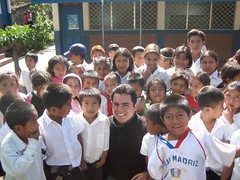
The kids we work with at Quebrada Honda School in Madriz, Nicaragua

Hello,
The picture was taken in a school at San Jose de Cusmapa, Madriz. This state one of has the worst food insecurity indicators in Nicaragua.
Bellow is a summary of the School Garden project we're conducting. The report is not ready yet so this is rather a draft, yet it has some info you may find useful.

Project Rationale and Priorities

The main objective of PESA Nicaragua is to contribute to the access and availability of food and to improve the nutritional situation of the 16 municipalities where the project currently exists.

One of the many initiatives to achieve such objective is through the implementation of school gardens which are improving the food security of the communities where they are being grown. This is done mainly through both education and production. The gardens are used as tools for the teaching of the concept of nutrition, e.g. the importance of a balanced and diverse diet. The garden activities engage children more than the traditional confines of the classroom, guaranteeing a clear understanding of food and its role in their wellbeing.

A school garden encourages local children to transfer the gardening techniques learned in the school garden to gardens in their homes, introducing new vegetables into their diets and that of their families. In addition, the garden products can be used as complements to a School Lunch Program, whereby food can be taken home by the kids, or sold at the local markets.

Although school gardens around the world have been used to generate income, promote community participation, and improve the teaching of applied curriculum activities, the priorities of this project are the effective teaching of a) nutrition and b) practices of growing vegetables and other foods. This is not to say that the other components mentioned above are not important. In fact, there are some schools where the teaching of science, math, and other assignments through community gardens is achieved with good results. Nevertheless, FAO through the PESA project expects augmented nutritional and production patterns in the communities where the project is been implemented.

Such impact should be measured through: improved understanding of nutrition; recognition and consumption of new vegetables and fruits; creation of home gardens at the children’s homes; and, of course, a reduction of under-nutrition indicators.

Location and Size

The representation of FAO in Nicaragua has been working in school gardens for the past year. Thus far, FAO-PESA in alliance with members of the private, civil, and public sectors (see annexes) have set up about 60 gardens in the north and central region of the country, prioritizing those counties with severe under-nutrition indicators. The school gardens are mainly found in rural communities, but there are some gardens that have been implemented in the peri-urban belt of Managua.
There are about 14,000 students participating in the gardens in six different Nicaraguan states. In addition, 450 teachers, extension agents, and social workers have been trained to set up and oversee the school gardens.


Beneficiaries

The FAO-PESA provides training in setting up and running a school garden to extension agents of private and public entities, social workers, teachers, instructors, and parents. Nonetheless, the main beneficiaries of the school garden project are the children and their families. The project also expects positive influence on the community as a whole, resulting from better community organization, improved school environment, and, of course, healthier and brighter children.


Main Components

The methodology of the project can be divided into four main components: 1) Organization; 2) Education; 3) Nutrition; and 4) Production.

PESA considers community organization as one of the main means of achieving its goal of improved food security. Organization is key for guaranteeing the sustainability of the school garden project and the involvement and commitment of the participant agents. Before implementing the garden, the project assesses the level of interest of the parents, teachers, students, and other participant organizations in the area. If the level of organization and enthusiasm is adequate, committees are formed with specific tasks, e.g. watering, harvesting, security, etc. The parents participate in the committees conducting heavy labor that is inappropriate for children. They also play a crucial role during vacations as they have to ensure that the gardens are well maintained.

Education is another important component of the project as gardens can be used as tools in practical curriculum. Advocates of experimental learning like Jean Piaget and Maria Montessori have acknowledged the tremendous success of these techniques. School gardens can be used in subjects such as math, science, environmental studies, and even writing and arts. At a recent meeting, teachers were eager to show us the result of creative artistic work for labelling the garden beds and other decorations inside the garden. Also, the change of environment from a classroom to the garden has proven to provide positive impacts in the learning capabilities of children. California is a leading example in this area, as the state-wide campaign for greening the schools and using gardens for applied curriculum have had excellent results.

Nonetheless, the primary curricular component that the project wants children to clearly understand is nutrition. The project believes that a positive difference in food security can be made by changing the diet patterns of children at the school and, subsequently, at home. As a result, school gardens are used to introduce new vegetables that already exist in the communities but are not widely consumed. In addition, healthy snacks such as fruit and some vegetables are being encouraged as replacements for packaged munchies and sodas. Changing the diet habits of an adult is far more difficult that changing that of a child, and if the children are participating in the production of such new products, incorporation into the diets of children will be much easier.

The last subject is no less important than the others. Good production and a healthy garden are essential to keep the participants motivated and enthusiastic. In this regard, the project provides training in vegetable production using different techniques such as drip irrigation, raised bedding, tire gardening, and Earth Boxes (see annexes). Training in weed and pest management is also provided emphasizing the used of local resources and organic pesticides. For instance, neem tree seeds have been used widely as a repellent against Aphids, Coccoids, and Lepidoptera.

As mentioned before, the outcome of the garden is used in the school kitchen as a complement of a school nutrition program. However, there is no way a school garden will be able to replace such a program. Gardening is a difficult task that depends in a lot of variables like water, soil, light, pests, inputs, labor, etc. Thus, having a school food program that relies solely on the products from the garden is unwise and could put children in jeopardy.

There is evidence, however, of some school gardens in Sub-Saharan countries that depend on the school gardens to provide for a feeding program. Similarly, there are school gardens that effectively sell their harvests, process the food into value added, and obtain significant income from the gardening activities. Yet, these tend to be schools with decades of experiences at gardening, and under different conditions of those in Nicaragua.


Cost and Benefits

A
cost-benefit analysis has been challenging to put in place as most of the benefits of the garden take the form of intangibles. There is still much controversy in the economic literature regarding the quantification or returns of benefits such as education, improved nutrition, better organization, etc. In this regard, my study lacks the tools and the time to gather primary information for a strong qualitative data set. However, I’m relaying on other studies to estimate the contributions of improved primary education, enhanced nutrition on children, and superior communal organization. Such studies quantify lost revenue for not having a school degree, or the forfeited wages due to illness, an indirect cause of malnutrition.

The only quantifiable benefit in a school garden project is the production coming out of the gardens. In this regard, garden production can be quantifiable by estimating the output per square meter and the commercial price of vegetables such as tomatoes, radishes, cucumbers, squash, onions, and beets among others. The results so far show that the financial contribution of such production is minimal compared to the investment required in setting up a school garden. However, students and parents have expressed in different workshops the advantage of not having to spend money in some items of their food basket. On this point, I have to emphasize that we are working with communities making less than two dollars a day, so small savings coming from the garden production are greatly appreciated.

Concerning the cost calculations of the project, the study has determined that it costs about US$300.00 to set up a garden with the necessary inputs for a year of production. Included in these calculations are tools, worm castings or compost mixture, fertilizer, some organic pesticides, seeds, and transport. I am in the process of calculating cost of technical assistance and opportunity costs of all the participating agents in the garden.

From a rigid financial point of view and assuming production to be the main benefit, gardens are an inefficient tool, as the school will be better off by obtaining the vegetables at the local market. This action would save time for both teachers and students, increase school space, make access to food more reliable (free from worries about pests and other problems), and contribute to the local economy by purchasing from nearby farmers. It may even be the case that the total quantity of food that US$300.00 can buy over a year is higher than what a garden could produce during the same period of time, implying that a cash transfer is a wiser option.

Nevertheless, the main benefits of the school garden are not on the production side. As mentioned before, they can be summarized in a better understanding of nutrition, so the children can make more educated decisions regarding their diets. Changes like the diversification of consumption patterns that include more and new vegetables and fruits that can be accessed locally is the project’s main goal. These changes will guarantee a reduction in malnutrition levels, and the adequate presence of micro nutrients that are so essential for the development of children and their future livelihoods. Therefore, school gardens appear to be an appropriate tool in the fight against food insecurity.


Main Issues

Even though Nicaragua has seen initiatives of school gardens dating back to the 40’s and 50’s, the sustainability of such programs has never been ensured. The U.S., under the Alliance for Progress (former USAID) promoted the use of gardens widely. In a similar way, and under the pressure from food scarcity, the Sandinista government sponsored in the 1980’s a nation-wide strategy for the implementation of school, community, and home gardens. However, the school gardens have never been implemented into the school curriculum, and no national agency has taken responsibility for their sustainability. Most of the promoters came from the civil sector and acted in an Ad Hoc way, with few linkages to research, extension, and educational intuitions of Nicaragua.

Although these aspects have been changing progressively (the Ministry of Education signed an agreement for a pilot program with school gardens and Nicaragua’s Agricultural Research and Extension Institute has been of the main participants of the school garden project), the sustainability of the school gardens in term of funding, technical support, and other aspects remains uncertain.

Another drawback of the school gardens is technical assistance. Vegetable gardening in particular requires careful oversight as these crops tend to be extremely susceptible to water depravation and vulnerable to a host of pests. So far, the amount of literature available to the instructors at the schools is limited. Although there are several manuals and guides in school gardening, the project is in the process of adapting those to the local circumstances.

The project is also using a technology called Earth Boxes. A close facsimile to tire gardening, the boxes maximize water usage and vegetable production (www.earthboxes.com). Although the sustainability of this technology is questionable as each cost about US$40 (they have been donated by Growing Connections), the boxes bring to the garden an attractive component that makes students and instructors more willing to participate.

The last issue has to do with the way many people in the project and at national institutions see school gardens. For them, gardening has no place at a school and sees no connection between a school garden and education and nutrition. These are typical misconceptions that will take time to change.


Annexes

List of organizations participating in the School Garden Project. NGO (1), Government (2), Private Sector (3)

Alcaldía de Managua. 2
Fundación COEN. 1
Fundación Familia Fabreto. 1
INPRHU. 1
Alcaldía de Las Sabanas. 2
CISA Exportadora. 3
INTA. 2
Fe y Alegría. 1
Europa Motor. 3
Café Soluble. 3
Continental Airlines. 3
Ganadería Santa Elisa.3
Cristiani Sánchez. 3
Química Word. 3
Televicentro Canal 2. 3
BANCENTRO. 3
Kola Chaler. 3
CARLAFISA. 3
Enrique Zamora. 3
COASTAL. 1
Fundación Pantaleón. 1

"it is imposible to fight poverty when we pay the poor to remain that way" something like that, but you get the message right?. Milton Friedman
Wednesday, October 25, 2006

International World Food Day. Oct 16

Hello,
Last week we celebrated the International World Food Day (WFD), as well as, the creation of the United Nations Food and Agriculture Organization in 1945. Coincidence or not, FAO has been working extensible in the reduction of food insecurity around the world, and Nicaragua is not the exception.

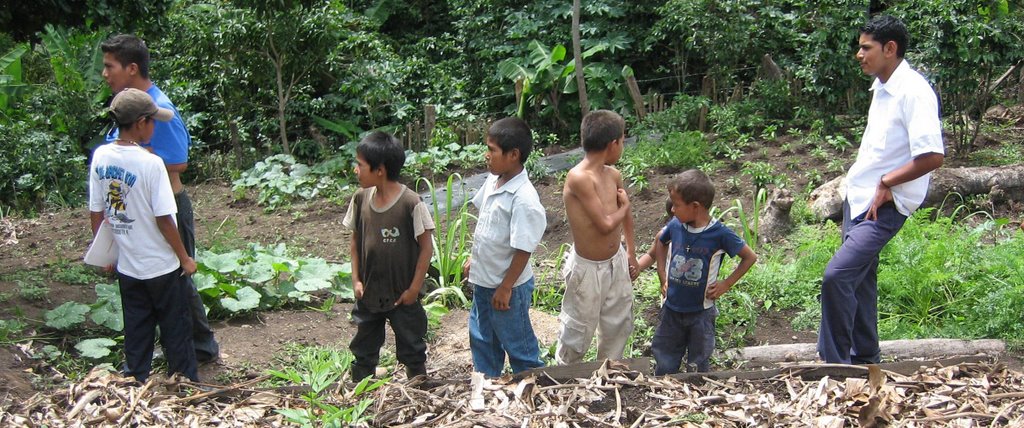
There is now a global consensus on the fact that the fight against hunger requires a comprehensive approach: is not just about increasing yields as it used to be. The fight against hunger is also about creating new markets, promoting conservation and valued added practices, organizing the communities, and, of course, ensuring jobs and education. To accomplish these, however, there must be an alliance among the different components of a society e.g. government, NGO’s, donors, private sector. Our program on School Gardens is a good example of how different sectors can get together and work towards a common goal, food security. Bellow find a video FAO-PESA prepare for the WFD 2006.
Enjoy.

Sunday, September 24, 2006

School Gardens as a Tool Against Food Insecurity


Hello All, I know it's been a while since my last post, but I've been very occupied gathering material to what is going to be a busy blog for the coming weeks.

School Gardens: I arrive to Nicaragua about a month ago. I've been working (or rather volunteering) on the Special Programs on Food Security, task force set up by the Food and Agriculture Organization of the United Nations. As an Agricultural Economist, I have the task of evaluating, from an economical point of view, the viability of school gardens when it comes to reduce food insecurity. As mentioned earlier, I have been busy visiting schools mainly in the north of the country (Somoto, Jinotega, Esteli, Madriz). Initially, I though of doing a Cost-Benefit Analysis, but the project is quite diverse and most of the benefits are in form of intangibles e.g. education, better nutrition, etc. So allow me to discuss the rationale behind the school gardens and why is it can be difficult to analyze them.

In Nicaragua about 30% of the population, especially in the rural areas, is considered food insecure. This means that they cannot produce or acquire enough food for an adequate diet. Since the repercussions of undernutrition are enormous especially in children, one must think of an immediate solution that puts food in the people's tables. Therefore, school gardens should serve as providers of nutritional food that kids can eat in their school lunch or take with them to their homes. And some school gardens are doing just that.

However, most schools don't have the experience, resources, and/or technical assistance to maintain a garden that will produce an output significant in the kids’ diet. When this is the case, we justify the gardens as methodical tools that make the learning process easier. Proponents and literature argue that gardens can be use in the teaching of math, biology, other sciences, and even language using the concept of "learning by Doing". The rational behind this is that practice will guarantee that the kids will learn the material better and easier. If this is the case, then he will be more prepared to face a situation of food insecurity. He/she for instance can get a job easier, can help their parents in their business, can even set up a garden in his house or in other words can get food easier. Sounds very good but is that really the case? How can we know? And more important is it the best choice given our limited resources?

These are some of the questions I have to struggle with for the next three months. To me is very easy to conclude that a school garden is an effective tool against food insecurity when this garden is producing lots food that is being used in the school kitchen, the kids’ homes, or even process and sold. If this is the case, is simply a matter of comparing the US$250 that cost to set up and maintain a garden for a year with the benefits: lots of food probably worth more than the garden cost, not to mention improved nutrition, education, social skills etc.

But when the gardens do not produce a significant amount of food, then is hard to see whether or not school gardens are a good tool against undernutrition. Here is the case when the intangibles must be quantified and numbers must be given to kids doing gardening. It is hard as an economist realizing that such a wonderful experience as gardening may not the best thing to do given the difficult challenges they’re facing.

I’ll keep you posted as I come up with answers to these questions. As always check the pictures at www.flickr.com/photos/rafamerchan
Best,

Wednesday, July 05, 2006

Urban Agriculture in Lesotho

Lesotho Urban Ag

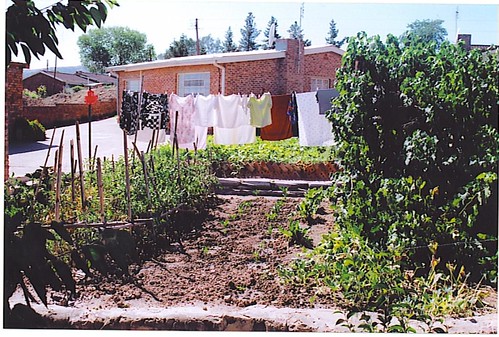
Maseru, the capital of Lesotho, is an overcrowded city located in the lower lands of this mountainous country. The night I arrived in the city I was only able to hear the incessant noises of taxis honking at pedestrians, as if they all needed one. But it was the first morning while driving around this city that I realize how most of the houses have productive gardens. It was amazing to see how Basotho are growing tomatoes, spinach squashes, and maize in pretty much any available space around their homes. In my neighborhood, Maseru East, eight out of ten houses grow different vegetable and fruits. This was a pleasant surprise as I was getting used to the typical North American house with huge unutilized lawns. After seeing the important role home gardens play in the cities of Lesotho, I decided to do my research on Urban Agriculture and how these productive gardens are securing Basotho’s food supply.

The Concepts of Urban Agriculture and Food Security
It is hard to imagine cities and agriculture together as most of us tend to see agriculture as a rural activity. In fact, urban agriculture is sometimes perceived as old-fashioned, temporary, and unsuitable, a view I found widely spread among the officials in Lesotho’s Ministries of Agriculture and Education. However, this common view ignores the fact that urban agriculture is a significant economic activity, central to the lives of tens of millions of people throughout the world. Moreover, in countries like Lesotho where hunger and malnutrition are predominately urban problems, home gardening can contribute significantly to reduce problems of undernutrition and food insecurity.

Although urban agriculture is a recent phenomenon in some parts of the world, traditionally different cultures farmed intensively within and/or at the edge of the city. In developing countries, where cities are characterized by having a large population of people migrating to the cities, home gardening is widely practiced. This can be explained by the fact that most of these people do not have other skills that would allow them to get jobs in the cities, so their income generating activities are very limited. With very little money to acquire food, the most basic need, people have no alternative but to grow their own.
This last aspect brings up the issue of food security: “access by all the people at all times to enough food for an active, healthy life” Reutlinger. Food security can be expressed by an equation that compares the value of the food production deficit in a household with the income and liquid assets that a household has available to purchase food (Leather, Foster, 2004). In other words, you are food secured when you can buy or produce the same or more food that your body requires. If you do not have land to grow food or money to buy it, you will suffer from undernutrition. In Lesotho, with an unemployment rate of 45% many people don’t have the income necessary to purchase food so they have to produce it. Nevertheless, lack of money to purchase food is not the only incentives to grow food.

Overview of Lesotho’s Problems
Food insecurity and poverty have reached alarming proportions in Lesotho with ever increasing numbers of people needing food aid and or other forms of assistance in recent years. In 2004, the prime minister of Lesotho Pakalitha Mosisili, estimated that 600,000 Basotho are faced with starvation unless they are given food aid, mostly coming from international donors (Phororo 1999). This figure shows a steady increase as in 2002 the number of people facing starvation was 500,000. Part of this increase can be explained by important factors that have been taking place in Lesotho for the past two decades: First, the advent of HIV/aids related diseases and the repercussions these have in the much-needed labor force for the agricultural and manufacturing sectors. Second, the diminishing household incomes as a result of limited job opportunities and job losses caused by the retrenchment of huge numbers of Basotho men from the South African mines. There are other important factors that have also contributed to the alarming food insecurity in Lesotho; An inappropriate land tenure system, aid dependency on foreign donors, land degradation mostly caused by erosion, and a perpetual drought that have been present for the last 5 years (Thabane, 1998). Each of these factors is very complex and required in-depth discussion that, due to space constraints, I cannot cover on this paper.
Urban agriculture can played an important role in tackling the problems mentioned above as it enables the people to produce their own food not only for their consumption but also for income generation. The availability of food that a home garden can provide ensures a balance diet, essential for a healthy labor force and vital for people infected with HIV/Aids .

Interview in Maseru East
Maseru East is a neighborhood located in the eastern part of Maseru. Most houses are situated on a hill that borders a stadium and air force landing field in the north, and a big water reservoir in the south. This reservoir provides a good portion of the water used in the gardens of Maseru East. My host family’s house is located in the middle of the neighborhood. My host dad, Ralikariki Molapo, has been living in that area for more than 10 years, so he pretty much knows everybody in the vicinity.
The interviews were rather informal dialogues I had with people on the area of Maseru East. I visited about 20 households from which only one did not have a garden. The questions ranged from the history of the families and the meaning of their names, to the money they spend on inputs and the crops grown in their garden.
Basotho, friendly as they are, like to talk a lot and rather than following a fixed questionnaire I listened most of the time as they were eager to tell me about all the things they were doing with their plots. Responders answered pretty much most of the questions, but for the yields harvest and the prices paid for inputs they could not remember the exact numbers. This can be explained as very few of them have an organized accounting system.
The economic status of the Basotho living inside the neighborhood is extremely diverse. These can be best seen by the types of houses. Ralikariki Molapo’s house is a three bedroom, one story house with western amenities, but right in front of it there is a hut built with aluminum siding very similar to those seen in the shantytowns of Soweto (see attachement A and B). Thabo, the owner of this hut, makes a living by crafting mud- bricks. He then sells them in bulk to construction sites around the area.
Both Ralikariki and Thabo cultivate a productive garden, yet they have different reasons for doing it. Ralikariki enjoys gardening and has been doing it since he was a kid. In elementary school, he and his classmates spent a lot of time in the experimental plot and in the classrooms taking about agriculture. As expressed by Libusena Berena, an estension agent at the Department of Field Services in Maseru “agriculture is a way of life we inherit from our parents”. On the other hand, Thabo practices agriculture to supplement income he gets from the sale of bricks. This does not mean that Thabo does not enjoys working in his garden; it rather means that he has no other option but to produce his own food.
Mamasello, another of the interviewees, is 70 years old but her hands are still very strong to till the land and to pull the carrots out of the soil. -The way you can tell the carrots are ready- she said –is by looking at the base of the plant and check whether the soil is cracked-. When the carrots are big and sweet the dry soil on top of them breaks, as it has to leave room for the expanding carrots. I met Mamasello the second day of my stay in Maseru East and it was thanks to her that I decided to do my research on urban agriculture. That morning Mamasello showed me how agriculture is so important for the Basotho. She also introduced me to other families who enthusiastically showed me their gardens.

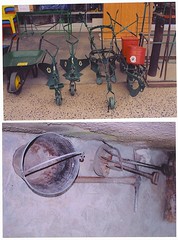
Lesotho Tools


Urban Agriculture in Lesotho
Urban agriculture in Lesotho is practiced mostly by women. Most of them were married and head the household as their husbands often work in the mines of South Africa. They said that the main reasons they engage in urban agriculture are to supplement household food supply and to save money. Urban agriculture is then an important, but not main source of income. Salary wages and remittances from their husbands in South Africa are the main sources of income for these families.
I also found that the respondents engaged in home gardening consume most of the harvest yield leaving the surpluses for sale or barter. This trade takes place between neighbor as the quantities are small and the supply irregular. In addition, selling one’s vegetables can become problematic as many in the neighborhood grow the same crops and harvest during the same periods. These factors tend to reduce the prices making it difficult to make profit. However, there is some initiatives taking place to organize mini-markets, construct communal storage facilities, and get transportation so products can be sold in other parts of the country.
The main crops I found in the gardens were: Cabbage, tomatoes, corn, carrots, sepaile, spinach (Swiss chard), potatoes, green beans, pumpkin, turnips, peas, and rapa (vegetable with edible taproot and leaves). This diversity in vegetables ensures a balanced diet that can combat undernutrition. Vegetables like peas and rapa are good sources of protein, replacing the sometimes unaffordable meat. Corn used to make papa and to feed the livestock, is a good carbohydrate. Cabbage is the most widely grown vegetable both in summer and in winter because of its low productivity cost, high yields, and marketability. Unfortunately, their nutritional value is very low compared to other greens also grown in Lesotho like spinach, pumpkin leaves, and green beans. Cabbage is low in protein, iron, vitamin, A B1, B2, and Niacin (Ministry of Agriculture, 1994).
Common practices I found in the gardens included fencing, raised beds/terracing, manure use, composting, and intercropping. The fence is essential as it protects the crop from animal commonly found browsing around the neighborhood. Manure from cows, pigs, and poultry is often mixed with ashes left from cooking. This great natural fertilizer is applied to the crops, improving soil fertility and increasing the retention of moisture. Because the space is often limited, the intercropping must be intensified, preventing erosion from taking place.

Final words
The first day I visited a garden I found myself with big list of things people could do better, or more efficiently. Nevertheless, this naïve view changed as I spent more time with the people in their plots. That is how I realized that they are being as efficient as possible. For instance, I noticed that very few practice composting. But later I realized that every leftover is used to build, feed, or cure, and there is simply very little mulch to put in the compost. One thing that I still think can be done with the support of the government or the civil sector is the installation of water tanks so rain can be stored for the dry season. Although some houses have them, they are an expensive investment that very few people can afford. That is why the government or NGO’s need on be part on their promotion. Urban agriculture is therefore an important activity that needs not only to be recognized by the government of Lesotho but also encouraged, promoted, and supported. However, urban agriculture is not the panacea, as the income it provides is little and the labor requirement high. Home gardening is rather part of a solution that include major support to the farmers in the rural areas, elimination of the dependency on foreign food aid, food for work projects, and participatory approaches to rural and urban development. Thus, as expressed by Thabo, Ralikariki, and Mamasello the government needs to pay more attention to their needs and to those of the community.