Sunday, August 13, 2006

Photos of Guatemala´s Fields

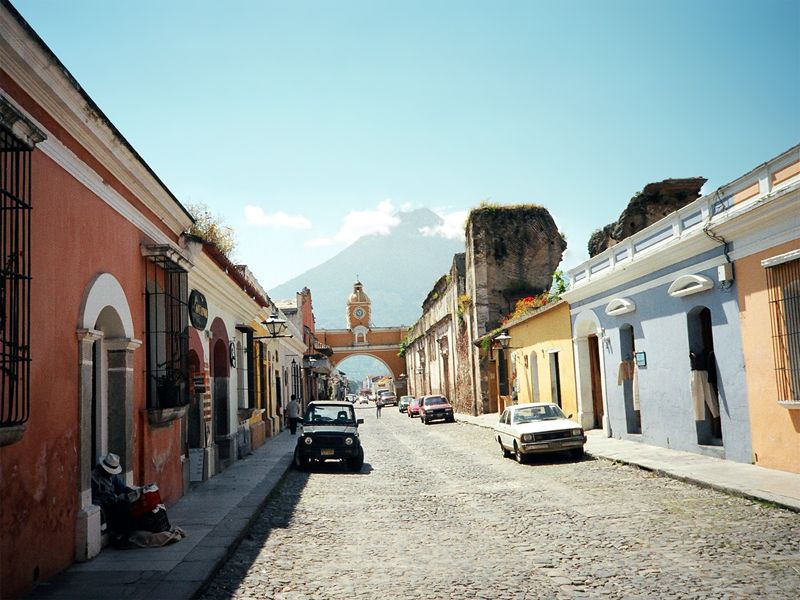
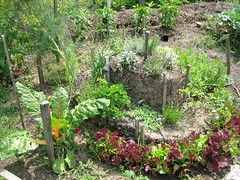
Agricultural Plots Outside Antigua
Imagen 149

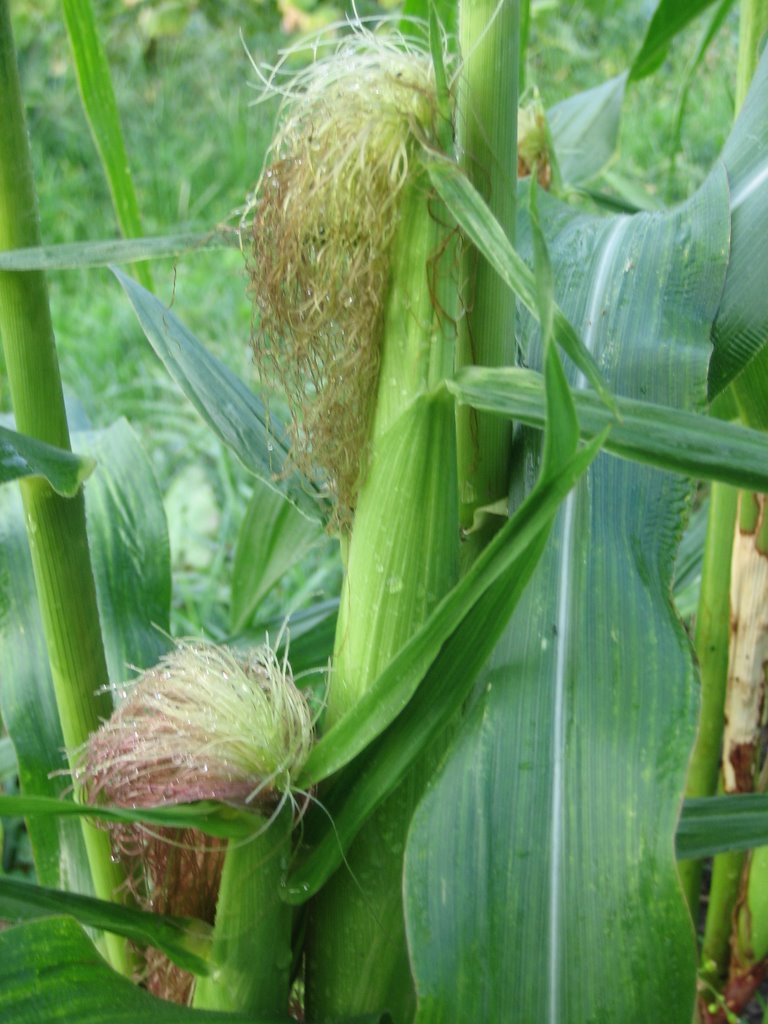
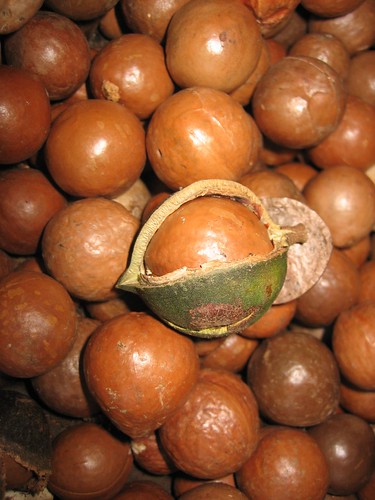
Macademia Nut Farm
Imagen 163

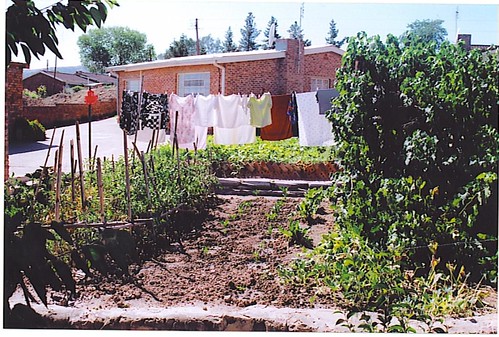
Cotton, the Raw Material for Guatemala´s Beautifull Textiles
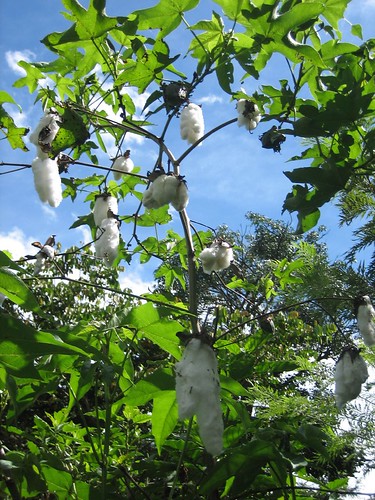
Imagen 106

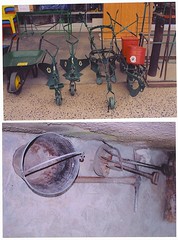
Enrich by Volcanic Soils, Guatemala´s Coffee is one of the Best
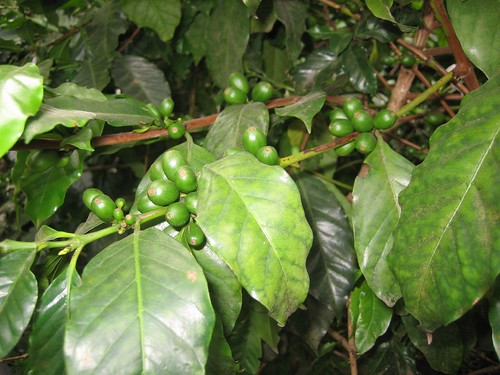
Imagen 105

Friday, August 11, 2006

Colors of Guatemala´s Markets


Saludos Seño. Check Guatemala´s latest pictures HERE

Guatemala is a country filled with colors. Right after our second day in the city, we decided to visit the capital’s Central Market in Zona 1. We were amaze at what we saw: A whole range in colors depicted in fruits and vegetables. Similarly beautiful were the colors of the dresses of the Mayan women who sell these products. Colors and odors is an experience you don’t want to miss in the country’s capital, a little taste of its amazing cultural and natural diversity.

This market, where the picture was taken, is located right in front the cathedral, which lies next to the presidential palace. One advantage of this particular market is that you’ll get the Guatemalan price as this part of the city is not frequented by tourists, who avoid it given the bad reviews of guide books. Usually, tourist are given a premium in the pricing of goods, specially crafts, so bargain is a good practice to get used to. Although crime tends to be higher in this part of the city, there is a comprehensive effort to better Zone 1, the centre of the city. The goal is to take advantage of the flow of tourist who usually set off directly towards Antigua.

Markets in Guatemala are the economic engine of the country. Though many consider this as informal economy, the contributions to the country’s growth and welfare are very significant. Central Markets are very complex indeed. They usually involve several players linked between the producer and the consumer. The Mayan lady I bought my vegetable to told me that she buys the produce from three farms in her community. She also sells to bulk buyers who go to upscale parts of the city or supply to restaurants making some profit. In other words, when you buy at the market, the produce has already gone through many hands.

That’s not to worry as this translates into employment. Guatemala as most Central American countries suffers of two-digit unemployment rate. Yet, agriculture infrastructure developed for winter markets in the U.S and Europe, along with money from the tourists industry and, unfortunately, drug trade, are employing more people than ever.
Check the recently uploaded pictures of Guatemala HERE. Also stay tuned for some videos.

Thursday, August 10, 2006

Central America Trip, First Stop: Guatemala


Hola
Disclaimer. During august, Agdes will be a travel blog. Although I’ll write about agriculture in Central America, I will also describe my trip around Guatemala, Honduras, Salvador, and Nicaragua. As some of you know, three days ago Kate and I started our trip throughout Central America. First stop: Guatemala, a country filled with beauty in culture and landscapes. Although the capital, Guatemala City, has a reputation for being unwelcoming, infested with pollution, and crime, we found it quite pleasant. The climate is very nice, mid-70´s with an enjoyable breeze in the afternoon.
Guatemalans are extremely nice and they’re the best source of information when it comes at what places to visit and what to avoid. The city is divided by zones; we stayed in Zone 1 the city centre. A little scary at night because is fairly empty, but during the day there are several churches, museums, plazas, and markets to visit.
The bohemian scene can be found at¨4 Grados Norte¨ and ¨100 Puertas¨. The first one is two blocks of cafes, bars, and cultural centres. The second a little hallway with some Cuban Trova and Spanish rock bars. There are also two excellent museums to have a better understanding of the Maya culture. The first one, Popol Vuh, is an archaeological museum divided by the different periods of the Maya. The second one, the Ixchel museum, puts more emphasis on the Mayan textiles and its meanings.
So, if you’re planning to come to Guatemala, spending a couple days in the capital is definitely worth it. Just don’t forget the universal rules of carrying little cash, avoid bad neighbourhoods and ASK the locals.That’s all for now. Stay tuned for pictures!!! Saludos RAFA

Tuesday, August 01, 2006

Promoción del Cultivo de Caucho y Palma Africana en Colombia

El periódico Colombiano El Tiempo publicó hace poco un artículo sobre la posibilidad de expandir los cultivos de caucho y palma africana en Colombia. Titulado “Es necesario aumentar áreas de cultivos de caucho y palma para depender menos de las importaciones”, el articulo argumenta que al producir mas caucho y palma africana el país se beneficiará pues dependerá menos de los mercados globales. Vale la pena analizar un par de puntos antes de presentar el cultivo de esto productos como una de las alternativas viables para el desarrollo agropecuario Colombiano.

Primero, el alto nivel de importación no debe ser motivo para fomentar la producción local del producto importado. Con algunas excepciones, estamos importando porque en alguna parte del mundo alguien lo esta haciendo de una manera mas eficiente y barata. Contrario a lo que muchas personas piensan, el sector agrario es dinámico y receptivo a las demandas del mercado mundial. Si fuera tan rentable el aumento en la producción de estos productos, como el artículo lo sugiere, el mismo sector ya hubiera empezado a expandir la producción. El que todavía sean pocas la hectáreas cultivadas indica, entre otros, problemas de cultivo, procesamiento, transporte, y falta de financiamiento para estos proyectos de largo plazo. En otras palabras, falta de rentabilidad.

Fuera de eso, el artículo no menciona el impacto ecológico que podría tener el aumento de hectáreas cultivadas. La palma africana tiende a crecer en las costas Pacifica y Atlántica, lugares con invaluable riqueza ambiental. La expansión de estos monocultivos tiene el potencial de amenazar la diversidad tanto biológica como étnica (Palma Africana y las comunidades Afrocolombianas) de las zonas donde se cultivarían. De todas formas esta es una posibilidad entre otras, pues como es el caso en Tumaco, Nariño, la palma esta siendo plantada en antiguos potreros de ganado.

Aclaro que la idea de expandir la producción no es mala, la falacia esta en la justificación que se da para esta. Basados en las fluctuaciones del mercado y su posible rentabilidad, es que se deben tomar las decisiones de cuanto y cuando producir. Fuera de eso, pueda que el cultivo de palma traiga beneficios ignorados en el artículo. Beneficios tales como mayores fuentes de empleo, innovación e inversión en nuevas tecnologías, alternativas para cultivos de uso ilícito etc. Todos estos elementos se deben tomar en cuenta al promover políticas agrarias.

Saturday, July 29, 2006

Video Tour of my Garden

Hola
For those of you that have been asking about my garden, here is a quick tour of it.
The quality of the video is not the best, but you can see what I'm growing at the moment (late july 06). The garden is located in Blair Road Community Garden Association, Washington DC. If you just want to see pictures of the plot click HERE
Enjoy

Programs on International Development. Pt 2

Hola
Browsing the internet I found a very usefull document published by Queens University of Canada. The orginal format was a Word document, but I copied the content into this post so you can have better access to its exellent links. To see the original source please click here. This information is for educational purposes. If used, please give credit to the source.

See infomation below
Graduate Programs in International Development

Canadian Universities
A helpful site to use while researching graduate programs in Canada is: www.idsnet.org/ccupids

University of British Columbia (www.ubc.ca)

Graduate programs can found in four areas at UBC:

Department of Geography (www.geog.ubc.ca)
See: Winter 2002-2003 Graduate Program Brochure
http://www.geog.ubc.ca/~mluk/NewApplicant/NewBrochure02-03.pdf


The Sustainable Development Research Institute (SDRI)
http://www.sdri.ubc.ca
Email: sdri@sdri.ubc.ca

The Institute for Resources and Environment (IRE)
Resource Management Environmental Studies Program
http://www.ire.ube.ca/y2k/ire/html/home.htm
Email: rmesgrad@interchange.ubc.ca

The Liu Centre for the Study of Global issues
http://www.liucentre.ubc.ca
Email: liuctre@interchange.ubc.ca


Dalhousie University (www.dal.ca)

Master of development economics with concentration in international development studies

International Development Studies at Dalhousie
http://www.dal.ca/~intdwww.html
Tel.: (902) 494-3814
Email: ids@is.dal.ca

Contact: Dr. Pauline Gardiner Barber
Tel.: 494-2523
Email: pauline.gardiner.barber@dal.ca

Related organizations at Dalhousie:
Lester Pearson International
The Society for Corporate and Environmental and Social Responsibility

Carleton University (www.carleton.ca)

Master of Arts in International Affairs
Three core sections: development studies, conflict analysis, international political economy

Also: Joint Master of Arts in International Affairs and Bachelor of Law degree
Offered through the Norman Paterson School of International Affairs and the Common Law Section of the Faculty of Law at the University of Ottawa

Contact: international_affairs@carleton.ca


University College of Cape Breton (www.uccb.ns.ca)

Master of Business Administration in community economic development

Faculty: School of Business
Contact: gmacinty@uccb.ns.ca
Tel.: (902) 563-1467


University of Guelph (www.uoguelph.ca)

MA in International Development Studies

MSc in International Development Studies

Contact: Collaborative International Development Studies Program
Sally Humphries (Director)
Email: shumphri@uoguelph.ca
Graduate Secretary
Email: CIDS@css.uoguelph.ca


Saint Mary’s University (www.stmarys.ca)

Master of Art in International Development Studies


University of Northern British Columbia (www.unbc.ca)

Master of Arts in International Studies

Contact: International Studies Program, Lana Diaz
Tel.: (250) 960-6668
Email: diazl@unbc.ca


University of Toronto

Development Studies can be pursued at the Graduate level in three departments at the University of Toronto:

Geography: www.geog.utoronto.ca
See: International Development
Email: geograd@geog.utoronto.ca

Political Science: Political Economy of Development (PED)
Requirements for the program are: political science, undergraduate level microeconomics, macroeconomics, and statistics
Contact: Carolynn Branton (Graduate Secretary)
Tel.: (416) 978-2017
Email: artsci.utoronto.ca

Sociology:
Contact: Jeannette Wright
Telephone: (416) 978-3414
Email: wright@chass.utoronto.ca


International Universities

British Universities

See: http://www.ids.ac.uk/courses for complete list of graduate programs in Development Studies

A printed guide is also available: Development Studies in Britain, A Select Course Guide
For a copy, contact l.j.knight@bradford.ac.uk


US Universities

See: www.gradschools.com/listings/all/intlDevelop.html for information on Graduate Schools in the United States in International Development

Friday, July 28, 2006

Integrated Farm Management in Benin

Hola
It's about time to start adding more media technology to the blog.
I found this video surfing the internet. It describes an on-going project in the west African country of Benin. The project, Songhai Centre Commitment to Excellence,
is a perfect example of what developing countries are doing to address the social and economic problems facing their nations.

Although I've seen several models similar to this one, the Songhai Centre is unique on its emphasis on markets. Farmers in Central America and Sub-saharan Africa need income generating activities that can get them out of poverty traps. Sure sustainability, participation, gender equality and other components of projects are pluses, but a model that does not increase income is unsustainable in the long run.

To learn more about the project and the organization visit

Songhai Centre Commitment to Exellence

check the video:

Thursday, July 27, 2006

Colonial Gardening

Also...
New Pictures from the gardens of Colonial Williamsburg and Moticello, Jefferson's Farm House. Both places have demostrations of colonial gardening using heirloom seeds and old, very old techniques.
Check the pictures HERE

Hasta la vista

Graduate Programs in International Development. pt. 1


Graduate School is next for me and finding the right university is not easy task. I’m interested in international development, with a lot of emphasis in agriculture. The cross-sectoral nature of agriculture must be the main component for a good understanding of developmental studies. Of course there other very important subjects that should be cover in an ID master’s, but rejecting or paying little attention to agriculture’s role in development is a big mistake.

Anyway, I’ve been talking with several people in the development circles and they all seem to agree that if you’re looking for a graduate program in international development and agriculture you should look towards land-grant Universities. I’ve done just that and so far here are my favorites: U.C Davis, Cornell University, and Michigan State. Stay tune for some review on these programs.

In the meantime, here are some link of national and international universities with programs on international development that you may find usefull in your search.
chao

Wageningen University, Master in International Development Studies http://www.mid.wur.nl/UK/

Institute of Development Studies, MA Science, Society and Development http://www.ids.ac.uk/ids/teach/mascience.html.

Harvard, Master in Public Administration in International Development http://www.ksg.harvard.edu/programs/mpaid/


McHill, International Development Studies http://www.mcgill.ca/ids/ M.S Agricultural Economics http://www.agrenv.mcgill.ca/agrecon/grad/overview.htm

Duke University, The Program in International Development Policy http://www.pubpol.duke.edu/centers/dcid/pidp.php

Toronto University, International Development Studies http://www.utsc.utoronto.ca/~socsci/ids/index.html

Brown University, Development Studies Program http://www.watsoninstitute.org/ds/masters.cfm

Colorado State, International Development Studies HERE


Also, gradschools.com has a list with 81 universities that offer Masters in International Development. Follow this link:

http://programs.gradschools.com/usa/international_development.html


Thursday, July 13, 2006

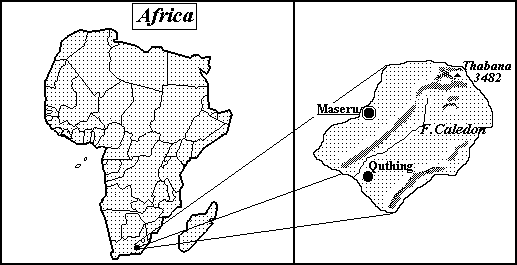
Photo Gallery of Lesotho: Agriculture, Faces, and Landscapes


In January 2005 I had the wonderful opportunity to visit the Kingdom of Lesotho. Located in Southern Africa, this country is one of the three in the world completely landlocked by another country (South Africa).

Lesotho, the Switzerland of Africa, offers beautiful landscapes, delicious food, and best of all welcoming people. This characteristic allowed me to go a little beyond the tourist eye and explore the culture of the Basotho.

Today, after months of procrastination and with a unlimited capacity account on FLCKR, I decided to scan the pictures I took in my trip to Lesotho. One by one you’ll see small details that make this country uniquely stunning. I’ve tried to add as much information as possible on each photo but as you may know “A picture is worth a thousand words”.

There are two photo sets: one on Lesotho in general available HERE and another on Lesotho’s Agricultural Sector available HERE.

Enjoy
rafamerchan

Wednesday, July 12, 2006

Saturday, July 08, 2006

Cursos por Internet en Agroecologia y otras Areas de Agricultura

Saludos
REDCAPA es una organizacion que organiza diversos cursos en agricultura, con la alianza de distintas universidades. El programa se lleva a cabo en linea, y usualmente duran 3-4 meses. Abajo encontraras mas informacion sobre la lista de cursos mas reciente.

Desde REDCAPA le informamos acerca de nuestros Cursos por Internet para el período de septiembre-diciembre del 2006:
Encuentre todas las informaciones en:
este link

CURSOS EN ESPAÑOL:

Agroecología: diseñando agroecosistemas biodiversos y sustentables
REDCAPA, Universidad de California en Berkeley y SOCLA
Profesores: Miguel Altieri y Clara Nicholls.
Inscripciones hasta el 04 de septiembre de 2006.

Formulación y evaluación de proyectos agrícolas y agroindustriales
Universidad Austral de Chile y REDCAPA
Profesor: Ing. Agr. Dr. Juan Lerdon
Inscripciones hasta el 04 de septiembre de 2006.

Métodos Participativos en el Desarrollo Rural Sustentable
REDCAPA
Profesora: Julia Guivant
Informaciones en: Inscripciones hasta el 04 de septiembre de 2006.

Wednesday, July 05, 2006

Urban Agriculture in Lesotho

Lesotho Urban Ag

Maseru, the capital of Lesotho, is an overcrowded city located in the lower lands of this mountainous country. The night I arrived in the city I was only able to hear the incessant noises of taxis honking at pedestrians, as if they all needed one. But it was the first morning while driving around this city that I realize how most of the houses have productive gardens. It was amazing to see how Basotho are growing tomatoes, spinach squashes, and maize in pretty much any available space around their homes. In my neighborhood, Maseru East, eight out of ten houses grow different vegetable and fruits. This was a pleasant surprise as I was getting used to the typical North American house with huge unutilized lawns. After seeing the important role home gardens play in the cities of Lesotho, I decided to do my research on Urban Agriculture and how these productive gardens are securing Basotho’s food supply.

The Concepts of Urban Agriculture and Food Security
It is hard to imagine cities and agriculture together as most of us tend to see agriculture as a rural activity. In fact, urban agriculture is sometimes perceived as old-fashioned, temporary, and unsuitable, a view I found widely spread among the officials in Lesotho’s Ministries of Agriculture and Education. However, this common view ignores the fact that urban agriculture is a significant economic activity, central to the lives of tens of millions of people throughout the world. Moreover, in countries like Lesotho where hunger and malnutrition are predominately urban problems, home gardening can contribute significantly to reduce problems of undernutrition and food insecurity.

Although urban agriculture is a recent phenomenon in some parts of the world, traditionally different cultures farmed intensively within and/or at the edge of the city. In developing countries, where cities are characterized by having a large population of people migrating to the cities, home gardening is widely practiced. This can be explained by the fact that most of these people do not have other skills that would allow them to get jobs in the cities, so their income generating activities are very limited. With very little money to acquire food, the most basic need, people have no alternative but to grow their own.
This last aspect brings up the issue of food security: “access by all the people at all times to enough food for an active, healthy life” Reutlinger. Food security can be expressed by an equation that compares the value of the food production deficit in a household with the income and liquid assets that a household has available to purchase food (Leather, Foster, 2004). In other words, you are food secured when you can buy or produce the same or more food that your body requires. If you do not have land to grow food or money to buy it, you will suffer from undernutrition. In Lesotho, with an unemployment rate of 45% many people don’t have the income necessary to purchase food so they have to produce it. Nevertheless, lack of money to purchase food is not the only incentives to grow food.

Overview of Lesotho’s Problems
Food insecurity and poverty have reached alarming proportions in Lesotho with ever increasing numbers of people needing food aid and or other forms of assistance in recent years. In 2004, the prime minister of Lesotho Pakalitha Mosisili, estimated that 600,000 Basotho are faced with starvation unless they are given food aid, mostly coming from international donors (Phororo 1999). This figure shows a steady increase as in 2002 the number of people facing starvation was 500,000. Part of this increase can be explained by important factors that have been taking place in Lesotho for the past two decades: First, the advent of HIV/aids related diseases and the repercussions these have in the much-needed labor force for the agricultural and manufacturing sectors. Second, the diminishing household incomes as a result of limited job opportunities and job losses caused by the retrenchment of huge numbers of Basotho men from the South African mines. There are other important factors that have also contributed to the alarming food insecurity in Lesotho; An inappropriate land tenure system, aid dependency on foreign donors, land degradation mostly caused by erosion, and a perpetual drought that have been present for the last 5 years (Thabane, 1998). Each of these factors is very complex and required in-depth discussion that, due to space constraints, I cannot cover on this paper.
Urban agriculture can played an important role in tackling the problems mentioned above as it enables the people to produce their own food not only for their consumption but also for income generation. The availability of food that a home garden can provide ensures a balance diet, essential for a healthy labor force and vital for people infected with HIV/Aids .

Interview in Maseru East
Maseru East is a neighborhood located in the eastern part of Maseru. Most houses are situated on a hill that borders a stadium and air force landing field in the north, and a big water reservoir in the south. This reservoir provides a good portion of the water used in the gardens of Maseru East. My host family’s house is located in the middle of the neighborhood. My host dad, Ralikariki Molapo, has been living in that area for more than 10 years, so he pretty much knows everybody in the vicinity.
The interviews were rather informal dialogues I had with people on the area of Maseru East. I visited about 20 households from which only one did not have a garden. The questions ranged from the history of the families and the meaning of their names, to the money they spend on inputs and the crops grown in their garden.
Basotho, friendly as they are, like to talk a lot and rather than following a fixed questionnaire I listened most of the time as they were eager to tell me about all the things they were doing with their plots. Responders answered pretty much most of the questions, but for the yields harvest and the prices paid for inputs they could not remember the exact numbers. This can be explained as very few of them have an organized accounting system.
The economic status of the Basotho living inside the neighborhood is extremely diverse. These can be best seen by the types of houses. Ralikariki Molapo’s house is a three bedroom, one story house with western amenities, but right in front of it there is a hut built with aluminum siding very similar to those seen in the shantytowns of Soweto (see attachement A and B). Thabo, the owner of this hut, makes a living by crafting mud- bricks. He then sells them in bulk to construction sites around the area.
Both Ralikariki and Thabo cultivate a productive garden, yet they have different reasons for doing it. Ralikariki enjoys gardening and has been doing it since he was a kid. In elementary school, he and his classmates spent a lot of time in the experimental plot and in the classrooms taking about agriculture. As expressed by Libusena Berena, an estension agent at the Department of Field Services in Maseru “agriculture is a way of life we inherit from our parents”. On the other hand, Thabo practices agriculture to supplement income he gets from the sale of bricks. This does not mean that Thabo does not enjoys working in his garden; it rather means that he has no other option but to produce his own food.
Mamasello, another of the interviewees, is 70 years old but her hands are still very strong to till the land and to pull the carrots out of the soil. -The way you can tell the carrots are ready- she said –is by looking at the base of the plant and check whether the soil is cracked-. When the carrots are big and sweet the dry soil on top of them breaks, as it has to leave room for the expanding carrots. I met Mamasello the second day of my stay in Maseru East and it was thanks to her that I decided to do my research on urban agriculture. That morning Mamasello showed me how agriculture is so important for the Basotho. She also introduced me to other families who enthusiastically showed me their gardens.

Lesotho Tools


Urban Agriculture in Lesotho
Urban agriculture in Lesotho is practiced mostly by women. Most of them were married and head the household as their husbands often work in the mines of South Africa. They said that the main reasons they engage in urban agriculture are to supplement household food supply and to save money. Urban agriculture is then an important, but not main source of income. Salary wages and remittances from their husbands in South Africa are the main sources of income for these families.
I also found that the respondents engaged in home gardening consume most of the harvest yield leaving the surpluses for sale or barter. This trade takes place between neighbor as the quantities are small and the supply irregular. In addition, selling one’s vegetables can become problematic as many in the neighborhood grow the same crops and harvest during the same periods. These factors tend to reduce the prices making it difficult to make profit. However, there is some initiatives taking place to organize mini-markets, construct communal storage facilities, and get transportation so products can be sold in other parts of the country.
The main crops I found in the gardens were: Cabbage, tomatoes, corn, carrots, sepaile, spinach (Swiss chard), potatoes, green beans, pumpkin, turnips, peas, and rapa (vegetable with edible taproot and leaves). This diversity in vegetables ensures a balanced diet that can combat undernutrition. Vegetables like peas and rapa are good sources of protein, replacing the sometimes unaffordable meat. Corn used to make papa and to feed the livestock, is a good carbohydrate. Cabbage is the most widely grown vegetable both in summer and in winter because of its low productivity cost, high yields, and marketability. Unfortunately, their nutritional value is very low compared to other greens also grown in Lesotho like spinach, pumpkin leaves, and green beans. Cabbage is low in protein, iron, vitamin, A B1, B2, and Niacin (Ministry of Agriculture, 1994).
Common practices I found in the gardens included fencing, raised beds/terracing, manure use, composting, and intercropping. The fence is essential as it protects the crop from animal commonly found browsing around the neighborhood. Manure from cows, pigs, and poultry is often mixed with ashes left from cooking. This great natural fertilizer is applied to the crops, improving soil fertility and increasing the retention of moisture. Because the space is often limited, the intercropping must be intensified, preventing erosion from taking place.

Final words
The first day I visited a garden I found myself with big list of things people could do better, or more efficiently. Nevertheless, this naïve view changed as I spent more time with the people in their plots. That is how I realized that they are being as efficient as possible. For instance, I noticed that very few practice composting. But later I realized that every leftover is used to build, feed, or cure, and there is simply very little mulch to put in the compost. One thing that I still think can be done with the support of the government or the civil sector is the installation of water tanks so rain can be stored for the dry season. Although some houses have them, they are an expensive investment that very few people can afford. That is why the government or NGO’s need on be part on their promotion. Urban agriculture is therefore an important activity that needs not only to be recognized by the government of Lesotho but also encouraged, promoted, and supported. However, urban agriculture is not the panacea, as the income it provides is little and the labor requirement high. Home gardening is rather part of a solution that include major support to the farmers in the rural areas, elimination of the dependency on foreign food aid, food for work projects, and participatory approaches to rural and urban development. Thus, as expressed by Thabo, Ralikariki, and Mamasello the government needs to pay more attention to their needs and to those of the community.

Tuesday, June 27, 2006

Kate's Spiral Garden


Kate's Spiral Garden
Originally uploaded by rafamerchan.
The spiral garden of my girlfriend is now cover with beautiful colors, intense flavors, and lasting aromas. Ranging from Pineapple Sage and Cilantro, to Heirloom Lettuce and Rosemary, the garden has made our summer cooking experience unforgettable.

Wednesday, May 24, 2006

El Círculo Latino Americano

Un círculo es la mejor figura geométrica para describir los que ha estado pasando en Latino América en los últimos cinco anos: comunidades étnicas, clases obreras, y minorías marginadas por siglos de recursos y derechos por las clases tradicionales, están tomando poco a poco las riendas del poder. De la misma manera, el rol de la mujer en un continente netamente machista, esta viviendo cambios sin precedentes. Los vientos de la democracia están llegando a lo más alto de la montaña, al pueblo más lejos de la capital, a los barrios donde el estado no se ve. Pese a la contagiante esperanza existe cierta incertidumbre en la magnitud de estos cambios y la fuerza de voluntad de los que lo llevan a cabo.

Cada país en donde estos cambios han estado ocurriendo tiene su peculiaridad reflejada en las condiciones locales o regionales de estos. Sin embargo, todos se caracterizan por tener como prioridad el reducir la pobreza y disminuir los altos niveles de inequidad, triste característica de Latinoamérica. De la misma manera, estos gobiernos ven el crecimiento económico y la integración regional como objetivos claves para llevar a cabo sus prioridades. Bajo estas plataformas, gobernantes en Brasil, Chile, Uruguay, Bolivia, Venezuela, y Argentina llegaron al poder logrando alcanzar altos niveles de aceptación sobre todo entre las clases medias y bajas. La popularidad de estos gobiernos ha llevado a que los proyectos, aunque innovadores, tengan el necesario respaldo de la opinión pública.

Bien sea abriéndole las puertas a inversión extranjera como el caso de Brasil o exigiendo mayores dividendos a multinacionales petroleras como en el caso de Venezuela, países latinoamericanos están explorando nuevas alternativas al consenso de Washington. La estrategia de crecer primero y después redistribuir esta siendo remplazada con frescas alternativas que muestran que ambas cosas se pueden hacer al mismo tiempo. Distribución económica, inversión en salud pública, infraestructura, y educación, y mayor participación de la sociedad publica en el gobierno, son frutos que buscan acabar con siglos de injusticia social, racismo, e inequidad arraigados en el legado Latinoamericano.

Chile, un país culturalmente conservador donde el divorcio era prohibido hasta hace un par de años, eligió como presidente en marzo once de este ano a Michelle Bachelet, la primera mujer en la historia del país en asumir esta posición. Este acto, refleja una vuelta completa dejando atrás un pasado oscuro marcado por una dictadura de la que la misma Bachelet fue victima.

En Bolivia, el país mas pobre se Sur América donde aproximadamente el 65% de población es aborigen, eligió como su presidente a Evo Morales, el primer aborigen en ocupar este cargo en la historia del país. Bolivia, un país donde las mayorías étnicas fueron reconocidas como ciudadanos hace un par de décadas, Evo ha de ser un motivo de orgullo y ejemplo para otros países de la región. La marginalización y el olvido producto de mitas, encomiendas y plantaciones serán sepultados en lo profundo de los suelos andinos y cubiertos con cultivos de café, papa, yuca y coca.

El caso de Chile y Bolivia son solo dos ejemplos de un fenómeno continental de el que se están contagiando otros países en Latino América. Este año, candidatos con fuertes compromisos en reducir la pobreza y la inequidad tienen una alta probabilidad de ganar las elecciones presidenciales en México y Perú. Aunque no hay duda que estos vientos positivos de cambio se están expandiendo, es muy temprano para distinguir estos, de brotes caudillistas y populistas que se aprovechan del pueblo para llevar a cabo sus miopes intereses y avanzar una agenda que mantiene el status quo. El tiempo juzgará si fuimos una generación participe en la creación de una nueva Latinoamérica o simplemente una pequeña curva en un círculo incompleto.

Rafael I Merchan holds a B.S on Agricultural and Resource Economics from University of Maryland, College Park. rafamerchan@gmail.com