Sunday, July 15, 2012

Mozambique Thought Series: Sopa do Planos – (Strategies soup)

This is the first one of a series of reflections about my internship in Mozambique. I apologies to readers as the blog has been quite neglected in the past couple months. However, time permitting, I intend to get back to my normal posting habits. Tell me what you think!

Try the following: google ‘Mozambique government strategy’, grab a shield, and hit enter. You will be bombarded with hundreds of official government documents, detailing strategies to… you name it – from reducing poverty and malnutrition to promoting culture and sovereignty. For newcomers to the country – such as me – these documents are a solid proof that the government is serious about the issues of your choice. My issue is food security and nutrition and if you read the PAMRDC (the government’s strategy to combat malnutrition or ‘the bible’ as I call it), the essence of integrated development emerges clearly. You look in detailed and find out that all the Lancet interventions of their maternal and child healthseries are included and you cannot content your happiness. In other countries where REACH operates, such level of government commitment is years in the future. But then you take a copy of your bible to a meeting with a provincial ministry director and he says “PAMR….what”?

Yes, Mozambique has a soup of strategies that seek to satisfy different audiences -especially donors- but when it comes to implementation these lofty strategies often fail to reach the ground. So here is my own exercise to navigate this endless list of documents:  


The country’s development strategy is set in the PQG – a five year plan – and the PARPA. The former is presented to voters and the later to international donors. In addition to those, pretty much every ministry has its plan, and for cross-sectorial interventions such as nutrition, gender, and others, you also have development plans.

But those are just the key ingredients for the soup’s stock. What really makes the soup tasty (or terrible for that matter) are the local strategies. For that, every provincial and district office has a multi-year strategy and the yearly PES (economic and social plans). Moreover, large NGO have projects that completely overshadow the organizational capacity of these local governments and their respective plans. Not only there is little coordination between the NGO’s project and the PES, but also such projects provide little capacity to local governments, and in occasions living things worse off when the project ends.

Another very significant challenge is that cross-sectorial issues at national and local level have little legal and budgetary power. Since these strategies rely on a coordinated approach, they quickly become bureaucratic orphans as none of the ministries likes to take a leadership role in their implementation. And while the country has SETSAN - an agency mandated with the coordination of food security and nutrition interventions among ministries – petty turf wars have left the agency toothless and inefficient – a comment I will often hear outside the formal meeting settings.

So what now? Well, stay tuned for the next post. Something tells me that after all this soup may serve well to Mozambique’s outstanding cuisine.  
Thursday, June 21, 2012

No sustainable development without eradication of hunger and extreme poverty

Cheers from Mozambique. I've has been taking a break from blogging after a semester filled with term papers and other writing requirements that left me with little appetite for writing. However, i'm getting ready to report on my summer in Mozambique, working on issues of nutrition and food security. Stay tuned! In the mean time, enjoy this great piece by the heads of UN agencies working on food security. Cheers 


By José Graziano da Silva, Director-General, Food and Agriculture Organization; Kanayo F. Nwanze, President, International Fund for Agricultural Development, Ertharin Cousin, Executive Director, World Food Programme; and Emile Frison, Director General, Bioversity International

We stand at a crossroads: it lies within our reach to eliminate hunger and poverty, using methods that do not compromise the future of life on this planet. That is the essence of sustainability. It will require not just universal acceptance of the right of every person to be free from hunger, but also profound changes in the way we produce and consume food and manage the earth's resources.


Rio+20 gives us a golden opportunity to bring together the agendas of food security and sustainable development to build the future we want. Increasingly, we know how to eliminate hunger and poverty in ways that also promote sound management of natural resources, encourage social inclusion and drive economic growth.


There are 1.3 billion people living in extreme poverty, and close to 900 million chronically undernourished. An additional 1 billion suffer from “hidden hunger”, a lack of vitamins and minerals. Undernourishment in children prevents them from ever reaching their full physical and cognitive potential, costing lives, livelihoods and economic growth. We must all understand that the Rio vision of sustainable development cannot be achieved as long as hunger and extreme poverty persist.


We can and we must help poor people worldwide access the food they need, and we must support their efforts to escape the poverty trap for good. But the world's ecosystems and biodiversity are already under extreme pressure from overexploitation, degradation and the effects of climate change. We now face the challenge of raising global food production by 60 per cent by 2050 while managing the natural resource base so that we are not robbing future generations.

It can be done. We can reach our goal of eliminating hunger while promoting sustainable food production. We know what the right tools and policies are. What we need most are the governance systems and institutions that promote accountability and ensure that the right tools and policies are scaled up and applied.
Rio+20 must demonstrate the political will to improve governance, reform policy and, above all, take action.  All our efforts toward "sustainable development" will be in vain if we cannot feed humanity and also safeguard the resources upon which life depends.


This is a shared challenge, involving actions that must be undertaken by government, the private sector and civil society, and producers and consumers of food. It is everyone’s responsibility. We must unlock the power of partnerships, working across sectors and tearing down barriers that have sometimes made development efforts uncoordinated and inefficient. The principles of inclusiveness, equity, gender equality and a rights-based approach must be upheld both in the consultative process and the actions undertaken. We can also build upon existing institutions such as the inclusive Committee on World Food Security (CFS).


We must recognize that individuals and the private sector make the bulk of investments in our food systems. The people who work the world's 500 million small farms are the backbone of many rural economies, and are the largest investors in agriculture in the developing world. They are also custodians of a large part of the world's natural resources and biodiversity. They have enormous potential as entrepreneurs, but all too often lack the resources they need to thrive, feed their families and contribute to the food and nutrition security of others.
Women are drivers of change. The majority of small farmers are women.  Giving them the same access as men to assets, services and other resources could make a powerful contribution to poverty reduction and food security.  Let us not waste this potential, nor exclude their voices.


We must scale up safety nets and build resilient livelihoods and landscapes. To ensure access to adequate and nutritious food at all times, the poorest and most vulnerable people in both rural and urban areas need to be supported through research, education, assistance, and social protection programmes, or safety nets.  Disaster risk management and resilience-building need to be adopted by food-insecure countries and communities exposed to increasing land degradation and resource scarcity, changing rainfall patterns and  extreme weather events, as well as market downturns, food price spikes and other shocks.


Responsible tenure systems* are needed to secure access rights to land, fisheries and forests for poor people. Agricultural methods and technologies that work with and not against nature can help them produce more, and more sustainably. Promotion of crop diversification can ensure that agriculture produces a variety of foods suitable for health and nutrition, and also provide the necessary resilience to cope with climate change.
Action also must be taken to deal with the fact that one third of food produced globally is wasted or lost to spoilage, damage and other causes. Making the most of what we already produce and harvest would reduce the increase in production required to feed a growing population, raise the incomes and food security of poor farmers, and also minimize the impact of food production on global ecosystems.


The future we want is within our grasp. Together, the Rome-based food and agriculture agencies commit to working with international organizations, governments, research institutions, civil society and non-governmental organizations, cooperatives, small farmers’ organizations, communities and the private sector, at all levels. We must all rise together to meet this challenge. 


Let us seize this historic opportunity. Let us dedicate ourselves to transforming our current unsustainable food production and consumption systems, so as to ensure access to sufficient nutritious food for all people. We must act now. 


* The Voluntary Guidelines on the Responsible Governance of Tenure of Land, Fisheries and Forests in the Context of National Food Security, recently endorsed by the  CFS, outline principles and practices that governments can refer to when making laws and administering land, fisheries and forests rights.

Saturday, April 28, 2012

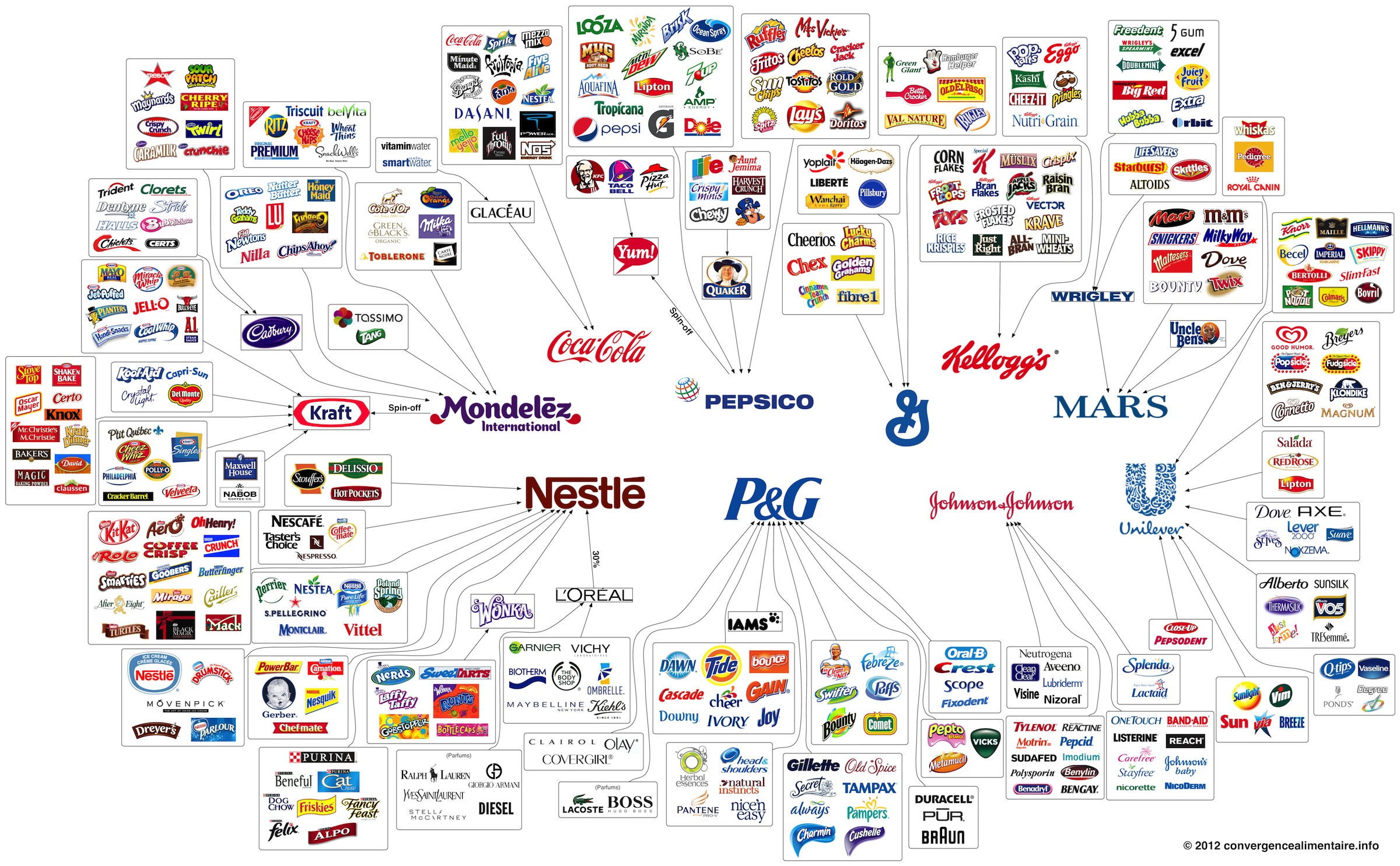
Map of Global Food Retailers

Impressive graphic from the Convergence Alimentaire 

Saturday, April 21, 2012

EARTH SUMMIT at Columbia University

For those readers in NY, make sure you sign up for a great event I'm helping organize:

Columbia Earth Summit: A Call to Action
April 25, 2012 12:30-6:00pm
Low Memorial Library

As we face a growing number of environmental challenges, we believe that the solutions will come from partnerships between public, private and academic sectors. On April 25, 2012 at Columbia University experts, thought leaders and practitioners from a variety of sectors will come together to discuss some of the most pressing environmental questions. This FREE event (RSVP recommended), will feature interactive panels and key one on one discussions with leaders from: Bunge Limited, the Rockefeller Foundation, UNDP, TB Bank, NRDC and the Acumen Fund among others.

The Food Security and Agriculture Panel (which I'm organizing) will count with the participation of:
Glenn Denning: Director of the Center for Globalization and Sustainable Development at Columbia’s Earth Institute.
Cherly Palm: Senior Research Scientist at Earth Institute's Tropical Agriculture and Rural Environment Program.
Gary Toenniessen: Managing Director at Rockefeller Foundation's initiatives in agricultural development.
Carl Hausmann:  Managing Director at Bunge's Global Government and Corporate Affairs

The panel will address the main question of how to feed the world by 2050. We'll cover issues of vital importance such as sustainability, climate change, changing diets, GMOs and Biotechnology, and the role of the public sector.

Visit our website for registration and more information: http://columbiaearthsummit.weebly.com/

Grains and Leaves: Weekly Ag-Related News, Events, and Others


  • At UN conference, Latin American countries reaffirm commitment to eradicate hunger

Monday, April 02, 2012

HIghlights from The Economist "Feeding the World" Conference

Find out more information about this great even HERE

Sunday, April 01, 2012

Clemens' False Dichotomy about Debates in Development


Debates on Development
A couple weeks ago I had the opportunity to attend  NYU's conference “Debates in Development.”
The agenda included Yaw Nyarko and William Easterly from NYU's Development Research Institute, Stewart Paperin, Open Society Foundations, Bernadette Wanjala, Tilburg University Development Research Institute; Andrew Rugasira, Founder and Chairman, Good African Coffee; Abhijit Banerjee, MIT's Poverty Lab, and others. 

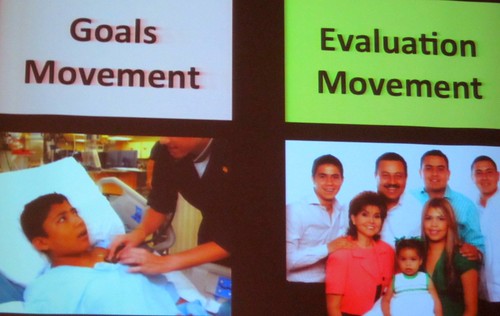
In general, with the exception of a handful of speakers, I found the conference to filled with silly generalizations about development work and a myopic need to compartmentalize development into artificial 'conflicting sides.' This was epitomized when CGD's Michael Clemens presented an artificial characterization of the debate  as a “Goal Movement” vs. “Evaluation Movement." 
Goals vs Evaluation MovementsFirst of all, his criticism of integrated development as something “we've tried and failed” is misdated and does not meet his own rigorous evaluation standards. Monitoring and evaluation techniques have evolved tremendously and are now an essential piece of development work, both at macro and micro levels. Therefore, suggesting that the misnomer “Goal Movement” is devoid of solid evaluation does not correspond with the realities of today’s development interventions.

One of the hallmark criticisms of Michael Clemens to the Millennium Village Project (MVP) is that Integrated Rural Development Projects (IRDP) have already been attempted and deemed a complete failure by a number of evaluations conducted by USAID, World Bank and others. However, Mr. Clemens fails to recognize that if he were to apply his evaluation standards to these reviews of IRDP, few if any will qualify. Most of these evaluations were conducted using ex-post assessments of macro-economic indicators. None used RCTs and few carried out the complex quantitative methodologies that he proposes to guarantee causality.

Fortunately, development M&E techniques have gained a tremendous amount of importance among academia and practitioners in recent years. Under pressure from both donors needing demonstrable impact for their constituencies, and practitioners needing more effective feedback mechanisms to understand program outcomes and impacts, today most development projects allocate a significant amount of program resources -10 to20%- to M&E. Also at their disposal, practitioners have a well-stocked toolbox of quantitative and qualitative methodologies to monitor and measure development outcomes. As argued by Dr. Woolcock and other, a ‘mixed method approach’ using qualitative and quantitative methods simultaneously, is the best way to understand project impact. 

Hence, suggesting the differences between the “Goal Movement” and the “Evaluation Movement” are 'irreconcilable' is simply baseless. Most bilateral and multilateral development interventions and even the initiatives by small NGOs and civil organizations considered evaluation essential to their programs’ successful implementation. Therefore, Clemens’ artificial grouping of the development debate is a false dichotomy: simply put the ‘evaluation side’ will be an orphan without having something to evaluate.

Moreover, the development community, or as he call it the ‘Goal Movement’ has made tremendous advances in strengthening institutions and policy, and developing tools and technologies since the 70s and 80s when IRDPs were commonplace (See other post about promising trends in Africa). These recent developments have enabled practitioners to fine-tune interventions by getting more accurate data and by addressing contextual issues (institutional support, local government etc.) that often impede the success of otherwise adequate interventions. Thanks to that work, today there is a robust body of evidence from development and other disciplines demonstrating the strong synergies created between economic, health, nutrition, and agriculture.

Finally, the issues Mr. Clemens list as the characteristics of the ‘Evaluation movement,’ namely; testing questions, failure is required, local outcomes, and clear accountability, are all part of the ‘Goal Movement.’ The early history of development is filled with examples in which development interventions have failed spectacularly and where local outcomes have been at the front and center of the projects.

Evidently, I was very disappointed with Mr. Clemens presentation. The language he used – calling MV’s Development Harvest 'a masterpiece of misrepresentation,' and his insistence on maintaining false dichotomies add little value to development debates. I'm not completely sold on the MV model. However, I truly believe that as African nations continue to experience economic growth and improvements in governance, they will need models on which to base interventions to attend the needs of their long-neglected rural communities. MV can play an important role in showcasing governments how to do this - the same way cooperation among nations and regions within countries have done for centuries. 


But instead of offering doable alternatives on how to tackle poverty, Mr. Clemens' contributions distract the public with hyperbole that can damage the credibility of very important and proven interventions that should instead be scaled up. 

Friday, March 30, 2012

Grains and Leaves: Weekly Ag-Related News, Events, and Others

Thursday, March 08, 2012

Focus on Farmers to Feed the World by 2050

The Female Face of Farming

Check out this cool initiative started by FAO and Farming First about the role of women in food production.

Also, IFPRI just published a great book, Reshaping Agriculture for Nutrition and Health, about the linkages that exist between these sectors. 

Tuesday, March 06, 2012

Grains and Leaves: Weekly Ag-Related News, Events, and Others

Monday, March 05, 2012

A História da Agricultura e a Economia Verde


Check out the English version HERE of this great video

Saturday, March 03, 2012

Brazil's Most Valuable Export: Fome Zero and its Programa de Aquisição de Alimentos da Agricultura Familiar (PAA)

With funding from Brazilian Cooperation Agency (ABC), the country's foreign aid agency,  WFP and FAO are rolling out a new food security program modeled after the successful Programa de  Aquisição de Alimentos da Agricultura Familiar (PAA). PAA, Family Agriculture Food Procurement Program, connects smallholder farmers with school feeding programs by purchasing their products at a subsidized price. In addition, PAA gives farmers access to credit, training, and technical advice. 


The government committed 2.3 million dollars for pilot projects in Ethiopia, Malawi, Mozambique, Niger and Senegal. According the WFP, these funds will strengthen their ongoing initiative on local procurement called P4P.

This is also the latest example of the growing south-to-south cooperation between Brazil and the rest of the developing world. In addition to private investments in soybean cultivation in Mozambique, this year the Brazilian government formed an alliance with WFP to open the Center of Excellence against Hunger. The goal of this initiative is the strengthen developing countries' capacity to design and carry out effective programs against food insecurity and malnutrition, with special emphasis on school feeding. Watch WFP Executive Director Josette Sheeran describe the Center.

Mozambique's Soybean Potential

As some of you know, I'll be traveling to Mozambique over the summer to work on a new UN initiative named REACH - Renew Efforts Against Child Hunger. The overall goal of REACH is to facilitate better governance and management of nutrition programs and ensure that UN agencies (FAO, WFP, UNICEF, and WHO) are coordinating their nutrition interventions.

With more than 40% of children under five stunted, Mozambique's government has prioritized the fight against chronic malnutrition. However, the integrated nature of nutrition programming makes it difficult to  operationalize, specially in Mozambique where there are so many development agencies and initiatives working at the same time.

Agricultural projects that can have a positive impact in reducing stunting are gaining traction in the development discourse.  Mozambique has an incredible potential to increase its food production and use agricultural development as an powerful engine for economic growth. The country has plenty of unused arable land, growing urban markets inside and abroad, cheap labor, and a great geographic location, with deep-water ports and infrastructure projects needing relatively little investments.

Can soybean lead the way in agricultural development? As the video below shows, the Northern part of the country has soils similar to those in the Cerrado - the Brazilian soy basket. According to the video, the Mozambique government recently signed an agreement with Brazilian soy farmers, allowing them to farm these lands in exchange for increased labor demand and technological advice on soy farming.


The initiative is also been supported by EMBRAPA, Brazil's agricultural research agency along with JICA and USAID. They are all working with government officials to adapt seed varieties to the Northern region and identify the steps need to develop soy's the value chain.

Similar, a World Bank study recently noted the following:
Soybean is a fairly new crop in Mozambique, but agricultural and market scenarios suggest a high potential in the northern Zambezia/southern Niassa area of northern Mozambique, and in Manica and Tete provinces in central Mozambique. In both production areas, improved soybean production can strongly benefit from a local good demand of soybean sub-products and investments in new industrial units, and from  already existing roads and railways linking to the important consumer markets of Beira  in the center and Nampula and Nacala in the north
More recently, Rei do Agro, a local agricultural firm, announced the plantation of 500 hectares of soybeans in the Zambézia province. This follows similar private sector initiatives that are taking advantage of the increasing world demand for soybeans to invest in Mozambique's crop potential.

At first look this makes sense. Soybean are one of the country's top 5 imports in terms of volume and value. With an increasing trade deficit, it makes sense to promote the crop as an import substitute and, in the future, as an export to satisfy growing world demand for the commodity.

Another good reason to promote soy is that the soil type in the north renders it unsuitable for other cash crops. Like the Cerrados in the 70's, these soils are consider wasteland.

In terms of nutrition, the high caloric and protein content of soybeans is also attractive given the country's high incidence of stunting. In theory, soybeans could play an important role in meeting the caloric requirements of Mozambicans while generating cash to access other products.

However, little evidence exist about the positive linkages between agricultural growth and reduction in chronic malnutrition. Although it may seem intuitive to think that higher food availability and/or increase incomes will improve diets, the link between those hasn't quite been demonstrated by robust studies. Moreover, most soybean production is used for livestock feed and the processing for human consumption requires a more complex value chain that the country currently lacks.

So the question remains: Would soybean serve as an engine of economic growth, providing much needed cash, calories, and employment for thousands of Mozambicans or would the project be added to the long list of failed mono-culture promotion initiatives in the past few decades? For now the jury is still out. Stay tuned.

Saturday, February 18, 2012

Grains and Leaves: Weekly Ag-Related News, Events, and Others

As my semester keeps getting busier Agdes has suffered from serious neglect. However, I'll try to continue blogging about some cool things happening this year: I'll be starting an internship at the Earth Institute's Tropical Agriculture and Rural Environment Program. Over the summer, I'll also be going to Rome and Mozambique as part of a internship placement with the UN's Renewed Efforts Against Child Hunger (REACH). For now, enyoy this week's version of Grains and Leaves.

Tuesday, January 17, 2012

After the Hiatus

The break is over and I'm back in NYC after a wonderful time in Milwaukee and Nicaragua. So after this winter break Agdes has a lot of catching up to do. I'll be writing about my visit to Growing Power in Milwaukee; some of the work I did in Nicaragua; and a paper I wrote about the new push for integrated rural development.

I will also continue compiling the Grains and Leaves series: a biweekly email with Ag-related news, events, and others. Similarly, I'll be logging about content cover by a couple of classes I'm taking this semester, in particular one in global food systems and micro-enterprise development.

I hope you had a fantastic break. As always, feel free to email me with suggestions or questions you may have.

Friday, December 09, 2011

Reading List for the Cold Days Ahead

Looking for a good read for your winter break? Check this list of development books shamelessly copied from by Chris Blattman awesome blog on international development. Also check out a similar list put together by the Guardian. Enjoy

1. The Anti-Politics Machine, James Ferguson. (“Sometimes markets don’t exist for a reason.”)
2. Peasants into Frenchmen, Eugen Weber (“Do not forget that French was recently a foreign language to most Frenchmen,” or “Nation building is a long and messy business.”)
3. Down and Out in Paris and London, George Orwell (“So you think we’re so far away from abject poverty ourselves?”)
4. African Economies and the Politics of Permanent Crisis, Nic van de Walle (“Everything you think about the African crisis and structural adjustment is wrong,” or “the aid and democratization folks seem to forget that incentives matter.”)
5. Seeing Like A State, Jim Scott. (“The perils of scientific approaches to planning and development.”)
6. and 7. Other Jim Scott must reads: Moral Economy of the Peasant (“Don’t overestimate the material.”) and Art of Not Being Governed (“Development usually means coercion, and underdevelopment is a strategy not a condition.”)
8. In the Company of Strangers, Paul Seabright (“The origins of market cooperation, industry and development are evolutionary.”)
9. Emergence of Autocracy in Liberia, Amos Sawyer (“Authoritarian politics are not solely the products of colonialism; seek checks and balances.”)
10. and 11. Party Games, Mark Summers, and Right to Vote, Alexander Keyssar (“Corruption and electoral mayhem — not so crippling to growth as you think,” or “Chill out, America, and remember you were recently much worse.”)
12. Coffee and Power, by Jeffrey Paige (“Five coffee producing nations, five different power structures, five very different democratic outcomes a hundred years later”)
13. and 14. Coercion, Capital and European States, Charles Tilly (“War makes the state”). See Jeffrey Herbst’s States and Power in Africa for the post-colonial converse (“An absence of war doesn’t make the state”).
15. Embedded Autonomy, Peter Evans. (“Most of the time state-led industrialization doesn’t work, but guess what? Sometimes it does.”)
16. and 17. Cities and the Wealth of Nations, Jane Jacobs. (“Seek healthy cities not healthy nations, and here’s how.”) which is interesting to read alongside Max Weber’s The City (“Man, are we lucky the merchants not the ruling classes lived in European cities.”)
18. Staples, Markets and Cultural Change, Harold Innis. (“Everything you need to know about New World development can be gleaned from cod, fur, and wheat.”) The most forgotten AEA President ever, and also a mentor to Marshall McLuhen.

Wednesday, December 07, 2011

Promising Trends in the African Continent


Le Grand Marche Lome. (C) Rafael Merchan 2008

In a time where developed countries continue to shrink their development aid portfolios, exciting things are happening in Africa that may hold the answer to solve the continent's chronic poverty. The news comes from South Africa's Standard Bank with the publication of an excellent series of reports about Africa's unprecedented potential to catch up to the rest of the world. A recent editorial and article by The Economist also cover this promising trend, citing some of the reports' findings.

The series, entitled "The Five Trends Powering Africa's Enduring Allure" provide a robust evidence about the continent's strategic position to meet the world appetite for food, natural resources, and manufacturing goods, all while reinvigorating local economies and bringing much needed revenue to the governments' treasures. More importantly, the report talks about how the urbanization process in the continent is resulting in a middle class with more disposable income. This extra cash is exactly what farmers need to market their product and diversified into more profitable activities.

Although those living in remote communities and/or subsistence poverty will likely be passed by the emerging local markets, with the spread of ICT, better rural infrastructure, and more committed local governments, their future does not seem as grim as a decade ago.  Finally, one of the reports highlights the central role of agriculture in this new development. Below are the main points made by the fantastic work of  Standar's Bank Simon Freemantle on his report about Africa's Dormant Resource Potential.

  • Donor institutions have re-prioritised development assistance for African agriculture as a means to elevate socio-economic prosperity.  Meanwhile, programmes such as NEPAD’s Comprehensive Africa Agriculture Development Programme (CAADP), and the Alliance for a Green Revolution in Africa (AGRA) are gaining momentum.
  • Foreign land leasing deals are on the increase. Estimates vary, yet it is believed that between 50 mn and 60 mn ha of land in SSA has been purchased or leased since 2001. The majority of land leasing agreements are structured on a government-to-government basis. Unsurprisingly, Gulf States have been prominent. Meanwhile, Asian nations, particularly China and South Korea, are prioritizing Africa as a means to ensure long-term food security. 
  • Private and institutional investor interest is growing. For instance, London-listed Agriterra owns a variety of agricultural assets in Africa, including 14,000 ha of land for ranching, as well as a maize processing facility in Mozambique. And, Indian horticultural firm Karuturi Global has emerged as the world’s largest exporter of fresh cut roses on the spine of its investments in Kenya and Ethiopia.
  • While there are meaningful objections to the nature and structure of much of the new investment in African agriculture, it is clear that the introduction of new capital, skills, and technology is an essential component in unlocking the continent’s ultimate allure. Africa’s agricultural sector has persistently underperformed for much of the past half century—having been a net food exporter in the early 1960s, Africa is now a net importer. Between 1998 and 2008 the number of hungry people in SSA increased by 20%. And, between 1967 and 2007, farm output per person in SSA fell by one-quarter, even while it doubled in South Asia and tripled in East Asia.
  • The reasons for Africa’s poor agricultural performance are complex, and myriad. For one, on average, African countries allocate only 4% of their budgetary expenditures to agriculture, compared to 14% in Asia. Only around 6.5% of African farmland is irrigated, compared to 40% in Asia. And, according to the World Bank, SSA uses just 11.6 kilograms (kg) of fertilizer per ha of arable land, compared to a world average of 119 kg/ha. Meanwhile, post-harvest grain losses due to inadequate storage and transport facilities in SSA are equal to USD4 bn per year around 15% of total output.
  • Though much is required, and a collective inertia still in large part remains, there are increasing signs of how Africa’s agricultural fortunes are changing. Under CAADP, 22 African countries have committed to raise the budget share for agriculture to 10%. And, in partnership with AGRA, commercial banks are beginning to lend to small-scale farmers. According to OECD/Food and Agriculture Organization (FAO) projections, Africa’s production of wheat is expected to increase by 30%, rice by 75%, and milk and sugar by 35% within the next decade. Approximately 25% of the source of crop production growth in SSA between 2010 and 2050 will come from arable land expansion, 7% from increases in cropping intensity, and 68% from an increase in yields. Other estimates have posited that the value of Africa’s annual agricultural output could double by 2020, based largely on gains produced by new land placed under cultivation, yield growth, and the transfer to higher-value crops.
  • Africa’s agricultural allure is vast, yet central to the realisation of commensurate socio-economic benefits is an appreciation, on the part of African stakeholders, of how pivotal and intensely valuable this opportunity is—and to position accordingly.