- Can Science Feed the World? Nature, August 2010: Excellent compilation of articles and agriculture research
- Gates Foundation inform us about their progress on Ag grants
- The Political Economy of Trade and Food Security. A good paper on global food security and what's needed to feed the one billion hungry and the many to come..the picture is quite bleak. One of the authors, M. Ann Tutwiler from USDA, plays a leadership role at Feed the Future Initiative
- Virginia's senator Jim Webb criticizes Millennium Challenge Account for a recent award given to a Chinese state-owned company to build an airport in Mali. Read why Webb's ideas are misguided and expensive
- An opinion piece by Gordon Conway on the Financial Time about the importance to honor the L'Aquila commitment and support ag-lead development
- Remarks from Jim Miller, USDA's Under Secretary for Farm and Foreign Agricultural Services at the International Food Aid and Development Conference in Kansas City
- IFPRI asks "Do Health Investments Improve Agricultural Productivity?" The answer, we don't know yet

Friday, August 13, 2010
Weekend Reading (WR) Aug 13
For this week's list of a ag and food security weekend reading, don't miss Natures's articles and the paper on international food security. As always, send me an email to agdesblog@gmail.com with any suggestions next Friday. enjoy.
Friday, July 23, 2010
Weekend Reading (WR)
Links to articles, events, reports, and sites. Have any suggestion? Send me an email and I'll add it to next's Friday round of GWR
- President Obama's announcement at the G8 Summit of "A New Approach to Global Development," outlining a more significant role for global development. See also the administration new initiative Feed the Future
- Events and Activities on agriculture and food security taking place in the Washington Area
- Two weeks away from the USDA & USAID 2010 International Food Aid & Development Conference in Kansas City MI . This blogger will be there
- Notes from IYCN's presentation on Maximizing Nutritional Benefits from Agricultural Interventions
- Informative blog on M&E in Development Project: Rick on the Road
- In grad school and wanting to do ag-related field research? Check A Guide to Effective and Relevant Graduate Research in Africa definitely of one the best resources I've seen
- Sign up for Global Food for Thought Listserv from the Chicago Council on Global Affairs. They send weekly emails with a plethora of reports, events, policy discussion, research and much more on international food security. Highly recommended
Friday, June 25, 2010
President Obama Outlines New Approach to Development
Check out this press release from the White House listing the administration's major initiatives and outlining Obama's new approach to development:
A New Approach to Advancing Development
At the Muskoka G8 Summit, President Obama outlined his views on a new approach to development. In his recently released National Security Strategy, development is recognized as a moral, strategic, and economic imperative for the United States and our partners. Development, diplomacy, and defense are components of a comprehensive, integrated approach to the challenges we face today. Countries that achieve sustained development gains make more capable partners, can engage in and contribute to the global economy, and provide citizens with the opportunity, means and freedom to improve their lives.
President Obama launched a study of U.S. development policy in September 2009 and will be issuing a new policy directive in the near future. The new U.S. development policy builds on two signature initiatives launched by the Obama Administration in 2009 to focus on results-based, strategic investments aimed at promoting meaningful and lasting results:
• Feed the Future: At the London G20 Summit in 2009, President Obama announced a global food security initiative that has the support of the world's major and emerging donor nations, includes strong roles for our multilateral institutions, and is led by partner countries that are ready and willing to develop comprehensive plans and commit their own resources to agricultural and market development. Secretary Clinton launched the comprehensive U.S. strategy – "Feed the Future" – to implement this groundbreaking effort in May 2010. To date, the United States has led international efforts to review nine comprehensive country strategies, commit new resources in support of those strategies, collaborate in the establishment and initial capitalization of the World Bank-led Global Agriculture and Food Security Program, and launch a new research and development program.
• Global Health Initiative: In May 2009, President Obama announced the Global Health Initiative (GHI), which builds on the progress and success of PEPFAR (the President's Emergency Program on AIDS Relief) and also expands our global health effort and impact by including investments to strengthen health systems, improve maternal child health, address neglected tropical diseases, and foster increased research and development. The GHI will integrate our health programs in order to reduce inefficiencies and expand impact, and is designed to save lives and achieve sustainable outcomes. This new, integrated approach will be fast-tracked in eight countries.
President Obama's new development policy will:
• Foster the Next Generation of Emerging Markets: The U.S. will intensify efforts to promote sustainable economic development and support good governance by making targeted investments in countries and/or regions where the conditions are right for progress.
• Invest in Game-Changing Innovations: By leveraging the power of research and development, the U.S. will work to create and scale-up technologies for health, green energy, agriculture, and other development applications.
• Meet Basic Human Needs in a Sustainable Fashion: The U.S. will continue to be a global leader in the meeting of basic human needs, but will place increasing emphasis on building sustainable public sector capacity to provide basic services over the long-term.
• Tailor Development Strategies: The U.S. will tailor development strategies in countries in or recovering from conflict to reflect the unique conditions on the ground, and will join efforts to promote stabilization and achieve security with those designed to promote our long-term sustainable development goals.
• Hold all Aid Recipients Accountable: The U.S. will seek sustained development progress in all countries receiving U.S. economic assistance by placing a greater focus on policy reforms key to development.
In addition, in pursuing these objectives, the U.S. will pursue a new approach to development that:
• Is More Selective: The U.S. will seek a division of labor with other donors and focus its efforts on select countries, regions, and sectors - while ensuring critical development needs are met.
• Leverages other Donors, Philanthropy, Diaspora and the Private Sector: The U.S. will seek a division of labor with other donors and make a concerted effort to partner with other actors to leverage U.S. investments.
• Underscores Country Ownership and Mutual Accountability: The U.S. will place a premium on partnering with countries that are well governed and will work to strengthen their institutions and support their development strategies.
• Strengthens Multilateral Capabilities: The U.S. will support multilateral development capabilities and support key reforms and the creation of new capabilities, where required.
• Drives Policy with Analysis: The U.S. will adopt metrics and set in place rigorous standards for monitoring and evaluation, and use data and analysis to drive decision-making.
A New Approach to Advancing Development
At the Muskoka G8 Summit, President Obama outlined his views on a new approach to development. In his recently released National Security Strategy, development is recognized as a moral, strategic, and economic imperative for the United States and our partners. Development, diplomacy, and defense are components of a comprehensive, integrated approach to the challenges we face today. Countries that achieve sustained development gains make more capable partners, can engage in and contribute to the global economy, and provide citizens with the opportunity, means and freedom to improve their lives.
President Obama launched a study of U.S. development policy in September 2009 and will be issuing a new policy directive in the near future. The new U.S. development policy builds on two signature initiatives launched by the Obama Administration in 2009 to focus on results-based, strategic investments aimed at promoting meaningful and lasting results:
• Feed the Future: At the London G20 Summit in 2009, President Obama announced a global food security initiative that has the support of the world's major and emerging donor nations, includes strong roles for our multilateral institutions, and is led by partner countries that are ready and willing to develop comprehensive plans and commit their own resources to agricultural and market development. Secretary Clinton launched the comprehensive U.S. strategy – "Feed the Future" – to implement this groundbreaking effort in May 2010. To date, the United States has led international efforts to review nine comprehensive country strategies, commit new resources in support of those strategies, collaborate in the establishment and initial capitalization of the World Bank-led Global Agriculture and Food Security Program, and launch a new research and development program.
• Global Health Initiative: In May 2009, President Obama announced the Global Health Initiative (GHI), which builds on the progress and success of PEPFAR (the President's Emergency Program on AIDS Relief) and also expands our global health effort and impact by including investments to strengthen health systems, improve maternal child health, address neglected tropical diseases, and foster increased research and development. The GHI will integrate our health programs in order to reduce inefficiencies and expand impact, and is designed to save lives and achieve sustainable outcomes. This new, integrated approach will be fast-tracked in eight countries.
President Obama's new development policy will:
• Foster the Next Generation of Emerging Markets: The U.S. will intensify efforts to promote sustainable economic development and support good governance by making targeted investments in countries and/or regions where the conditions are right for progress.
• Invest in Game-Changing Innovations: By leveraging the power of research and development, the U.S. will work to create and scale-up technologies for health, green energy, agriculture, and other development applications.
• Meet Basic Human Needs in a Sustainable Fashion: The U.S. will continue to be a global leader in the meeting of basic human needs, but will place increasing emphasis on building sustainable public sector capacity to provide basic services over the long-term.
• Tailor Development Strategies: The U.S. will tailor development strategies in countries in or recovering from conflict to reflect the unique conditions on the ground, and will join efforts to promote stabilization and achieve security with those designed to promote our long-term sustainable development goals.
• Hold all Aid Recipients Accountable: The U.S. will seek sustained development progress in all countries receiving U.S. economic assistance by placing a greater focus on policy reforms key to development.
In addition, in pursuing these objectives, the U.S. will pursue a new approach to development that:
• Is More Selective: The U.S. will seek a division of labor with other donors and focus its efforts on select countries, regions, and sectors - while ensuring critical development needs are met.
• Leverages other Donors, Philanthropy, Diaspora and the Private Sector: The U.S. will seek a division of labor with other donors and make a concerted effort to partner with other actors to leverage U.S. investments.
• Underscores Country Ownership and Mutual Accountability: The U.S. will place a premium on partnering with countries that are well governed and will work to strengthen their institutions and support their development strategies.
• Strengthens Multilateral Capabilities: The U.S. will support multilateral development capabilities and support key reforms and the creation of new capabilities, where required.
• Drives Policy with Analysis: The U.S. will adopt metrics and set in place rigorous standards for monitoring and evaluation, and use data and analysis to drive decision-making.
Thursday, May 27, 2010
Fellowship Opportunity for Early Career Professionals Working in African Agriculture.
Find below a funding opportunity for young professionals working on agricultural and policy research in Africa. Link to the announcement can be found here.
Stay tuned for more news on the unprecedented Feed the Future Initiative
r
The Future Agricultures Consortium (FAC) aims to encourage critical debate and policy dialogue on the future of agriculture in Africa. Founded in 2005, the Consortium is a partnership between leading research-based organisations in Africa and the UK, with work focusing on Ethiopia, Kenya and Malawi, as well as Burkina Faso, Ghana, Tanzania, South Africa and Zimbabwe.
Through stakeholder-led policy dialogues on future scenarios for agriculture, informed by in-depth field research, FAC aims to elaborate the practical and policy challenges of establishing and sustaining pro-poor agricultural growth in Africa. To date, the Consortium's research has concentrated on four core themes: agricultural commercialisations; growth and social protection; policy processes; and science technology and innovation. In 2010, Future Agricultures launched research in four new areas: climate change and agriculture; land and tenure, pastoralism; and youth and agriculture.
FAC recently received funding from the UK Department for International Development (DFID) to support a three-year capacity building programme that will be available to early career professionals working in Africa and the UK. Both full-time and part-time appointments are available. All fellowships will require attachment to a senior FAC member and affiliation with a FAC partner institution. The awards are designed to support original field-based and policy-oriented research on African agricultural policy that builds on previous work and contributes directly to a specific FAC theme.
Source Link: http://www.fundsforngos.org/latest-funds-for-ngos/future-agricultures-call-for-applications/#ixzz0p42EWtAJ
Copyright©FUNDSFORNGOS.ORG. Do not remove this link.
Under Creative Commons License: Attribution
r
The Future Agricultures Consortium (FAC) aims to encourage critical debate and policy dialogue on the future of agriculture in Africa. Founded in 2005, the Consortium is a partnership between leading research-based organisations in Africa and the UK, with work focusing on Ethiopia, Kenya and Malawi, as well as Burkina Faso, Ghana, Tanzania, South Africa and Zimbabwe.
Through stakeholder-led policy dialogues on future scenarios for agriculture, informed by in-depth field research, FAC aims to elaborate the practical and policy challenges of establishing and sustaining pro-poor agricultural growth in Africa. To date, the Consortium's research has concentrated on four core themes: agricultural commercialisations; growth and social protection; policy processes; and science technology and innovation. In 2010, Future Agricultures launched research in four new areas: climate change and agriculture; land and tenure, pastoralism; and youth and agriculture.
FAC recently received funding from the UK Department for International Development (DFID) to support a three-year capacity building programme that will be available to early career professionals working in Africa and the UK. Both full-time and part-time appointments are available. All fellowships will require attachment to a senior FAC member and affiliation with a FAC partner institution. The awards are designed to support original field-based and policy-oriented research on African agricultural policy that builds on previous work and contributes directly to a specific FAC theme.
Source Link: http://www.fundsforngos.org/latest-funds-for-ngos/future-agricultures-call-for-applications/#ixzz0p42EWtAJ
Copyright©FUNDSFORNGOS.ORG. Do not remove this link.
Under Creative Commons License: Attribution
Tuesday, May 04, 2010
Press Release: MacArthur Awards $5.6 Million to Support New Master's Programs...
The MDP network keeps expanding! below find today's press release from the MacArthur Fd listing 10 additional universities that will be offering the Masters in Development Practice. Notice how the agricultural component of the network keeps getting stronger with the addition of CATIE in Costa Rica and UC Davis in California.
Cheers,
****
Chicago, IL, May 4, 2010 – The John D. and Catherine T. MacArthur Foundation today announced grants totaling $5.6 million to ten universities in eight countries to establish new Master's in Development Practice (MDP) programs. The programs combine training in the natural sciences, social sciences, health sciences, and management to help practitioners address global challenges such as sustainable development, climate change, and extreme poverty. The universities were selected through a competitive process that included reviews by experts outside the Foundation.
MDP programs are designed to offer graduate students training beyond the typical focus on classroom study of economics and management found in most development studies programs. The degree will provide students with substantive knowledge required to analyze and diagnose multi-dimensional problems such as malnutrition, extreme poverty, climate change, and infectious disease control by integrating the core disciplines of health sciences, natural sciences, social sciences and management. At the same time, the programs help develop practical skills through extended periods of field training to provide hands on, problem solving experience for students in a developing country.
"Today's global development challenges – from human rights to extreme poverty and climate change – are interconnected," said Barry Lowenkron, MacArthur's Vice President for Global Security and Sustainability. "So the next generation of sustainable development leaders must be able to draw on our best knowledge across multiple fields such as agronomy, health, and the environment."
These grants complete a $16 million MacArthur investment to seed the creation of new Master's programs in sustainable development practice at universities worldwide over three years. The first awards were made last year to ten universities in seven countries. Together, the universities are expected to produce 400 graduates by 2013, with a total of 800 students enrolled each year.
The universities receiving grants to establish MDP programs are:
BRAC University (Dhaka, Bangladesh) ($200,000) will establish an MDP program within the BRAC Development Institute. The University will partner with its sister organization, BRAC, one of the largest non-government development organizations in the world, which manages sustainable development projects in over 69,000 villages throughout Bangladesh. For their field training, MDP students will participate in some of BRAC's projects, addressing issues such as poverty, microfinance, rural health care, and non-formal education.
The Institute of Political Sciences (Sciences Po) (Paris, France) ($800,000) will serve as a regional francophone MDP hub and focus on sustainable development in the Maghreb and West Africa. Students will be able to choose from among four field training opportunities in Senegal, Burkina-Faso, Tunisia, and Morocco.
Tropical Agricultural Research and Higher Education Center (Turrialba, Costa Rica) ($800,000) is a leading research and graduate training institute with expertise in tropical agriculture, natural resource management, and sustainable development. The Center's MDP program will have several partner organizations including the University of Minnesota, which will expand the Center's focus to include health sciences.
Universidad de los Andes (Bogotá, Colombia) ($800,000) will build on its Master's in Environmental Management within the School of Management to focus on climate change and conservation for the Andean-Amazon region, in addition to offering a curriculum in the MDP core competencies of the social, natural, and health sciences.
Universidade Federal Rural do Rio de Janeiro (Rio de Janeiro, Brazil) ($800,000) will offer courses and field training on the biodiversity of the Atlantic Rainforest and the Amazon Region, as well as the challenges posed by the country's urbanization. The program will collaborate with one university in Mozambique and three in Brazil and, serving as the MDP hub for Portuguese-speaking Latin America and Africa.
University of California, Berkeley (Berkeley, California) ($800,000) will house its MDP program in the College of Natural Resources but draw from faculty across the University, including engineering, business, and public policy. The program will also offer an open source curriculum that will be available to other universities in the MDP network. The University will partner with the Tropical Agricultural Research and Higher Education Center (Costa Rica), the Southeast Asian Regional Center for Graduate Study in Agriculture (the Philippines), and St. Petersburg State University (Russia), among others.
University of California, Davis (Davis, California) ($200,000) will offer an MDP program within its College of Agriculture and Environmental Science. The program will serve as an agriculture hub for the MDP network, and will offer field training in the Central Valley of California and at the University of Peradeniya in Sri Lanka, where students will focus on sustainable tropical agriculture.
University of Peradeniya (Peradeniya, Sri Lanka) ($200,000) will offer an MDP program with a focus on sustainable development challenges in South Asia, emphasizing tropical coastal areas and small islands. The University will collaborate with the International Research Institute for Climate and Society at Columbia University, University of California, Davis, and the Foundation for Environment, Climate and Technology, among others. Field training will take place in Sri Lanka and the Maldives.
University of Waterloo (Ontario, Canada) ($200,000) will build on its existing, inter-disciplinary undergraduate degree in environmental and international development to create an MDP program housed within the School of Environment, Enterprise and Development. Field training will consist of two, three-month postings focused on South Africa, organized through partnerships with Rhodes University and the University of the Western Cape
University of Winnipeg (Winnipeg, Canada) ($800,000) will offer an MDP program with a focus on indigenous peoples and sustainable development. Winnipeg will partner with the University of Ottawa and Pontifica Universidad Católica del Peru, which will serve as the primary link between the program and indigenous communities throughout Canada and Latin America.
Universities were selected based on five criteria, including support from top university leadership, excellent infrastructure and academic programs, and the ability to serve as regional hub; geographic representation among students and exceptional faculty across the four core competencies of the natural, health, and social sciences and management; and a timeline and business plan for financial sustainability when funding ends in three years.
A Global Master's in Development Practice Secretariat, supported by MacArthur and based at Columbia University's Earth Institute, will help manage the MDP network of universities, develop an open-source repository for the MDP curriculum and other teaching materials, and offer an online global classroom on sustainable development for students worldwide.
The creation of the Master's in Development Practice Program was a key recommendation of the International Commission on Education for Sustainable Development Practice, whose report was released in October 2008. The MacArthur-supported Commission was co-chaired by John McArthur, Chief Executive Officer of Millennium Promise, and Jeffrey Sachs, Director of the Earth Institute at Columbia University, and comprised of 20 top thinkers in the field of sustainable development from around the world.
The MacArthur Foundation supports creative people and effective institutions committed to building a more just, verdant, and peaceful world. In addition to the MacArthur Fellows, the Foundation works to defend human rights, advance global conservation and security, make cities better places, and understand how technology is changing children and society. More information is available at www.macfound.org.
Press contact: Andy Solomon, MacArthur Foundation, (312) 917-0313, asolomon@macfound.org
Cheers,
****
Chicago, IL, May 4, 2010 – The John D. and Catherine T. MacArthur Foundation today announced grants totaling $5.6 million to ten universities in eight countries to establish new Master's in Development Practice (MDP) programs. The programs combine training in the natural sciences, social sciences, health sciences, and management to help practitioners address global challenges such as sustainable development, climate change, and extreme poverty. The universities were selected through a competitive process that included reviews by experts outside the Foundation.
MDP programs are designed to offer graduate students training beyond the typical focus on classroom study of economics and management found in most development studies programs. The degree will provide students with substantive knowledge required to analyze and diagnose multi-dimensional problems such as malnutrition, extreme poverty, climate change, and infectious disease control by integrating the core disciplines of health sciences, natural sciences, social sciences and management. At the same time, the programs help develop practical skills through extended periods of field training to provide hands on, problem solving experience for students in a developing country.
"Today's global development challenges – from human rights to extreme poverty and climate change – are interconnected," said Barry Lowenkron, MacArthur's Vice President for Global Security and Sustainability. "So the next generation of sustainable development leaders must be able to draw on our best knowledge across multiple fields such as agronomy, health, and the environment."
These grants complete a $16 million MacArthur investment to seed the creation of new Master's programs in sustainable development practice at universities worldwide over three years. The first awards were made last year to ten universities in seven countries. Together, the universities are expected to produce 400 graduates by 2013, with a total of 800 students enrolled each year.
The universities receiving grants to establish MDP programs are:
BRAC University (Dhaka, Bangladesh) ($200,000) will establish an MDP program within the BRAC Development Institute. The University will partner with its sister organization, BRAC, one of the largest non-government development organizations in the world, which manages sustainable development projects in over 69,000 villages throughout Bangladesh. For their field training, MDP students will participate in some of BRAC's projects, addressing issues such as poverty, microfinance, rural health care, and non-formal education.
The Institute of Political Sciences (Sciences Po) (Paris, France) ($800,000) will serve as a regional francophone MDP hub and focus on sustainable development in the Maghreb and West Africa. Students will be able to choose from among four field training opportunities in Senegal, Burkina-Faso, Tunisia, and Morocco.
Tropical Agricultural Research and Higher Education Center (Turrialba, Costa Rica) ($800,000) is a leading research and graduate training institute with expertise in tropical agriculture, natural resource management, and sustainable development. The Center's MDP program will have several partner organizations including the University of Minnesota, which will expand the Center's focus to include health sciences.
Universidad de los Andes (Bogotá, Colombia) ($800,000) will build on its Master's in Environmental Management within the School of Management to focus on climate change and conservation for the Andean-Amazon region, in addition to offering a curriculum in the MDP core competencies of the social, natural, and health sciences.
Universidade Federal Rural do Rio de Janeiro (Rio de Janeiro, Brazil) ($800,000) will offer courses and field training on the biodiversity of the Atlantic Rainforest and the Amazon Region, as well as the challenges posed by the country's urbanization. The program will collaborate with one university in Mozambique and three in Brazil and, serving as the MDP hub for Portuguese-speaking Latin America and Africa.
University of California, Berkeley (Berkeley, California) ($800,000) will house its MDP program in the College of Natural Resources but draw from faculty across the University, including engineering, business, and public policy. The program will also offer an open source curriculum that will be available to other universities in the MDP network. The University will partner with the Tropical Agricultural Research and Higher Education Center (Costa Rica), the Southeast Asian Regional Center for Graduate Study in Agriculture (the Philippines), and St. Petersburg State University (Russia), among others.
University of California, Davis (Davis, California) ($200,000) will offer an MDP program within its College of Agriculture and Environmental Science. The program will serve as an agriculture hub for the MDP network, and will offer field training in the Central Valley of California and at the University of Peradeniya in Sri Lanka, where students will focus on sustainable tropical agriculture.
University of Peradeniya (Peradeniya, Sri Lanka) ($200,000) will offer an MDP program with a focus on sustainable development challenges in South Asia, emphasizing tropical coastal areas and small islands. The University will collaborate with the International Research Institute for Climate and Society at Columbia University, University of California, Davis, and the Foundation for Environment, Climate and Technology, among others. Field training will take place in Sri Lanka and the Maldives.
University of Waterloo (Ontario, Canada) ($200,000) will build on its existing, inter-disciplinary undergraduate degree in environmental and international development to create an MDP program housed within the School of Environment, Enterprise and Development. Field training will consist of two, three-month postings focused on South Africa, organized through partnerships with Rhodes University and the University of the Western Cape
University of Winnipeg (Winnipeg, Canada) ($800,000) will offer an MDP program with a focus on indigenous peoples and sustainable development. Winnipeg will partner with the University of Ottawa and Pontifica Universidad Católica del Peru, which will serve as the primary link between the program and indigenous communities throughout Canada and Latin America.
Universities were selected based on five criteria, including support from top university leadership, excellent infrastructure and academic programs, and the ability to serve as regional hub; geographic representation among students and exceptional faculty across the four core competencies of the natural, health, and social sciences and management; and a timeline and business plan for financial sustainability when funding ends in three years.
A Global Master's in Development Practice Secretariat, supported by MacArthur and based at Columbia University's Earth Institute, will help manage the MDP network of universities, develop an open-source repository for the MDP curriculum and other teaching materials, and offer an online global classroom on sustainable development for students worldwide.
The creation of the Master's in Development Practice Program was a key recommendation of the International Commission on Education for Sustainable Development Practice, whose report was released in October 2008. The MacArthur-supported Commission was co-chaired by John McArthur, Chief Executive Officer of Millennium Promise, and Jeffrey Sachs, Director of the Earth Institute at Columbia University, and comprised of 20 top thinkers in the field of sustainable development from around the world.
The MacArthur Foundation supports creative people and effective institutions committed to building a more just, verdant, and peaceful world. In addition to the MacArthur Fellows, the Foundation works to defend human rights, advance global conservation and security, make cities better places, and understand how technology is changing children and society. More information is available at www.macfound.org.
Press contact: Andy Solomon, MacArthur Foundation, (312) 917-0313, asolomon@macfound.org
Tuesday, March 16, 2010
So many good films, not enough time to watch them all
DCist and others who happen to be here this week, tomorrow is beginning of DC’s Environmental Film Festival. They wil be screening about 150 movies, documentaries and shorts. Of those, 32 are listed un the Food and Agriculture Category. Below are the links to some that look interesting:
FRESH; TERRA MADRE (I already bought tickets for this one) SOIL IN GOOD HEART; HOMEGROWN; SEED HUNTER; POTATO HEADS; HARVEST OF SHAME; GARAPA
And many more. To see the full list follow THIS link
FRESH; TERRA MADRE (I already bought tickets for this one) SOIL IN GOOD HEART; HOMEGROWN; SEED HUNTER; POTATO HEADS; HARVEST OF SHAME; GARAPA
And many more. To see the full list follow THIS link
Thursday, March 11, 2010
The Economist on Contract Farming in India
Another good article about recent developments on India's agricultural sector. THIS piece argues that contract farming -where farmers commit to grow a commodity for a particular buyer- is growing rapidly in response to the severe problems faced in the sector. A combination of poor agronomic techniques, such as flooding irrigation and animal traction, combined with government policies that create incentives for over-fertilization (see WSJ article) and use public money to get votes (see other Economist Article), have encouraged farmers to look elsewhere for a better future. That elsewhere is McDonald who, after five years of trying, now buys its potatos directly from Indian farmers.
These are good news for farmers in developing countries. They have traditionally been marginalized by better-off urban consumers who tend to preferred imports over local produce. A similar example is what Wall-Mart is doing in some Central American countries: through NGOs and other partners, Wall-mart equips farmers with the technical information (extension services), credit, and tools and inputs necessary to produce shelf-worthy products that meet the standards of the demanding urban consumer.
These types of relationships can be mutually-beneficial as they: a) make good local politics for the foreign-own corporation; b) can reduce the price of raw materials, especially now that transport cost is skyrocketing; and c) provide farmers with the markets they need to leave subsistence agriculture. However, it may be to early to name contract farming as the panacea for poor farmers. What it's clear, though, is that the McDonald and Wall-Mart examples show that the private sector can play a very positive role in helping farmers break their cycle of poverty. This, unfortunately, is often absent in the donor-driven agenda of agricultural development.
These are good news for farmers in developing countries. They have traditionally been marginalized by better-off urban consumers who tend to preferred imports over local produce. A similar example is what Wall-Mart is doing in some Central American countries: through NGOs and other partners, Wall-mart equips farmers with the technical information (extension services), credit, and tools and inputs necessary to produce shelf-worthy products that meet the standards of the demanding urban consumer.
These types of relationships can be mutually-beneficial as they: a) make good local politics for the foreign-own corporation; b) can reduce the price of raw materials, especially now that transport cost is skyrocketing; and c) provide farmers with the markets they need to leave subsistence agriculture. However, it may be to early to name contract farming as the panacea for poor farmers. What it's clear, though, is that the McDonald and Wall-Mart examples show that the private sector can play a very positive role in helping farmers break their cycle of poverty. This, unfortunately, is often absent in the donor-driven agenda of agricultural development.

Wednesday, February 24, 2010
WSJ: Green Revolution in India Wilts as Subsidies Backfire
An excellent report from WSJ about the overuse of urea in the state of Punjab, India. This is a textbook example of government policies that incentive the exhaustion of resources for short-term gain and constituency appeasement. A lesson that must be taken into account as we explore a new green revolution for Africa, that hopefully won't rely as much on finite inputs. Article LINK
Thursday, February 18, 2010
Event: Are the International Commitments to Ending Hunger and Increasing Global Food Security Real?
The year 2008 was the year of global food crisis; 2009 was the year of global promises to end food crises. Will 2010 be the year in which action happens?
The US Government has provided critically important leadership over the past year and the President pledged $3 billion for global food security at the G8 Summit in l'Aquila. The Administration has been developing and consulting on a whole-of-government food security initiative, with an implementation plan expected in the near future. The arrival of a new USAID Administrator with a strong recent background in agriculture and food security is expected to help accelerate implementation at USAID and in other agencies. The UN community - FAO, IFAD, and WFP - and the World Bank have already increased funding for agriculture and food security and are putting new mechanisms for additional into place. And the Comprehensive African Agricultural Development Program (CAADP) is getting some traction at national and regional levels while gaining recognition from the donor community as a useful framework for coordinating actions in Africa.
SID-Washington will host a panel of experts to consider the questions, helping participants to assess whether or not we can expect that the results in 2010 will match the rhetoric of 2009.
Panelists:
Christopher Delgado, Strategy and Policy Adviser, Agriculture and Rural Development, World Bank
Brian Greenberg, Director, Sustainable Development, InterAction
Allan Jury, Director, US Relations Office, World Food Programme
Michael Yates, Senior Deputy Assistant Administrator, Economic Growth, Agriculture, and Trade, USAID
Moderator:
Emmy Simmons, Independent Consultant, former USAID Assistant Administrator for Economic Growth, Agriculture and Trade
To RSVP, please click here.
When: Thursday, February 18, 2010, 1:00 p.m.-2:30 p.m.
(2:30-3:00 p.m.: Following the event there will be a SID-Washington Young Professionals "members-only" Q & A discussion with the panelists)
Where: Chemonics Auditorium, 1717 H St. NW, Washington, DC
The US Government has provided critically important leadership over the past year and the President pledged $3 billion for global food security at the G8 Summit in l'Aquila. The Administration has been developing and consulting on a whole-of-government food security initiative, with an implementation plan expected in the near future. The arrival of a new USAID Administrator with a strong recent background in agriculture and food security is expected to help accelerate implementation at USAID and in other agencies. The UN community - FAO, IFAD, and WFP - and the World Bank have already increased funding for agriculture and food security and are putting new mechanisms for additional into place. And the Comprehensive African Agricultural Development Program (CAADP) is getting some traction at national and regional levels while gaining recognition from the donor community as a useful framework for coordinating actions in Africa.
SID-Washington will host a panel of experts to consider the questions, helping participants to assess whether or not we can expect that the results in 2010 will match the rhetoric of 2009.
Panelists:
Christopher Delgado, Strategy and Policy Adviser, Agriculture and Rural Development, World Bank
Brian Greenberg, Director, Sustainable Development, InterAction
Allan Jury, Director, US Relations Office, World Food Programme
Michael Yates, Senior Deputy Assistant Administrator, Economic Growth, Agriculture, and Trade, USAID
Moderator:
Emmy Simmons, Independent Consultant, former USAID Assistant Administrator for Economic Growth, Agriculture and Trade
To RSVP, please click here.
When: Thursday, February 18, 2010, 1:00 p.m.-2:30 p.m.
(2:30-3:00 p.m.: Following the event there will be a SID-Washington Young Professionals "members-only" Q & A discussion with the panelists)
Where: Chemonics Auditorium, 1717 H St. NW, Washington, DC
Tuesday, October 27, 2009
US Goverment Global Hunger and Food Security Initiative
We keep seeing more signs that the Obama administration is prioritizing their food secutity strategy, making sure it incorporates the views of a diversed group of stakeholders. This strong, well-funded global food security strategy seems to be the bargaining chip Obama will bring to the table at UN Climate Change Conference in Copenhagen in early December, given that a comprehensive climate bill is not likely to pass (maybe a water-down version). Below some info and good resources from USAID's FBCI on the global hunger and food security strategy:
1. Comprehensively address the underlying causes of hunger and under-nutrition
2. Invest in country-led plans
3. Strengthen strategic coordination
4. Leverage the benefits of multilateral institutions
5. Make sustained and accountable commitments
Key Documents and Websites:
More than one billion people — one sixth of the world's population — suffer from chronic hunger. Without enough food, adults struggle to work and children struggle to learn. Global food supplies must increase by an estimated 50 percent to meet expected demand in the next 20 years. Advancing sustainable agricultural-led growth increases the availability of food, keeps food affordable, and raises the incomes of the poor.
The U.S. is committed to working as part of a collaborative global effort centered around country-led processes to improve food security. We are working with stakeholders to advance action that addresses the needs of small scale farmers and agri-businesses, and harnesses the power of women to drive economic growth. We will increase our investment in agriculture development while maintaining our support for humanitarian food assistance.Principles for Advancing Global Food Security
1. Comprehensively address the underlying causes of hunger and under-nutrition
2. Invest in country-led plans
3. Strengthen strategic coordination
4. Leverage the benefits of multilateral institutions
5. Make sustained and accountable commitments
Key Documents and Websites:
- State Department Global Hunger and Food Security Website
- USAID Fact Sheet on Food Security
- U.S. Government Global Hunger and Food Security Initiative Consultation Document - Input requested!
Friday, October 23, 2009
IFPRI Report: Millions Fed: Proven Successes in Agricultural Development
Check out this recent report published by IFPRI on Ag Development: Millions Fed: Proven Successes in Agricultural Development. The timing could be better. Just a couple weeks ago FAO announced that food production will have to increase 70% by 2050.
The report identifies about 20 successes across the developing world, spanning from interventions enhancing productivity to combating diseases and pests, conserving natural resources, expanding market opportunities, improving human nutrition, and improving the policy environment. A common thread running through many of these successes is the confluence of science, policy, and leadership. Hope those making key decisions get to read it.
The report identifies about 20 successes across the developing world, spanning from interventions enhancing productivity to combating diseases and pests, conserving natural resources, expanding market opportunities, improving human nutrition, and improving the policy environment. A common thread running through many of these successes is the confluence of science, policy, and leadership. Hope those making key decisions get to read it.
Thursday, October 22, 2009


Wednesday, October 21, 2009
Washingtonians: IFPRI-Oxfam America Panel Discussion -- "The Other Green Revolution"
For those in the DC area, check out the presentation below:
IFPRI and Oxfam America are pleased to invite you to the following
Panel Discussion, which will be held in IFPRI's fourth floor
conference facility located at 2033 K Street, NW (entrance to building
on 21st street between K & L streets). Please feel free to share this
announcement with your colleagues. Kindly RSVP to Simone Hill-Lee
(Tel: 202.862.8107; s.hill-lee@cgiar.org).
IFPRI and Oxfam America are pleased to invite you to the following
Panel Discussion, which will be held in IFPRI's fourth floor
conference facility located at 2033 K Street, NW (entrance to building
on 21st street between K & L streets). Please feel free to share this
announcement with your colleagues. Kindly RSVP to Simone Hill-Lee
(Tel: 202.862.8107; s.hill-lee@cgiar.org).
THE OTHER GREEN REVOLUTION:
Farmer-led Change in the Sahel 1980-2010
A successful example of achieving food security while adapting to
climate change, catalyzed by farmers and scaled-up by effective aid.
Panelists: Mr. Yacouba Sawadogo; Dr. Chris Reij; Dr. Edwige Botoni;
Ms. Sakina Mati
Chair: Rajul Pandya-Lorch
Friday, 30 October 2009
11:45-1:30 p.m.
A light lunch will be provided.
Abstract
After the devastating droughts of the 1970s and 1980s, African farmers
in the Sahel region mobilized to reclaim their land from the
encroaching desert. 30 years later, their work has secured 13 million
acres of farmland, fed three million people, recharged village wells,
and supplied useful and valuable tree products. Despite growing
populations and the threats of climate change, food security has
improved in the Sahel region.
Mr. Yacouba Sawadogo is a lead farmer and natural resource innovator,
in the Yatenga province, Burkina Faso. Dr. Chris Reij is a Natural
Resource Management Specialist, with the Center for International
Cooperation. Dr. Edwige Botoni is a Senior Coordinator, "Sahel Study,"
Committee for Drought Control in the Sahel. Ms. Sakina Mati is the
Director, village agro-forestry committee, in Maradi, Niger.
Tuesday, October 20, 2009
Crop Profile: Maya Nut (Ojoche) Local Solutions to Hunger
Hola reader,
I'm finally back from a short trip to Nicaragua and after catching up with the usual work that piles up while abroad, I wanted to blog about some exciting things happening in agriculture and the food security debate, foreign aid, and my garden.But first, I wanted to tell you about Ramon, or Ojoche as he likes to be called in Nicaragua. Ojoche is a tropical tree endemic to most areas in Meso America. The nut of this tree was used by the Mayas as a source of food rich in protein, fiber and vitamins. Today, organization such as The Equilibrium Fund are promoting the use of Ojoche -Maya Nut- as a local, sustainable solution to chronic malnutrition so prevalent in the many areas Central American Altiplano and as a economic alternative in underserved rural communities.

Ojoche has many benefits. First, the trees already grow naturally in most Central American countries and its nut is consumed by some individuals. For those areas where there aren't any trees, seedlings can grow fairly quickly. Second, the nut can be grounded and its flour used to make bread, tortillas, cookies, and many more recipes. As mentioned above, Ojoche's nutritional content is quite high, serving as a viable solution to the food needs of families leaving in these communities. Finally, the nut is part of forest, protecting water basins, feeding wildlife, and supporting an endangered biodiversity.
In addition to these benefits, the nut can be sold in the form of flour, generating much needed income in communities left behind in the road to progress. I hope we can start promoting the use of the nut in the areas where Fabretto, the organization i work for, runs its programs. I envision a local women coop that collects and process the nuts and then sells it to the local school for its lunch program. In this model, one addresses some of the immediate food needs and perhaps more importantly, generates local revenue sources. This new income has the potential to fundamentally change the economic structure of these communities by generating revenue for poor families who often time have little money to meet their most basic necessities.
Anyway, i could keep going on about how this is the type of development approach that must complement, if not replace, the effort of those in power calling the foreign aid shots in Washington. By the way, If your are going to be in DC in November, make sure you stop by the World Bank's Development Marketplace awards to see the Equilibrium Fund showcase its support of grassroots organizations promoting the use of Ojoche Nicaragua.
Finally, for those Hispanoparlantes, below you will find a great video about the use of Ojoche in Guatemala
Episodio 45 from Caminos del Asombro on Vimeo.
Monday, September 28, 2009
Some links
Greeting from Nicaragua. trying to find some time to dedicate to the blog but right now, time is a scare commodity. Plus i've been spending my time in Managua, Nicaragua's capital, where there isn't much to talk about relevant to Agdes.
I did, however, wanted to share with you a couple of good articles and links:
I did, however, wanted to share with you a couple of good articles and links:
- From today's Washington Post: Cuba Pins Hopes On New Farms Run for Profit
- From IPS: SOUTH AMERICA-AFRICA: Coming Together to Fight Poverty
- Let's talk coffee conference here in Nicaragua. can't go :(
Thursday, September 24, 2009
Living in DC looking for a bed in Monticello
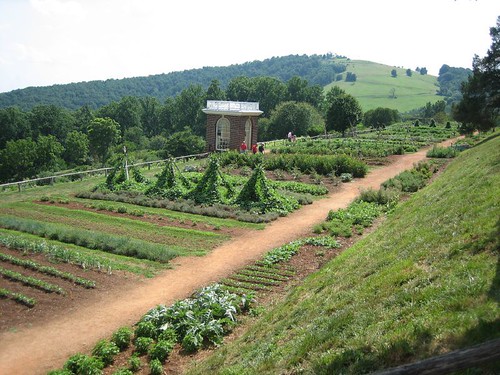
The political fronts were clearly aligned yesterday at the first symposium of the Global Harvest Initiative. Even though not many people knew about this event, (except those inside ag circles in DC) the online debate is heating up.
The Global Harvest Initiative (GHI) "is dedicated to spurring the development and sharing of agricultural innovations with those that need it most. It is underwritten by funding from the Archer Daniels Midland Company, DuPont, John Deere and Monsanto."
Have you seen Matt Damon latest movie The Informant? you should. In the movie, Damon plays the role of a ag technician promoted to senior management that releases secretive information to the FBI about the sketchy business deals of ADM or Archer Daniels Midland, yeah, one of the sponsors of GHI.
There are tons of documentaries and movies about the 'evil' work of Monsanto and DuPont. The point is that all these brand names, working for those that 'need ag innovation the most' should, at the very least, spark some ekeptisim about the real motives behind this iniciative.
So I wasn't surprise when i read the news release from the ad-hoc US Working Group on the Food Crisis, describing how GHI:
"continues to advocate a failed approach to feeding the world and addressing global hunger. The September 22 Global Harvest Initiative Symposium on “Agriculture at a Crossroads”—featuring Senator Richard Lugar—claimed to have some of the “best thinkers” in agriculture, food security and hunger. However, it relied heavily on panelists who have consistently pushed chemical-intensive production; unproven biotechnologies that have been linked to farmers’ loss of land, suicides and environmental contamination; and “free trade” in agriculture as the solutions to feeding the world."This criticism has merit, after all, these organizations carry a heavy baggage of past corruption and abuses. However, in an already polarized city, critics fail to recognize that fertilizers and biotechnology must play an central role in feeding our current population and the many more to come. Investing in agroecological sciences and biodiverse farming is essential but it won't guarantee the massive production of staples needed to satisfy the demand of a world moving to cities. So rather than focusing on vilification we could promote constructive dialogue by recognizing the validity of some aspects of GHI and work towards an agenda that promotes ag development, safeguards the environment and protects crop diversity....
I know, I know, i'm starting to sound like a politician, well i happen to live in DC, but i wouldn't think twice about moving to Monticello.
Wednesday, September 23, 2009
New publication from Action Against Hunger of global food crisis
Check out Action Against Hunger's latest publication: Feeding Hunger & Insecurity: Field Analysis of Volatile Global Commodity Food Prices, Food Security, & Childhood Malnutrition,
According to the press release the report offers an assessment of the global food crisis and its impact on vulnerable communities. It's based on a series of in-depth surveys that ACF carried out in the wake of the global food crisis, targeting households in Ethiopia, Sierra Leone, Liberia, and the Central African Republic. While the inflated food prices did not have an immediate impact on malnutrition rates, the findings suggest a significant, persistent impact on livelihoods and dietary diversity, which are key determinants of malnutrition.
A welcome addition to the recent collection of literature on the global food crises.
PS. Agdes is leaving for Nicaragua tmrw. Not sure how much time it'll have for blogging. stay tunned
The Nation on Africa's Green Revolution; Gates opening slowly
Somewhat different view from the optimistic goals of the Gate's foundation agricultural strategy in Africa. Although The Nation recognizes there is validity on some of Gates' objectives, they criticized the overall approach, in particular the entrenchment of corporate seed makers as an essential component for the so-called 'African green revolution.' According to the Nation, Gates, "actively promotes an agenda that supports some of the most powerful corporations on earth."
In my view, that statement ignores the fact that the foundation, as any other grant-maker, makes its funds available through a competitive bidding process, transparent and open to all sorts of organizations such as NGO's and university. Just take a quick look to the grants given so far and you'll recognized organization doing excellent work such as WFP, IFPRI, CMMYT, Heifer, Cornell University, GTZ, etc.
One of Gates' recent grantees is CIAT (Centro International de Agricultura Tropical). I had the fortune to visit CIAT earlier this year on my trip to Colombia. Set in the fertile soils of Valle del Cauca, and surrounded by endless hectares of sugar cane, CIAT has produced a massive record of research on neglected crops, hilly agriculture, participatory approaches etc.
Unfortunately, the current staff is only one quarter of what it used to be in their heydays. Walking through their facilities -a university like setting- you could see the financial struggles they are going through: high pastures as funding for overhead is almost non existing and abandon building and research sites. Budget cuts and lack of donor interest in agricultural research, extension, and education, have curtail the availability of CIAT and other CGIAG research center to maintain the level of work they had in the 70s and 80.
We should loudly applaud the recent boost Gates is given to CIAT and other research efforts. Instead of critizining their effort, we Nation should participate on a constructive dialoge on the most effective mechanismins to lift African farmers out of poverty.
Subscribe to:
Posts (Atom)